
7.22.2026
UVA Health Update | July 22, 2026
In March, UVA Health took the important step to validate its 14 Clinical Nurse Specialists (CNS) as credentialed and privileged providers. CNSs are one of four advanced practice nursing (APRN) roles who have graduate preparation (master’s or doctorate) in nursing as a CNS. Like other APRNs, they are trained in advanced physiology, pharmacology and physical assessment in addition to their particular areas of specialty.
Credentialing and privileging are distinct, but often intertwined formal processes. Credentialing provides confirmation that a healthcare provider holds sufficient qualifications, licensure, training, and competencies to practice at a nationally defined standard of care. Privileging authorizes a provider to perform specific procedures or professional services that the organization deems the provider is qualified to perform. Importantly, the process assures the public of safe clinical practice by highly qualified providers.
For the CNS, the process serves as a formal organizational recognition as an Advanced Practice Registered Nurse (APRN), promotes accountability for full scope of practice, and enforces professional standards of practice.
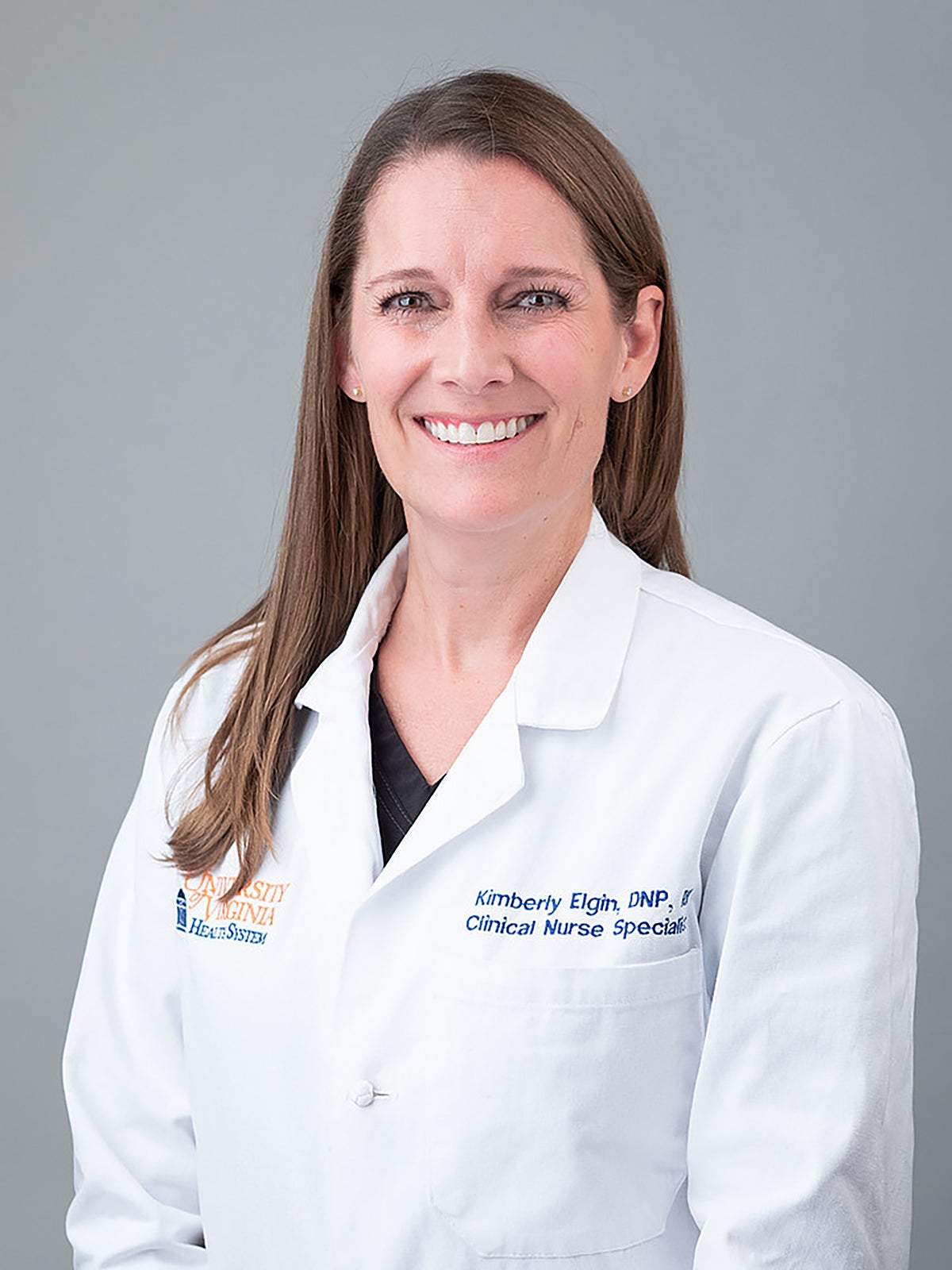
Kimberley Elgin, DNP, APRN, Lead Clinical Nurse Specialist, coordinated the effort. According to Elgin, the other three APRN roles — nurse practitioners, nurse midwives, and nurse anesthetists — were already bundled under the credentialed provider structure, however there was a growing need to recognize CNSs also and to align their level of responsibility and scope of practice with that of their APRN counterparts.
Beyond the interest in improving patients’ experiences, the ascension of CNSs to the status of credentialed providers means that UVA Health is in line with the CNS professional standards of practice. The change also will provide mechanisms for third-party billing of services provided by a CNS. At the same time, there is legislation in the Virginia General Assembly to elevate the scope of practice of the CNS to allow for prescriptive authority.
“There was a real need for credentialing CNSs,” said Elgin. “The fluidity of the CNS role is important, but it could lead to role confusion for colleagues. After centralizing the CNS team, I performed a systematic gap analysis, comparing our practice to the National Association of Clinical Nurse Specialists [NACNS] core competencies. Being able to validate that our CNSs were ‘aligning with and meeting national standards’ is actionable language that is meaningful and powerful to an organization.”
NACNS core competencies can be found here. They include competencies in direct care, consultation, systems leadership, collaboration, coaching, research and ethical decision-making, moral agency, and advocacy.
The Benefits of Credentialing the CNS
As a credentialed provider, CNSs’ validation as an APRN by the UVA Health nursing body and interdisciplinary colleagues is helping to build the structures and processes that are necessary to facilitate reimbursement practices.
Another significant improvement will be CNSs’ ability to formally consult other interdisciplinary clinicians without a physician co-signature. This efficient approach to patient care leverages the CNSs’ ability to generate revenue for the organization for the work they perform.
Finally, and most importantly, validating a CNS as a credentialed provider creates an opportunity to rethink processes and structures around interprofessional practice and develop different and more efficient methods to work together in a healthcare setting.
A CNS-Credentialed Provider “How To”
The process of obtaining formal recognition of the CNS as the newest credentialed provider type took four months and involved the entire organization.
The process included working with stakeholders to obtain subcommittee approvals, a full vote by all of the organization's clinical staff, and final approval by the UVA Health Operating Board. Critical to the success of this effort was securing support from the Chief Nursing Officer, Director for Advanced Practice, and from the CNS team itself.
“Our CNSs had a vision for it, but we still put a lot of energy and effort into securing their buy-in,” said Elgin. “This change will create different workflows for our CNSs, so — if we were to be successful, I needed them to be engaged in the credentialing process from the beginning.”
The approval process started with the proposal being presented to the Advanced Practice Provider Subcommittee of the Organizational Credentialing Committee. Once approved, a recommendation was made to the Credentialing Committee to add CNSs as a provider type. Next, it was voted on and approved at the Credentialing Committee and the Credentialing Committee made their recommendation to the Clinical Staff Executive Committee. This executive committee also approved the proposal and sent it to the entire clinical staff for a vote. Finally, the last step was the UVA Health Operating Board’s approval validating the CNS position as a credentialed provider.
Elgin credits her relatively smooth approval process to never underestimating the importance of engaging stakeholders — both in formal and informal settings — and taking time to listen and hear their concerns.


Fabulous work! Great job Kim!
Congrats Kim- a great and much needed accomplishment!