10.1.2026
UVA Health Teams Join Celebration of a ‘Significant Step Forward’ — the Result of a ‘Tremendous Collaboration’
Medical students devote countless hours to classroom learning as they prepare to become skilled and compassionate physicians. For second-year students, the anatomy lab marks a defining moment in their medical education. It is where learning moves beyond textbooks and 3D models to the study of the human body through anatomical donors — individuals who generously donate their bodies to science to advance medical education. This extraordinary gift gives students their first opportunity to explore the complexity, variation, and realities of human anatomy and disease, helping shape them into better physicians.
To honor these donors and their families for their profound generosity, second-year students organized a Convocation of Gratitude ceremony on Friday, Dec. 12. Six students led the planning for this year’s event: Zoe Ziff, Valeria Pabon, Melanie Weber, Basia Davis, Danielle Wilson, and Allison Horvath. We recently got together with Allison to discuss what it meant to her and her classmates to work with the donors — their “first patients and teachers.”
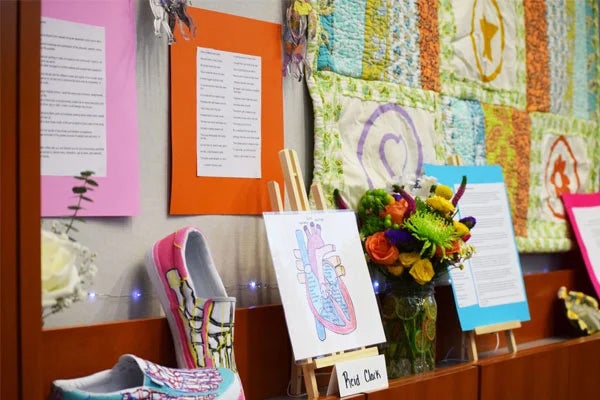
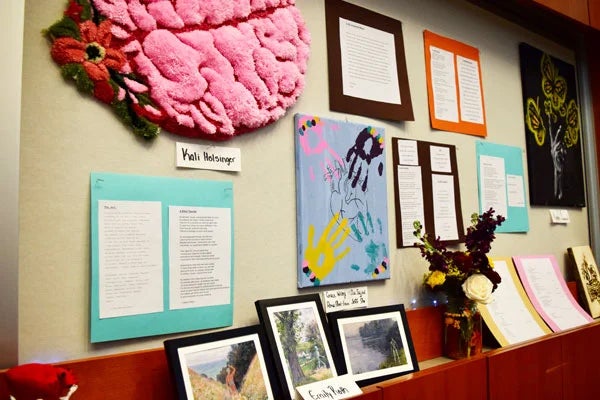
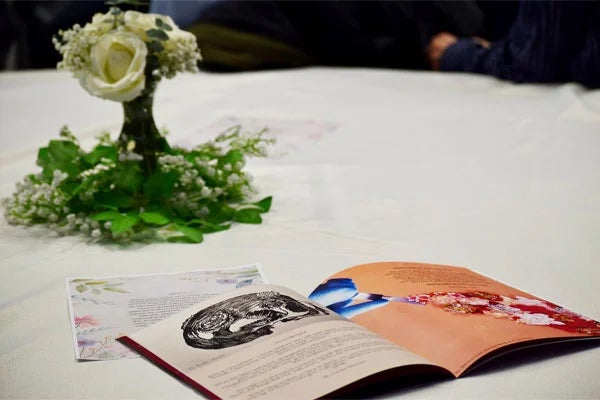
Allison: The Anatomical Donor Convocation Ceremony is an event to both remember and celebrate the legacy of those who donated their bodies for medical education at the University of Virginia School of Medicine. Donors make a proactive decision to be anatomical donors, and it is essential to the student body that we show immense gratitude to our anatomical teachers and their families. Our planning committee worked closely as a team to organize the contact with families, cultivate atmosphere/decorations, plan food, and coordinate programming to ensure all logistics ran smoothly for the big event. However, the most important contributions were collectively from all the medical students. At the conclusion of the anatomy curriculum, each student completed a “reflections project” of their choosing as a dedication to their donor to share their unique experiences. With projects ranging from music to poetry to artwork, the vulnerable and artistic side of our medical school class was displayed around the room during the ceremony, and these projects were one of the highlights of the evening.
Allison: In a world where artificial intelligence is swiftly replacing many of our standardized practices in medicine and beyond, no virtual experience can truly replicate the complexity and magnificence of seeing the human body. I found myself amazed on a daily basis as I was able to visualize structures that we had seen in a textbook materialize in front of us. I have seen the nerve bundle that runs through the spinal cord, understanding how spinal injury and atrophy can lead to the neurologic pain that many experience as they age. I have further learned the complex vascular network that wraps around the heart, envisioning how a heart attack can damage the muscle of one of our most vital organs. Anatomy lays the groundwork for everything we study in medicine and allows us to make connections about physiologic systems that we will carry with us throughout our careers.
Allison: Many families believe we are provided information about the donor we are matched with, but we are completely blinded to the identity of our anatomical donor. As we progress through the course, sometimes we are able to decipher health conditions that the patient had, but otherwise their story is a mystery. This is part of what makes the Anatomical Donor Convocation of Gratitude so special for us, as we are able to look around the room at photos of our donors and understand who they were as people as families share their stories.
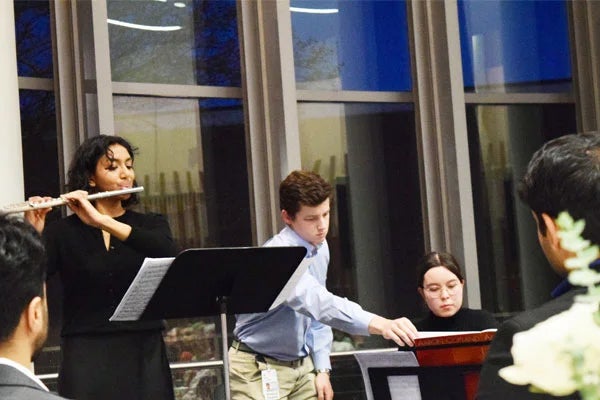
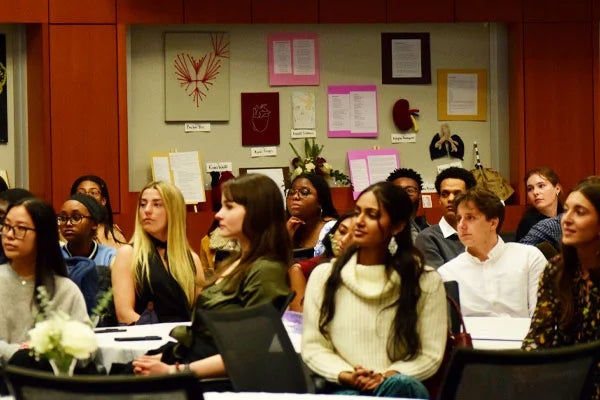
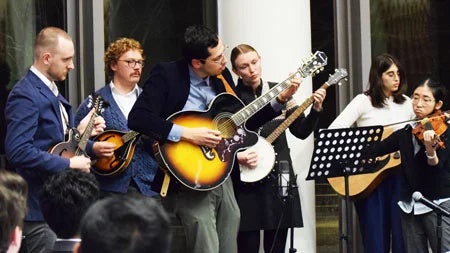
Allison: We had 16 families attend, both in person and virtually, along with students and faculty. It was the largest turnout of an anatomical donor convocation the School of Medicine has ever had, with students having to crowd along the edges of the room. During the ceremony, we had performances from the UVA Arrhythmics a cappella group, Divya Narayanan and Wendy Stewart with a piano/flute duet, and Code BLUEgrass band. Kamryn Crowder also read a poem called “Epilogue” as a dedication to her anatomical teacher. Following student showcases, 45 minutes were spent as an open opportunity for families to share their stories of their loved ones. There were both laughs and tears as attendees shared favorite memories of their dad, mom, sibling, nephew, and many more. The students were captivated to listen and learn about the lives of their anatomical teachers — people they had never gotten the chance to know.
Allison: One family member shared with the group in vulnerable honesty that she was initially not happy with her father’s wish to donate his body to medical education. Her father’s decision left her without final closure at his end of life, and she grappled with that in her grieving process. However, over time she began to recognize that it was the most selfless thing he could have done. She understood how his sacrifice would help us one day make a difference in the lives of others, and hearing our reflections helped her find the closure she needed. Hearing her full circle of understanding and appreciation re-emphasized to the students in the room how meaningful it was for us to be the last ones to physically see and pay tribute to these donors, and I hope all their families know it was not taken lightly by us.
Allison: Anatomy is a complex learning experience. On one hand, there is no better way to learn the human body than to see it in front of you and understand how fragile (and sometimes not fragile) it can be. On the other hand, it can be challenging to form emotional boundaries to be able to most effectively learn. I saw myself and others initially struggle with the gravity of dissecting the human bodies we vowed to one day save, and it showed how deeply our community cared about the conscious being who once lived inside those bodies. These two mental approaches were intertwined with a common theme of gratitude every time we entered the anatomy lab, and is how I know our medical school class will make great physicians.