5.12.2026
Rooted in Purpose: How UVA Health’s Occupational Therapy Program Is Growing Stronger — at 80!
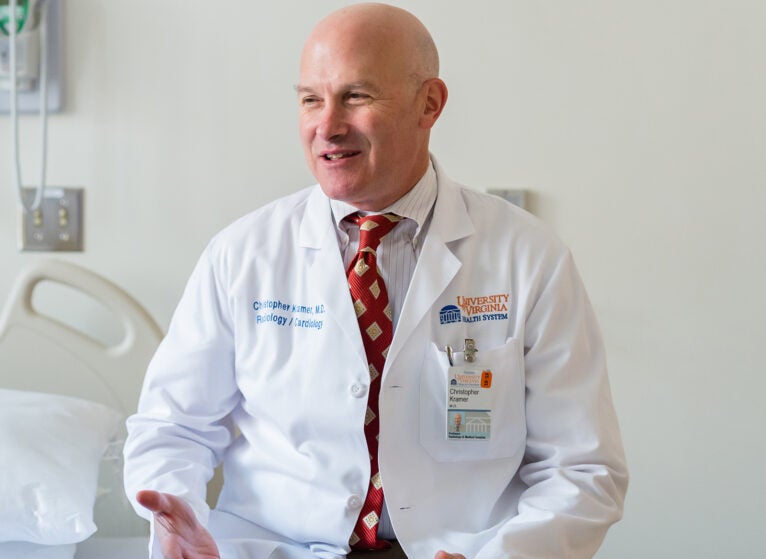
Christopher Kramer, MD, UVA Health cardiologist; and co-principal investigator, University of Oxford, United Kingdom
A sweeping international study has identified ways to detect patients who are at serious risk of sudden death, heart failure or other dangerous outcomes from heart thickening known as hypertrophic cardiomyopathy. The findings will help save lives while also sparing low-risk patients from unneeded heart implants.
Led by UVA Health cardiologist Christopher M. Kramer, MD, and a co-principal investigator at the University of Oxford in the United Kingdom, the study followed almost 2,700 patients with hypertrophic cardiomyopathy (HCM) in the United States and Europe for an average of approximately seven years. The researchers found that combining advanced heart imaging with blood test data could improve their ability to determine who is at greatest risk. Existing tools have limited and often unreliable predictive ability, leading to what the researchers call “avoidable deaths” they say their new work can prevent.
“This study identifies MRI markers and a blood test that identifies patients with this disease who are at higher risk of death from heart failure, stroke or sudden death from fast heart rhythms,” says Dr. Kramer, Chief, Division of Cardiovascular Medicine, UVA School of Medicine.
Dangerous Hypertrophic Cardiomyopathy
HCM is the most common genetic heart disease and the most frequent cause of sudden cardiac death in young people in the United States. It often makes headlines when a young athlete dies abruptly, but the condition can affect people of any age. HCM ultimately strikes at least 1 in 500 people, but perhaps as many as 1 in 200. In addition to sudden death from fast heart rhythms, it can lead to heart failure — the gradual loss of the heart’s ability to pump sufficient blood — and symptoms such as shortness of breath and chest pain.
Dr. Kramer’s study results show an important role for cardiac magnetic resonance imaging (CMR) in predicting patient outcomes. Using this advanced imaging to analyze patients’ left heart ventricles – the thickest and most muscular chamber of the heart — allowed the researchers to assess the mass of the ventricle, how well it was functioning and the presence of scarring within the heart tissue. They found they could then combine this data with the results of a blood test assessing the levels of a particular peptide to more effectively predict overall patient outcomes. (Peptides are short chains of amino acids that play important roles in our bodies, including serving as the building blocks of proteins.)
Further, the researchers found they could combine the imaging and peptide insights to improve doctors’ ability to identify patients at gravest risk of sudden cardiac death, including among patients whose irregular heartbeats were already treated. This, Dr. Kramer says, will improve the care patients receive. “The patients with HCM who are identified early can then receive therapies that can save lives,” he says.
In addition to helping doctors detect those at greatest risk, the study results will benefit patients at lower risk by sparing them from unneeded implantations of cardioverter-defibrillator devices. These battery-powered devices are designed to monitor for irregular heartbeats and restore appropriate heart rhythm when needed. The devices are lifesavers for patients who need them, but the new study results will help doctors better determine which patients will actually benefit.
“This is an important next step to do a better job of identifying HCM patients at high risk,” Dr. Kramer says. “This adds to presently used risk markers derived from the patient’s and their family’s prior history.”
UVA Health remains the only hospital in Virginia designated an HCM Center of Excellence by the Hypertrophic Cardiomyopathy Association. These centers are recognized for providing the highest-quality cardiomyopathy care and performing cutting-edge research to advance our understanding of the condition and develop better ways to treat it. Dr. Kramer is a Co-Director of UVA Health’s program.
Findings Published
Dr. Kramer and his colleagues have published their findings in the prestigious Journal of the American Medical Association. A full list of the researchers and their disclosures is included in the paper. Kramer disclosed that he has received research support from biopharmaceutical companies Bristol Myers Squibb and Cytokinetics.
The research was supported by the National Institutes of Health’s National Heart, Lung and Blood Institute, Oxford NIHR Biomedical Research Centre, Cytokinetics, and Frederick Thomas Fund.
To keep up with the latest medical discoveries from the UVA School of Medicine and the new UVA Paul and Diane Manning Institute of Biotechnology, bookmark the Making of Medicine blog.