
10.5.2026
Forging Hope Through Art, Former Surgeon Continues to Give Back to UVA Health
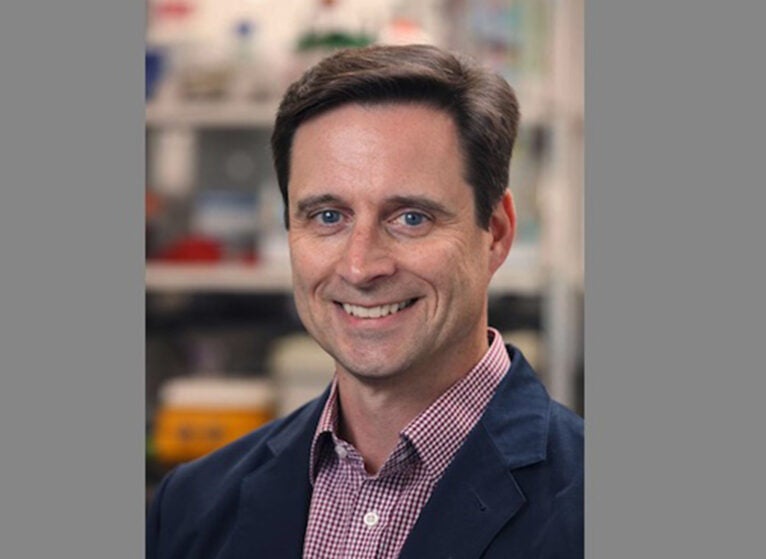
Richard J. Price, PhD
The fast-evolving field of focused ultrasound is rapidly nearing an “inflection point” that would radically change how we treat brain tumors, Alzheimer’s, Parkinson’s and other neurological diseases, leading UVA Health experts report in a series of new scientific papers.
Focused ultrasound is being explored for a wide variety of medical applications, including delivering gene therapies and other treatments through the brain’s natural protective barrier. This barrier blocks harmful toxins but has long frustrated doctors’ efforts to get effective treatments into the brain. Focused ultrasound researchers have already had success breaching this barrier by attaching gene therapies to viruses and driving them into the brain using highly focused sound waves, but it is the development of new alternatives to viruses that could be a game-changer, UVA’s Richard J. Price, PhD, and colleagues say. These new approaches could allow the delivery of gene therapies with unprecedented precision while avoiding harmful side effects.
“Our results show that, in addition to being a ‘platform technology’ for delivering gene therapies across the blood-brain barrier, focused ultrasound also offers exciting opportunities to target specific cell types in brain tumors with non-viral nanoparticles,” said Price, co-director of UVA’s Focused Ultrasound Immuno-Oncology (FUSION) Center. “This is exciting because we can now design entirely new gene therapy strategies that take advantage of these powerful cell-targeting properties.”
Focused Ultrasound’s Brain Benefits
The brain’s protective barrier, known as the “blood-brain barrier,” is extremely effective at keeping out foreign molecules, making it a formidable foe for researchers developing new treatments for neurological diseases. Many gene therapies have shown great promise in early lab testing, only to fail when put to the test in humans. Viral delivery systems powered by focused ultrasound represent a significant step toward overcoming this barrier, and it has generated great interest in the scientific community. But the approach is hampered by limitations such as manufacturing scale-up, cost and the triggering of immune responses against the gene therapy itself.
Non-viral alternatives include encasing treatments in nanoparticles made out of polymers or lipids — tiny blobs of fat — that can sneak them both through the blood-brain barrier and past the body’s natural immune defenses, Price and his colleagues note. These new approaches have several major advantages. One in particular is that a modified version of the polymer nanoparticle can be targeted specifically to tumor endothelial cells with focused ultrasound, opening new doors for therapeutic strategies that leverage this cell type. Further, they can be used to delivery treatments repeatedly, unlike viral systems, which are often one-and-done because of the body’s immune response.
Based on the promising results so far, Price and his colleagues are calling for investments from private industry, the government and philanthropic groups to help researchers explore and refine the potential applications of the focused-ultrasound approaches. Much more study is needed before the approaches could become available to patients as treatments, they note. But Price believes that both viral systems and non-viral alternatives will one day find their place in the clinic, with doctors tailoring the delivery system to best serve a patient’s particular condition.
“We are now very interested in exploring how these non-viral nanoparticle systems, when coupled with focused ultrasound, could be harnessed to engage the patient’s own immune system to better recognize and eliminate brain tumors,” Price said. “One thing that is really fascinating is that we are still uncovering new ways that sound energy interacts with cells and non-viral nanoparticles in the brain. I wouldn’t be surprised if the new findings represent just the top layer of this understanding, with future discoveries enabling the design of even better gene therapy strategies.”
Findings Published
Price and his colleagues have published their results on the use of polymer nanoparticles to stimulate immune responses against gliomas in the scientific journal Advanced Science. The article was authored by Anna C. Debski, Catherine M. Gorick, Jackson Tirrell, Krishan Perumal, Katherine M. Nowak, Ji Song, Natasha Sheybani and Price.
Price and his colleagues published their results on the use of lipid nanoparticles to augment chemotherapeutic treatment of gliomas in the scientific journal Cell Biomaterials. The article was authored by Anna C. Debski, Catherine M. Gorick, Victoria R. Breza, Ji Song, and Price.
Price and his colleagues also published a review of the state of the field in the scientific journal Cell Biomaterials. The article was authored by Eden N. Gordon, Anna C. Debski, Victoria R. Breza, Matthew R. Hoch, Nareen Z. Anwar, Khondamir Imomnazarov, Alec J. Batts, Matthew R. DeWitt, Natasha Sheybani and Price. UVA’s Licensing & Ventures Group is seeking patents related to the work for Price and Debski.
Focused Ultrasound at UVA
UVA Health was one of the earliest pioneers in the field of focused ultrasound. UVA’s expertise with the technology has led to a robust research program examining the use of focused ultrasound to treat many different conditions, from cancer to heart and kidney diseases.
The technology’s tremendous promise prompted UVA Health and the Charlottesville-based Focused Ultrasound Foundation to launch FUSION, the world’s first center dedicated specifically to exploring the benefits of combining focused ultrasound with cancer immunotherapy.
Finding new ways to improve patient care is a core mission of both UVA Comprehensive Cancer Center and UVA’s Paul and Diane Manning Institute of Biotechnology. UVA Comprehensive Cancer Center is one of only 57 cancer centers in the country to earn the elite “comprehensive” designation from the National Cancer Institute in recognition of their exceptional patient care and cutting-edge cancer research.
The Manning Institute, meanwhile, has been launched to accelerate the development of new drugs and cures for the most complex and challenging diseases. This is being complemented by a statewide clinical trials network that expands access to potential new treatments as they are developed and tested.
To keep up with the latest medical research news from UVA and the Manning Institute, bookmark the Making of Medicine blog.