
3.3.2026
Need to Know | University Medical Center
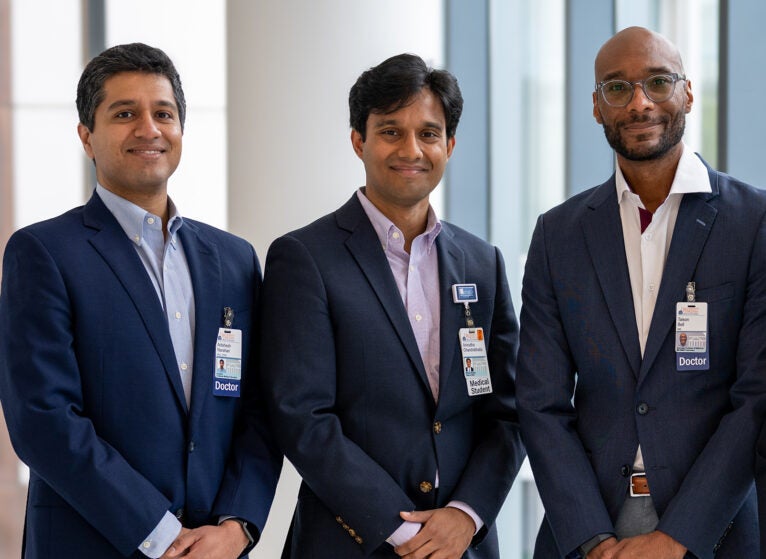
Adishesh Narahari, MD, PhD; Anirudha Chandrabhatla; and Taison Bell, MD, MBA
A new analysis of federal funding for RNA vaccine research highlights the vast potential of the technology not just for preventing infectious diseases but treating devastating conditions ranging from cancer to Alzheimer’s.
Researchers led by UVA Health’s Taison Bell, MD, MBA, surveyed RNA vaccine research funded by the National Institutes of Health using the agency’s grant database, known as RePORTER (Research Portfolio Online Reporting Tools). He and his collaborators identified 178 active grants that started between 1997 and 2025, totaling $1.65 billion in funding. The top three areas of study were viruses, RNA technology and cancer.
Among the virus grants, the most frequently funded areas of research were COVID-19 (29 grants) and, close behind, HIV (24 grants). Among cancers, the most grants went to the study of solid tumors (eight grants) and melanoma (three grants). But there were a wide array of other potential applications in the mix, targeting everything from tick-borne illnesses and parasitic infections to eye disease and syphilis.
“Our study showed that RNA technology could impact virtually every aspect of human health, from debilitating chronic diseases to conditions even thought incurable,” said University of Virginia School of Medicine researcher Anirudha S. Chandrabhatla, the first author of a new scientific paper outlining the findings.
RNA Vaccine Grants
The most RNA vaccine grants came from the NIH’s National Institute of Allergy and Infectious Diseases — the agency awarded 110 grants totaling $1.08 billion. The National Cancer Institute awarded 27 grants totaling $512 million, while the National Institute of General Medical Sciences 10 grants for a total of $5.5 million.
The federal grant money for RNA vaccine research has already produced more than 2,300 scientific papers that have been cited by scientists more than 149,000 times, the analysis found. These papers covered everything from basic lab research to promising advances in patient care. (Cancer vaccines, for example, are a particularly hot area of cancer research — they train the body’s immune system to seek out and destroy cancer cells and tumors.)
The top three states receiving grant funding were Washington, with 16 grants totaling $558 million; Maryland, with six grants totaling $407 million; and North Carolina, with 13 grants totaling $226 million.
In addition, 15 small businesses focusing on areas such as genomics and biomaterials received 18 grants through the Small Business Innovation Research and Small Business Technology Transfer programs. These grants, the researchers say, speak to the benefits of the federally funded research to private industry and biotech entrepreneurship.
Noting recent federal cuts to RNA vaccine research funding, the scientists are urging careful consideration of the benefits the technology could have for patients and the economy.
“NIH funding for RNA vaccination research is broad and covers more than just COVID-19 research,” said UVA researcher Adishesh K. Narahari, MD, PhD. “This research provides critical advances in infectious disease, cancer biology and molecular biology. Halting funding to this entire sector of research will be devastating to the biomedical research complex as a whole."
Bell, the interim chair of the Department of Medicine at the UVA School of Medicine, noted that the funding decisions made now could have far-reaching effects.
“The story of RNA vaccines is bigger than any one disease,” he said. “It represents a shift in how we design therapies — programmable, adaptable and increasingly precise. The question is no longer whether the science is promising. It’s whether we choose to keep advancing it.”
Findings Published
The researchers have published their analysis in the scientific journal JAMA Network Open. The article is open access, meaning it is free to read. The research team consisted of Chandrabhatla, Narahari, Kevin Jin, Benjamin Mazurek, and Bell. The researchers have no financial interest in the work.
To keep up with the latest medical discoveries from the School of Medicine and UVA’s new Paul and Diane Manning Institute of Biotechnology, bookmark the Making of Medicine blog.