4.2.2026
UVA Community Health’s Newly Enhanced Nurse Residency Program to Offer Year-Long Mentorship and Skill Development
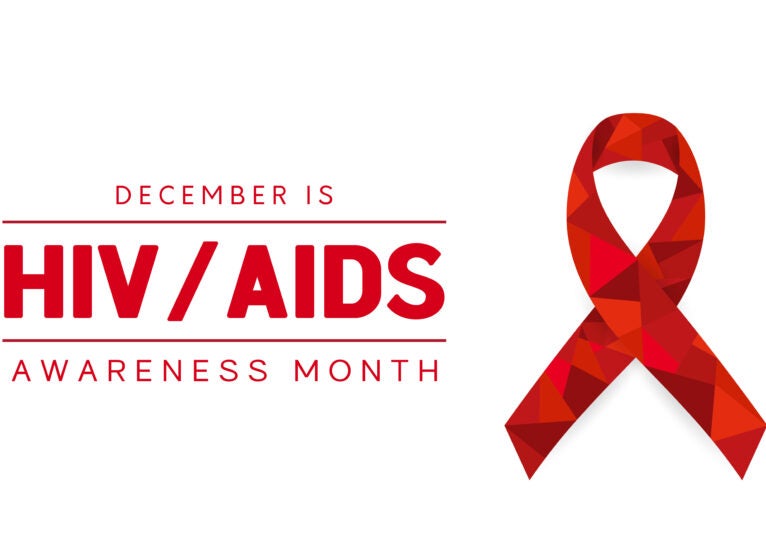
December Is HIV/AIDS Awareness Month, and Dec. 1 is World AIDS Day — a global movement to unite people in the fight against HIV and AIDS. Since 1988, communities have stood together on World AIDS Day to show strength and solidarity against HIV stigma and to remember lives lost.
The concept for World AIDS Day was created in 1987 by James W. Bunn and Thomas Netter, two public information officers for the Global Programme on AIDS at the World Health Organization(WHO) in Geneva, Switzerland. Upon the approval of Jonathan Mann, MD, Director of the Global Programme, World AIDS Day was launched Dec. 1, 1988.
The Red Ribbon is the universal symbol shared to raise awareness, commemorate those who have died, and celebrate victories such as increased access to treatment and prevention services. Each year, a theme is chosen to unite communities committed to celebrating compassion and advocacy.
World AIDS Day 2025
The theme for World AIDS Day 2025 — "Overcoming Disruption, Transforming the AIDS Response" — calls for sustained political leadership, international cooperation, and human rights-centered approaches to end AIDS by 2030.
In recognition of World AIDS Day, UVA School of Medicine Office of Medical Sciences Outreach and UVA Health Office of Community Engagement and Health Outcomes hosted “My Story, My Voice” featuring Jason Elliott, a local leader and HIV/AIDS educator and advocate. He traced the evolution of HIV/AIDS awareness and how the stigma that surrounded the epidemic persists. Elliott also shared how his personal experiences led him to becoming a passionate HIV/AIDS educator and advocate.
Sustained Commitment
Elliott’s talk underscored that despite significant progress, more education about HIV/AIDS is needed to reduce stigma, as well as transmission of the virus — and more progress toward ending the epidemic requires a sustained commitment from healthcare providers, community organizations, individuals, and policy makers.
In 2024, an estimated 40.8 million people were living with HIV globally.
Approximately 630,000 people died from HIV‑related causes in 2024 and an estimated 1.3 million people acquired HIV in 2024. According to the Virginia Department of Health, the COVID-19 pandemic decreased access to routine screening and testing. As a result, Virginia reported fewer new cases during that time.
However, the total number of HIV cases has returned to pre–pandemic levels. The impact of HIV has increased in certain communities. Youth, ages 15-19, saw a 41% increase in new HIV cases from 2023 to 2024. Black and Hispanic/Latino persons have seen a 27% increase in new cases each year since 2022.
In Virginia, there are more than 28,000 people living with HIV; more than 75% of them are men and more than half are 50 or older. While Black, non-Hispanic people make up 19% of the population in the Commonwealth, 56% of people with HIV identify as Black, non-Hispanic in Virginia.
WHO shares actionable steps:
Determination, Resilience, Innovation
According to WHO: “After decades of progress, the HIV response stands at a crossroads. Lifesaving services are being disrupted, and many communities face heightened risks and vulnerabilities. Yet amid these challenges, hope endures in the determination, resilience, and innovation of communities who strive to end AIDS.”
Elliott urged attendees to use their voices to take part in the fight to end HIV/AIDS by supporting community organizations working on the front lines, combating stigma through open and informed conversations, encouraging regular testing and preventative care, and staying up to date on information about the virus.
Additional resources can be found here. For more information, visit the Virginia Department of Health website.