3.4.2026
UVA Health Update | March 4, 2026
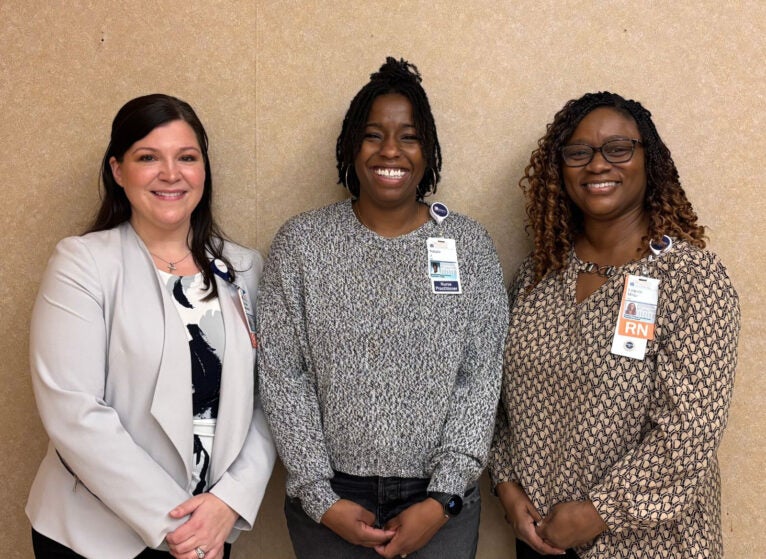
Christina Williamson, BSN, RN, OCN; Natalie Jefferson, DNP, APRN, FNP-BC; and Laquita Minor, MSN, BA, RN, NE-BC
Thanks to a growing program launched by Population Health in the fall of 2025, our efforts to provide comprehensive follow-up care extend beyond our walls and into our patients’ homes and daily lives. The Bridge to Primary Care Program was created in partnership with University Medical Center Ambulatory Associate Chief Nursing Officer Rachel Nauman, DNP, RN, NEA-BC, in an effort to support patients without a primary care provider from falling through the cracks after discharge.
“Our goal is to ensure every patient has access to a trusted primary care provider who delivers continuous, preventive, and coordinated care to improve health outcomes and reduce avoidable readmissions and ED visits,” says Laquita Minor, MSN, BA, RN, NE-BC, Director of Clinical Care Services for Population Health.
The Bridge to Primary Care Program team is small but effective. Led by Minor, it includes advanced practice provider Natalie Jefferson, DNP, APRN, FNP-BC, and nurse navigator Christina Williamson, BSN, RN, OCN. Together, they work with patients to educate, evaluate, counsel, and support them via telehealth for weeks or months, depending on the patient’s needs and how soon they can be connected with a primary care provider. “There are some access challenges for primary care across the country, so we help bridge the gap while we get them into their chosen clinics,” says Minor.
Within days of a patient’s discharge, Williamson calls the patient to introduce the program and to identify the care and resources they need. Once the patient agrees to enrollment, she helps them:
“There’s a lot of emotional support, coaching, and education that takes place,” she says. “Being a connection point — just to guide them along the way — makes a huge difference.”
After their initial consult with Williamson, patients then meet virtually with Jefferson, who provides short-term clinical oversight and care management. Her efforts to help patients navigate new diagnoses and manage chronic conditions include:
“When I hand patients off, it’s like a beautiful package. By the time they see their new PCP, most of their immediate needs have already been addressed,” says Jefferson.
If there’s a need, Natalie will find it, says Minor. “Natalie does a very thorough chart review because some of these patients have gone with gaps in their care for a very long time.”
This thoughtful and comprehensive approach to meeting the needs of patients has made a huge impact, in not only reducing readmissions, but saving lives. Jefferson’s keen eye helped one patient with newly-diagnosed Type 1 diabetes avoid the risks of extremely low blood sugars due to new insulin therapy. Her careful evaluation also led to a cancer diagnosis that might have been left untreated for some time if Jefferson hadn’t ordered additional tests and initiated a referral for the patient to follow up with a specialist.
“We're a safety net for a lot of people because the hospital and clinics are very busy places,” says Minor. "To be able to connect with patients in their home environment is an advantage — they're able to go look in their medicine cabinets and tell us what’s there, for example. So we have more insight into the patients needs in that moment.”
Over the past year, the Population Health team has taken proactive steps to strengthen how patients are identified for the services provided by the Bridge to Primary Care Program, utilizing three key strategies:
Each week, the Bridge to Primary Care Program team initiates contact with around 25 patients. Thanks to this dedicated team, we help to keep care gaps from widening and provide patients with comprehensive support until stable, ongoing primary care is established.
This article is part of an ongoing series highlighting Population Health’s decade of work to improve patient access, progression, and health outcomes — while strengthening performance in readmissions, length of stay, capacity, value-based care, and community well-being.