3.2.2026
Child Life Specialist Transforms Action Figure Into ‘Incredible Teaching Tool’ for UVA Health Children’s Patient
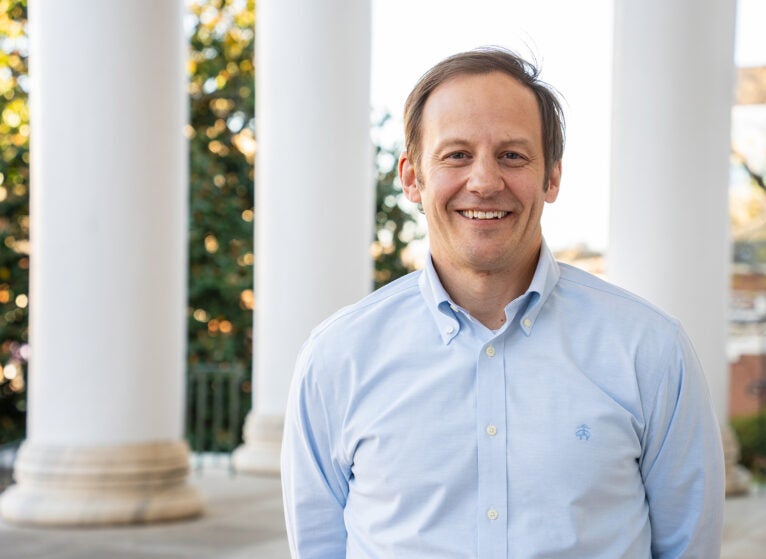
As part of this month’s CEO Update department feature, UVA Physicians Group (UPG) sat down with Michael Mazzeffi, MD, MPH, MSc, FASA, following his appointment as permanent Chair of the Department of Anesthesiology. In the conversation, he shares his vision for the department, his leadership philosophy, and the clinical, educational, and research strengths that position the team for continued growth. What follows is an edited version of the discussion.
As you step into the role of permanent Chair, what is your vision for the Department of Anesthesiology over the next few years?
Dr. Mazzeffi: My vision is for us to be recognized as one of the top academic anesthesiology departments in the country. The foundation of that aspiration is excellence in patient care. Everything begins there.
We want to be innovative in how we deliver care, how we educate our residents and fellows, and how we approach research. We are fortunate to have an outstanding care team — faculty, CRNAs, residents, and fellows — and continuing to attract the best and brightest to UVA will be essential to sustaining that excellence.
Equally important is ensuring that our department is a great place to work. Academic medicine is facing significant burnout, and we must be thoughtful about supporting wellness and professional growth. That includes flexible work arrangements, equipping people with the tools and autonomy to solve problems, and supporting their academic and professional interests. I want people to feel proud to work here and confident they are growing in their careers.
What principles or leadership priorities are most important to you as you guide the department forward?
Dr. Mazzeffi: For me, leadership is about prioritizing others above yourself, building meaningful professional relationships, and doing your part to move the work forward. I’ve always tried to lead by example.
To be effective, people need to know you care about them and are invested in their success. Leaders provide a sense of security and direction, particularly during times of change. I strive to be transparent, fair, open to feedback, and a constant learner. There is a great deal I don’t know — and that’s okay. When I make mistakes, I’m willing to pivot and improve. Continuous learning is central to effective leadership.
What are some of the department’s greatest clinical strengths or areas of excellence that you’d like the broader UPG community to better understand?
Dr. Mazzeffi: I’ve worked in five academic anesthesiology departments throughout my career, and each had its own culture and strengths. Without question, this is an outstanding department. Our greatest strength is our people — talented, dedicated, skilled, and deeply collaborative.
Our team performs more than 60,000 anesthetics annually across more than 70 sites per day. We provide over 10,000 nerve blocks each year to reduce postoperative pain. We staff three ICUs and hold medical directorship or co-medical directorship roles in all of them. We also operate a comprehensive pain practice that offers cutting-edge clinical trials for patients with chronic pain syndromes.
Despite staffing challenges and growing demand, we have not closed operating rooms during my tenure — a testament to the commitment and resilience of this team. One surgical chair who joined us from another top academic institution told me our anesthesiologists are the strongest clinically they’ve worked with. That speaks volumes about the caliber of our faculty.
How does the department contribute to education and training, and what makes that work especially meaningful?
Dr. Mazzeffi: We train more than 60 residents and multiple fellows each year. Our graduates go on to thrive in both academic medicine and private practice, and many remain in Virginia, ultimately providing a significant portion of anesthesia care across the state.
Watching trainees evolve from interns to independent physicians over four years is remarkable. The amount they learn — medically and personally — is extraordinary. Each graduate will care for thousands of patients throughout their career. The ripple effect of that training is profound and deeply meaningful.
Recently, I ran into a former resident at a national meeting who is now serving as a residency program director in Texas. Seeing her pay forward the education she received here was incredibly rewarding and a reminder of the long-term impact of our work.
Are there any current initiatives, innovations, or strategic priorities you’re particularly excited about?
Dr. Mazzeffi: There are several initiatives that energize me:
Our preoperative clinic now evaluates more than 7,000 patients annually, helping optimize chronic conditions such as anemia and sleep apnea before surgery while providing critical education about the perioperative experience.
We are advancing novel pain therapies, including inpatient nerve cryoablation for painful orthopedic conditions.
We’re collaborating with trauma surgery colleagues on emergency preparedness planning, including mass casualty readiness.
Our research portfolio is strong and growing. Faculty are studying novel pain treatments, including psychedelic therapies, and developing innovative technologies such as next-generation brain monitoring devices currently moving toward FDA approval.
We’ve piloted virtual reality tools to help residents learn technical procedures like nerve blocks, enhancing procedural training through simulation and immersive learning.
These efforts reflect our commitment to innovation across clinical care, research, and education.
What opportunities or challenges do you see ahead for Anesthesiology, and how is your team positioning itself to address them?
Dr. Mazzeffi: The greatest challenge facing our specialty is the growing demand for services combined with a national provider shortage. We are operating in a highly competitive recruitment environment, so our goal is to be a best-in-class employer.
We’ve recently recruited exceptional physicians and CRNAs, including leaders in perioperative informatics, cardiothoracic anesthesiology, palliative care, pain medicine, and global health. At the same time, we are focused on retention — offering creative staffing models, predictable scheduling where possible, reduced effort options, and per diem opportunities. Supporting flexibility while meeting clinical demand is essential to sustaining our workforce.
We are also working closely with medical center leadership to coordinate growth strategically, ensuring departments expand in alignment rather than reacting independently. That coordination will be critical in the years ahead.
How does Anesthesiology partner with other clinical departments, and what does strong collaboration look like from your perspective?
Dr. Mazzeffi: At a recent clinical chairs retreat, a speaker referred to alignment as the “holy grail” of academic medicine. I agree wholeheartedly.
Our department is deeply integrated across the health system — in operating rooms, ICUs, radiology suites, and pain clinics. Collaboration is not optional; it’s foundational. We view surgeons and proceduralists as partners in achieving the best possible patient outcomes.
Our research collaborations extend into neuroscience, outcomes research, coagulation and transfusion medicine, biotechnology, critical care, and data science. The healthcare landscape is evolving rapidly, and the challenges are complex. We are far more likely to succeed when we work together, leverage collective expertise, and solve problems collaboratively.
Ultimately, our success — and the success of UVA Health — depends on strong alignment, shared purpose, and a commitment to excellence in everything we do.