3.26.2026
UVA Health Leadership Institute | FAQs

This monthly community newsletter from Dr. Mitchell Rosner, interim Executive Vice President for Health Affairs, highlights how UVA Health serves our patients and the community. To stay up to date on operations, clinical services, and research efforts featured in UVA Health Community Update, subscribe.

Dear Friends of UVA Health,
I am pleased to share this month’s edition of Community Update, which includes spring cleaning safety tips and news about our new Pharmacy Central Services Center, which expands access to medications across Virginia and beyond. We also share a Q&A about colorectal cancer, encouraging news about research awards at the UVA School of Medicine, and an interesting discovery related to the risk of lung cancer.
Thank you for the trust you place in UVA Health. I welcome your continued feedback.
Mitchell H. Rosner, MD, MACP, FRCP
Chief Executive Officer, UVA Health
Executive Vice President for Health Affairs, UVA
Henry B. Mulholland Professor of Medicine

As many households begin their annual spring cleaning, experts at UVA Health’s Blue Ridge Poison Center note that common cleaning habits can pose unexpected risks. Each year, poison centers see preventable exposures tied to household products — especially when chemicals are mixed or used improperly.
The Blue Ridge Poison Center has taken more than 1 million calls since it opened in 1978. A recent report released by America’s Poison Centers showed that poison centers save $3.1 billion each year in medical costs by enabling callers to address their issues at home. We are fortunate to have local access to these experts, who take calls 24 hours a day at 1.800.222.1222. Nearly 90% of Blue Ridge Poison Center callers who are in their homes when they call can get the help they need and remain at home — saving the cost of a trip to a healthcare professional or hospital.
UVA Health has marked an important milestone with the opening of its new Pharmacy Central Services Center — part of a 40,000-square-foot campus of pharmacy facilities at North Fork, designed to strengthen how medications are delivered to our patients. The center serves as the hub of UVA Health’s growing pharmacy network, increasing prescription fulfillment capacity across the network by nearly 50% and enabling more efficient service for patients in Virginia and even other states via home delivery options.
For our patients, the impact has been immediate and meaningful. The new facility hastens home delivery, expands access to specialty medications, and allows for more coordinated care across UVA Health hospitals and clinics. By streamlining fulfillment through advanced automation, pharmacists can spend more time with patients — offering consultations, managing complex conditions, and supporting preventive care. The center also brings economic benefits to the Charlottesville area, creating about 50 new jobs while reinforcing UVA Health’s commitment to care.




As Colorectal Cancer Awareness Month concludes, this Q&A features insights from Dr. Cindy Yoshida, a gastroenterologist and professor recognized for her work involving colorectal cancer. In this Q&A, Dr. Yoshida shares what individuals and families should know about prevention, screening, and the trends we’re seeing among cohorts of younger adults.
Q1: What are the current recommendations for colorectal cancer screenings?
A1: For average-risk adults ages 45–75, the most common colorectal cancer screening options include:
For higher-risk individuals, colonoscopy is the preferred screening method, often starting before age 45. Higher risk includes those with:
Screening is becoming more personalized, and new research is aimed at developing AI-based risk models to help match patients to the most appropriate test.
Q2: We’ve been hearing about more colorectal cancer diagnoses in younger adults. What do you know about why this may be happening?
A2: Rates of early-onset colorectal cancers have increased about 3% each year since the 1990s. Most cases occur in people in their 40s, and it is now the leading cause of cancer death among adults under 50. Those born in the 1990s have double the risk of colon cancer and quadruple the risk of rectal cancer compared to those born in the 1950s. This points to shared environmental or lifestyle exposures. Contributing factors under study include:
Q3: How effective are the non-invasive tests used today?
A3: Non-invasive tests include:
Patients should consult with their provider about which screening option is best for them.
Q4: What do you wish more people understood about colorectal cancer prevention or early detection?
A4: Key actions should include:

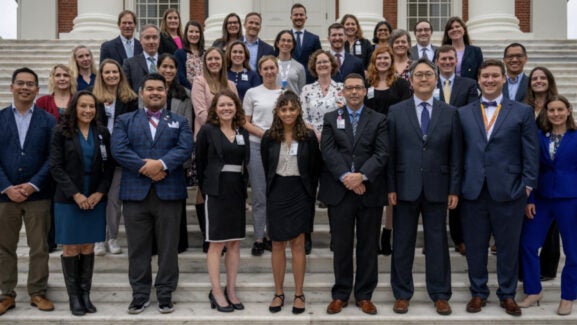
UVA School of Medicine’s research program continues to gain national momentum, climbing three spots to No. 36 in the country for National Institutes of Health (NIH) funding, according to a new report from the Blue Ridge Institute for Medical Research. With more than $203 million in NIH awards in fiscal year 2025, the School of Medicine has steadily advanced in the rankings over the past several years.
This progress comes at a time of growing national concern about research slowdowns tied to federal challenges. Even amid that uncertainty, UVA’s research enterprise remains strong and is driven by discoveries that are advancing care for conditions such as Alzheimer’s disease and cancer and by major investments like the Paul and Diane Manning Institute of Biotechnology.
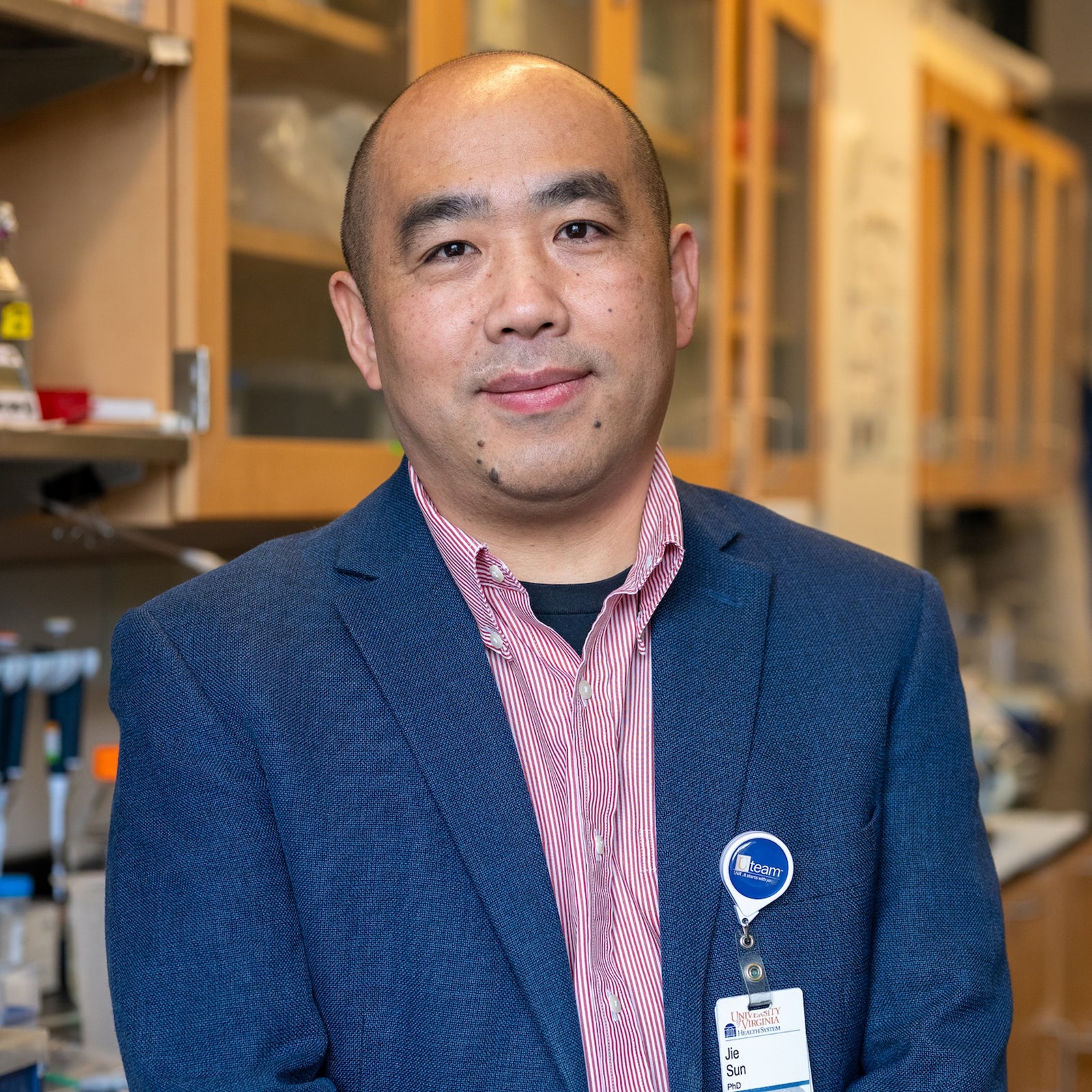
Who: A research team led by Jie Sun, PhD, of UVA School of Medicine, co-director of the Beirne B. Carter Center for Immunology Research and member of UVA’s Division of Infectious Diseases and International Health.
Focus: Understanding how severe respiratory infections, including COVID-19 and influenza, affect long-term lung health and cancer risk — and the role vaccination may play in preventing these outcomes.
Discovery: Sun and his UVA Comprehensive Cancer Center collaborators found that severe viral infections can “reprogram” immune cells in the lungs, creating a long-lasting inflammatory environment that facilitates tumor growth months or even years later. In both laboratory models and human patient data, individuals who experienced severe infections were more likely to develop lung cancer. Encouragingly, vaccination largely prevented these cancer-promoting changes.
Why it Matters: These findings suggest severe respiratory infections may represent a previously under-recognized risk factor for lung cancer, with important implications for patient monitoring and early detection. They also reinforce the broader protective benefits of vaccination.
The researchers have detailed their results in the scientific journal Cell.