
4.29.2026
‘Care in Action’: Derek Wilson Earns a 2026 Friend of Nursing Award
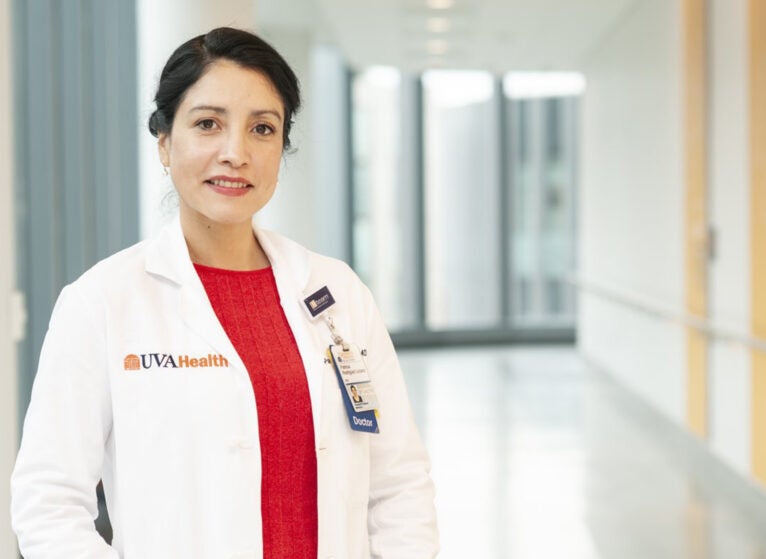
Patricia Rodriguez-Lozano, MD, MS, is on a mission to improve the standard of care for women’s heart disease.
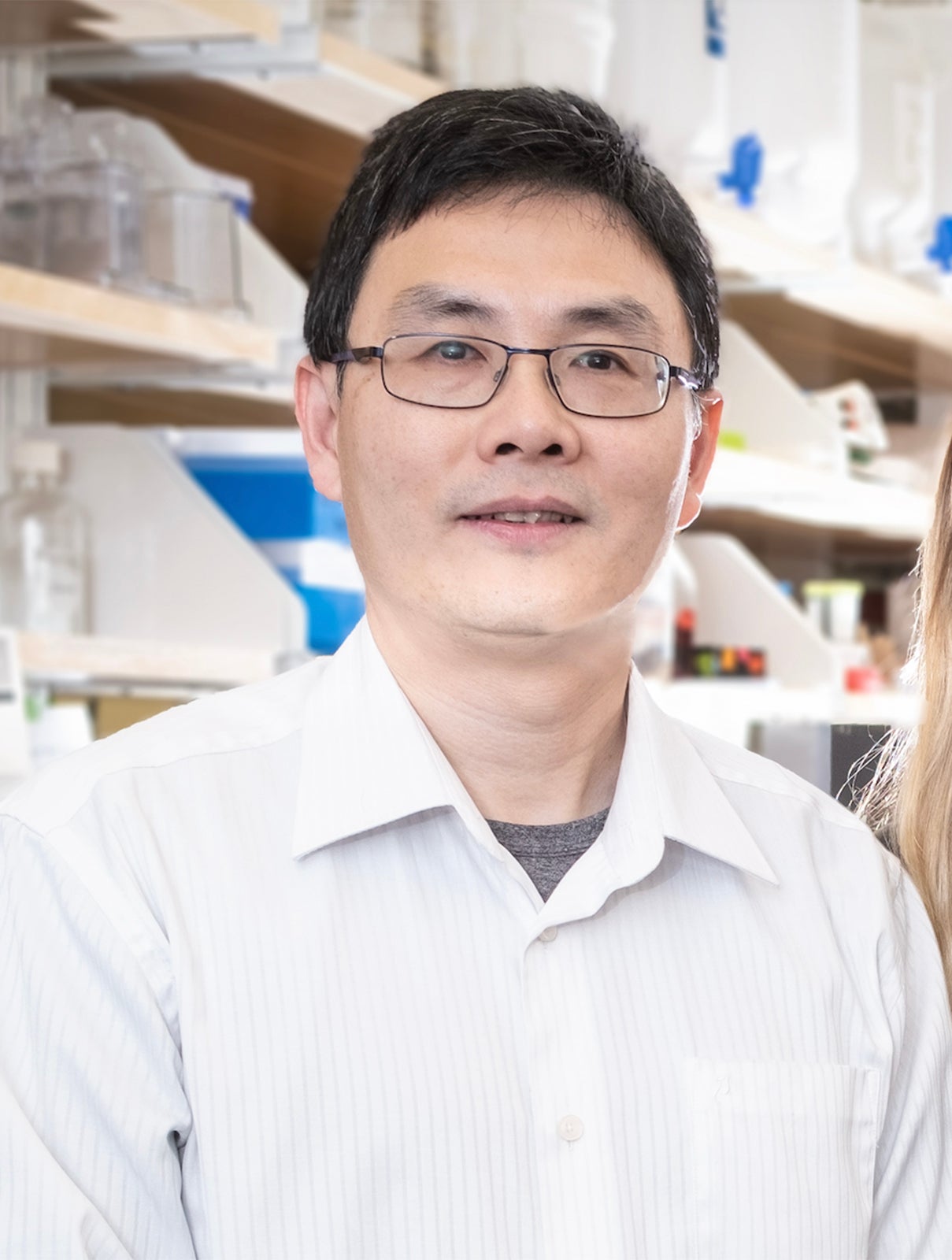
In 2020, a research team led by UVA School of Medicine scientist and professor of pathology Hui Li, PhD, discovered a gene responsible for glioblastoma — a rare and aggressive brain cancer that is usually fatal within a year of diagnosis. Identifying the disease’s Achilles’ heel was a significant step forward for medical science, and it almost didn’t happen. Li’s team was investigating a different disease when a serendipitous laboratory observation led the group down a new path. Today, he and his UVA colleagues, along with scientists worldwide, are leveraging this discovery to develop new treatments that could extend and save the lives of patients with glioblastoma.
The ability of medical school researchers to follow the science wherever it leads has become increasingly precarious. Recent changes and cuts to federal research funding, as well as other economic factors, have further destabilized the already volatile and highly competitive financial support system for curiosity-driven academic research — the kind that can lead to unexpected, groundbreaking discoveries like Li’s.
The rise in pressure is taking its toll. In March 2025, a Nature poll found that 75% of surveyed U.S. scientists were considering leaving the country, and many were exploring careers outside science. The futures and scientific potential of early-career medical school faculty are especially at risk in this environment.
To address this challenge and ensure that UVA School of Medicine can retain top talent and continue at the forefront of healthcare innovation and progress, the school has launched a new philanthropic initiative: the Fund for Early-Career Discovery. This new resource will offer financial support to the school’s emerging research pioneers and serve as a bridge to the next breakthrough.
Emerging faculty researchers and early-stage physician-investigators (typically, assistant professors) often have the freshest ideas and the motivation to define their careers with novel theories that yield new ways of understanding and treating diseases. Without the data and publications to prove their research acumen and preliminary hypotheses, however, they’re unlikely to secure the gold standard in medical research funding: a three- to five-year Research Project Grant (R01) from the National Institutes of Health (NIH).
Earning an R01 is a pivotal milestone in a medical researcher’s career. These prestigious, highly competitive grants, which can provide approximately $500,000 in direct costs per year, are often awarded to senior faculty with established track records, mature ideas, and preliminary data supporting a hypothesis. Because of their substantial size and length, R01s are critical drivers of healthcare progress and innovation. They support the feasibility studies and evidence-gathering required to translate an idea from the laboratory into human clinical trials and to obtain federal approval for new medicines, diagnostics, and treatment protocols.
By contrast, junior faculty typically rely on three types of short-term funding sources: (1) “career development” grants from state or federal agencies; (2) recruitment and start-up packages from their academic institutions; and (3) pilot funding from foundations, nonprofits, or philanthropists. Early-career basic scientists may use these funds to launch and initially staff their independent laboratories and begin testing hypotheses. Early-career clinical faculty may use the support to collect preliminary data for new clinical trials or conduct health outcomes assessments for new population health studies. While vital to building a research portfolio, these sources are not enough to sustain a research program or career. As a result, junior faculty are especially vulnerable to funding gaps and delays. In today’s environment, they even face cancellations.
Just ask Laura Newman, PhD, Assistant Professor of Cell Biology. She’d earned a highly competitive NIH postdoctoral career development grant, which came with five years of funding and helped Newman establish her independent laboratory at UVA. Then, in 2025, just 10 months into the grant period, the NIH canceled her award type. Newman had just published an exciting discovery in a highly competitive journal, Nature Metabolism. Her lab showed that mitochondria, tiny powerhouses in cells, can leak bits of their DNA, triggering inflammation. This discovery opened the door to new drug targets for diseases such as lupus and rheumatoid arthritis. Newman was keen to expand her initial discoveries to target inflammation associated with Alzheimer’s and other neurodegenerative diseases. Losing her NIH grant jeopardized those plans.
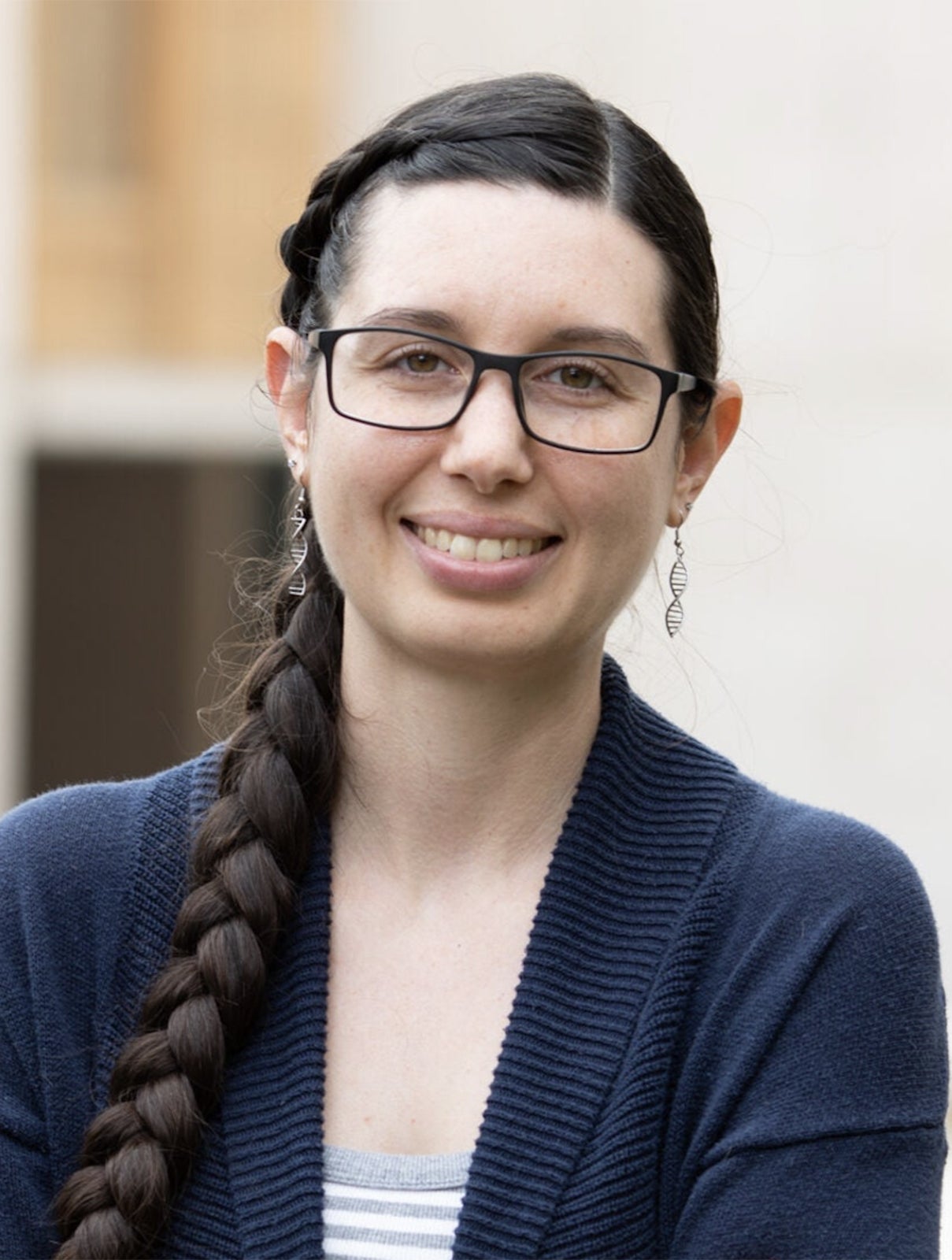
Fortunately, the original nature of Newman’s work drew the attention of a longtime UVA Health donor whose generosity has supported many early-stage research initiatives at UVA. Because of this donor’s three-year gift to Newman’s lab, she’s continuing to collect the data she needs to successfully compete for a more sustainable federal research grant in the near future.
“In addition, the funding enabled me to hire a postdoc with expertise in immunology, as well as a promising graduate student, and I would not have had the resources to bring them to my lab without this gift,” said Newman.
While basic scientists like Newman probe the fundamental mechanisms of biology and disease, physician-scientists typically investigate how insights from basic science can improve patient care. Their ability to take time away from clinical duties to secure research funding is a unique challenge. For many, the pull of increased job security and financial stability outside academia is too strong. UVA School of Medicine’s Senior Associate Dean for Research Jeffrey Martens, PhD, says that he and peers across the country are observing some unsettling trends.
“In the current climate, we’re seeing an uptick in physicians who are choosing to leave research and the academic path for private practice or positions in industry,” said Martens. “This has significant implications for the medical science pipeline going forward and our ability to develop cutting-edge new therapies and deliver them to patients,” he said.
The work of Assistant Professor of Ccardiology Patricia Rodriguez-Lozano, MD, MS, demonstrates why physician-scientists are critical for healthcare innovation. Dr. Rodriguez-Lozano is on a mission to improve the standard of care for women’s heart disease, which is relatively understudied and poorly understood. When she’s not seeing patients through UVA Health’s Women’s Heart Care Program, which she directs, Dr. Rodriguez-Lozano is researching more effective diagnostics and treatments for patients who don’t “fit the typical mold.”

“Many of the women we care for were previously told ‘everything looks fine,’ but we’re proving that their symptoms have a physiologic and treatable basis,” said Dr. Rodriguez-Lozano.
For example, women with coronary microvascular dysfunction (CMD) are often dismissed because their angiograms show “normal” arteries, despite disabling chest pain, she said.
“Thanks to early-career funding, I’ve been able to design and lead a clinical trial specifically for women with CMD and ANOCA (Angina with No Obstructive Coronary Arteries),” said Dr. Rodriguez-Lozano, whose research integrates advanced imaging with vascular and physiologic testing. Her goal is to improve women’s cardiac care by making it more precise, evidence-based, and patient-centered.
“Early funding is absolutely critical — it’s what gives life to an idea before it’s proven. For physician-scientists like me, who straddle both the clinic and the research lab, that first grant is often the bridge that lets us ask the bold, patient-centered questions that large federal mechanisms might not yet support.”
The Fund for Early-Career Discovery will be unique in its flexibility, providing UVA Health leaders with a centralized resource for quickly responding to the greatest needs and opportunities of junior faculty across disciplines and disease areas. Eligible beneficiaries will include assistant professors (tenure-track or equivalent) with a demonstrated commitment to a research-focused career.
“This fund will help us retain talent and maintain the momentum of early-career researchers who have a pioneering scientific vision, a high potential for meaningful patient impact, and a foreseeable pathway to longer-term external funding and sustainability,” said Martens, who added: “Donors to the fund will help UVA Health remain a place where life-changing research flourishes and healthcare innovation thrives.”
UVA Health has set a $5 million fundraising goal for the initiative. “We hope to begin awarding support to early-career investigators as soon as fiscal year 2027 — once sufficient funds have been secured,” said Martens.