8.20.2026
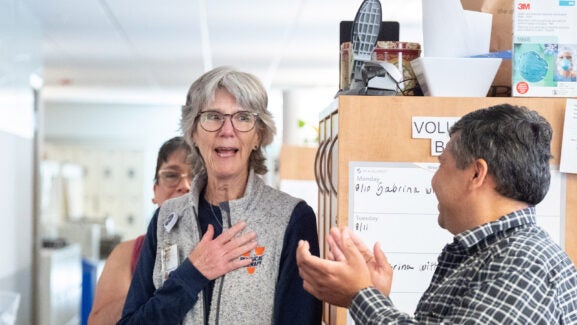
Physical Therapist Caps a Dozen Years of Service to UVA Health Patients and Team Members With a BEE Award
A powerful new research tool from a UVA School of Medicine scientist and colleagues is set to advance our understanding of how genetics and environment contribute to autism risk.
UVA’s Ziqiao Wang, PhD, and collaborators at Johns Hopkins have assembled a “statistical framework” called PGS-TRI that can untangle the complex web of genetic and environmental factors that contribute to childhood conditions. By analyzing "case-parent trios" — data from a child and both parents — this tool provides a more precise look at how "nature" and "nurture" interact within families.
“Traditionally, genetic studies focus on the ‘direct effects’ of genes passed from parent to child. However, a child’s health is also shaped by ‘indirect effects’— how a parent’s own genetic makeup influences the environment they provide for their child,” says Wang, an Assistant Professor who recently joined UVA Department of Genome Sciences. “PGS-TRI analyzes families, both parents and children, to figure out which health effects come directly from your genes versus which come from the environment your parents created.”
Understanding Autism Spectrum Disorders
Large-scale genetic studies have led to the development of genetic risk scores that estimate a person's predisposition to diseases and health conditions based on their DNA profiles. The new framework allows researchers and clinicians to analyze these scores using family data and to characterize the risk of conditions such as autism and other developmental conditions in children based on family DNA and environmental influences such as maternal diet and lifestyle factors.
For their study, the researchers analyzed more than 18,000 case-parent trios — autistic children and their parents — across diverse ancestral populations in the Simons Foundation Powering Autism Research for Knowledge (SPARK) consortium and the Genes and Environment Autism Research Study (GEARS).
PGS-TRI will help scientists better understand the role of genes and distinguish their effects from the results of those other, outside factors. Initial tests of the tool have already offered reassuring evidence that “polygenic scores” used to calculate autism risk are generally accurate. But these scores were more accurate for families from the Americas, Europe, and South Asia than for families of African or East Asian ancestry. This difference likely reflects the groups used to build the scores, the PGS-TRI developers say. The results highlight the need to include people of diverse backgrounds in genetic research, to ensure the findings benefit all patients, they note.
Another finding is that maternal genetic susceptibility for certain traits, including obesity and certain neurocognitive characteristics, may increase the risk of autism in children.
In addition to vouching for the validity of prior research, PGS-TRI is already producing promising leads for future work. The researchers used the tool to identify the CADM2 gene as a promising target for developing ways to prevent autism.
“We hope PGS-TRI will empower researchers to look beyond just the DNA a child inherits and start understanding the broader family environment that shapes their health, leading to more personalized and effective ways to support children with complex conditions like autism,” Wang explains. “This tool gives us opportunities to study the potential causal relationships of parents’ phenotype and their child’s disease risks and better understand how nature and nurture work together to influence a child's health.”
Findings Published
Wang helped assemble the tool while completing her postdoctoral training at Johns Hopkins; the project was overseen by Nilanjan Chatterjee, PhD, of Hopkins Department of Biostatistics, Bloomberg School of Public Health and School of Medicine. The scientists have described their new tool in the scientific journal Nature Genetics.
The tool is available at https://ziqiaow.github.io/PGS.TRI/ or at Zenodo, https://zenodo.org/records/19339894.
The research team consisted of Wang, Luke Grosvenor, Debashree Ray, Tianyuan Cheng, Ingo Ruczinski, Terri H. Beaty, Heather Volk, Christine Ladd-Acosta, and Chatterjee. The scientists have no financial interest in the work.
The research was supported by the National Institutes of Health, grants R00HG013674, R01HG010480, U01CA249866, R01ES034554, R35GM150836, and R01DE031855.
To keep up with the latest medical research news from UVA’ School of Medicine and UVA Paul and Diane Manning Institute of Biotechnology, bookmark the Making of Medicine blog.


What an incredible tool! Indirect effects may provide much-needed context. I am excited to see the results when testing is applied to a more diverse background of families. Dr. Wang’s vision of integrating factors such as family environment into actionable solutions and support for these children and their families is strikingly compassionate and human. I believe a lot of good will come from this research team’s hard work.