8.28.2026video
UVA Health Update | Aug. 28, 2026
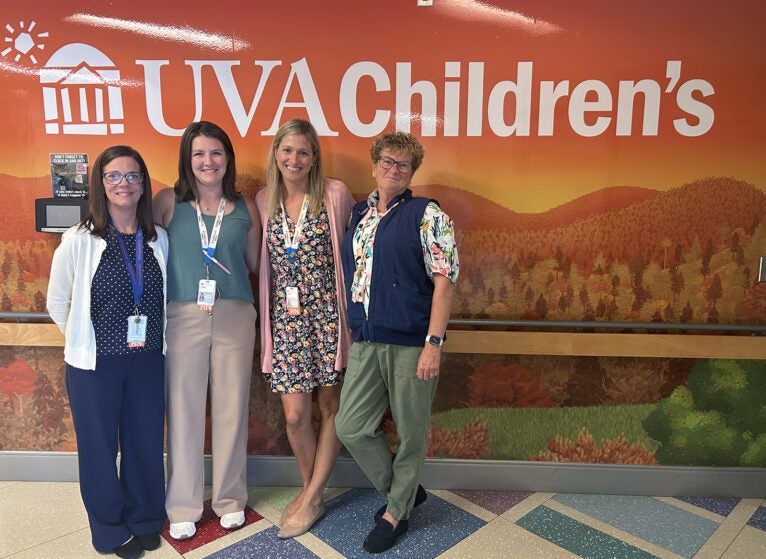
University Medical Center PICU’s Anita Robertson, RN; Shelby Lighton, BSN, RN, CCRN, CPN; Laura Cromwell, MSN, RN, CNL, CPN; and Mia Campbell, RN.
When UVA Health University Medical Center began preparing to implement the Tiered Skills Acquisition Model (TSAM®), Pediatric Intensive Care Unit (PICU) leaders saw an opportunity to rethink nurse orientation in their high-acuity, fast-paced environment. Early this year, PICU began piloting TSAM, an evidence-based model that takes a competency-based approach to orientation.
“We knew we wanted to change and look at orientation differently,” shares Laura Cromwell, MSN, RN, CNL, CPN, Nurse Manager. PICU. “This was the right time to do it.”
Meeting Nurses Where They Are
PICU regularly welcomes new graduate nurses and nurses with experience in other specialties. “In the past, orientation was based on a set number of months, and then you were off orientation,” explains Anita Robertson, RN, CCRN, Assistant Nurse Manager, PICU. “With TSAM, orientation is based on objectives and skills. The process is more clearly defined, but it's also tailored to each individual and what they need.”
“With TSAM, I tell nurses, ‘I have no time-frame expectations,’” says Shelby Lighton, BSN, RN, CCRN, CPN, Nursing Professional Development Practitioner, PICU. “The model starts with basic foundational skills and builds toward more advanced critical thinking. I can help you get there and meet you where you are.”
The pilot showed why flexibility matters. “We found our new graduate nurses were often able to finish orientation sooner and seemed to come off orientation more prepared,” adds Lighton. “We also found many of our experienced nurses needed more time than we used to give them.”
One nurse with more than 20 years of PICU experience completed her unit-based orientation in three weeks. Under the previous model, she would have received 10 weeks of orientation. “She was able to step in and show us what she already knew,” says Lighton. “Then we could focus on UVA Health policies and procedures rather than teaching her how to be a nurse.”
'Whole New Approach'
To prepare for the pilot, Lighton worked closely with Cromwell, Assistant Nurse Managers Robertson, Mia Campbell, RN, and other PICU leaders. Using TSAM resources from Mayo Clinic, Lighton developed training that introduced preceptors to the new approach. She also incorporated guidance on providing constructive feedback and using the appropriate escalation pathways.
“There was a lot of preparation and organization that went into introducing a whole new approach to orientation, especially when we were bringing in 25 new Clin 1 nurses,” explains Cromwell. “Shelby was the heart of that work. She brought all the pieces together, so the process worked seamlessly!”
Gaining Confidence
Nursing Professional Development Services (NPDS) also supported the pilot through biweekly check-ins with Kathleen Rea, DNP, APRN, ACNS-BC, PCCN, CNL, APP-Clinical Nurse Specialist; and Nurse Residency Program Coordinators Jennifer C. Kastello, PhD, WHNP, RN, and Briana Jacobs, MSN, RN, CNL.
“Kathleen, Jen, and Briana helped me talk through ideas,” Lighton says. “We discussed what was working and what we might try differently.”
Robertson learned about TSAM alongside many of the nurses and preceptors she supported. “I love it! We were all excited to serve as a pilot and figure out what this could look like for our team members. It's been very rewarding to watch our newer nurses grow through the program and gain confidence.”
Learning and Feedback
Protected resource time gave nurses dedicated opportunities to complete online learning and participate in simulations away from the unit. Nurses also learned how to find policies and other clinical resources they could use after orientation.
“We prioritized resource time and worked it into their schedules,” Lighton explains. “Instead of just clicking through content, they absorbed it. Six months later, they may remember reading something and know where to find the policy.”
The leadership team paired that learning time with regular check-ins. Preceptors and orientees discussed progress toward orientee goals, while leaders helped preceptors shift from evaluating time spent in orientation to evaluating demonstrated skills.
“We help preceptors recognize when nurses are meeting the objectives and make sure orientees feel prepared to practice independently,” Robertson says. “It is about looking at what each nurse can demonstrate, rather than how much time they spent in orientation.”
The check-ins also helped the team identify concerns sooner. “We could offer support instead of hearing six weeks later that someone had been struggling with something we could've addressed earlier,” shares Cromwell.
What's Ahead?
Now that TSAM has launched for Clin 1 through Clin 4 nurses across University Medical Center, PICU is beginning its second round of orientation under the model. The team is applying feedback from the pilot through more frequent check-ins and consistent questions that help preceptors and orientees align their goals. “We all recognize change is hard, and we don’t expect it to sink in right away,” says Lighton. “We’re still learning and growing through the process. It’s a group effort!”