8.31.2026
TSAM® in the PICU: More Individualized Approach to Nurse Orientation at UVA Health University Medical Center

This monthly community newsletter from Dr. Mitchell Rosner, interim Executive Vice President for Health Affairs, highlights how UVA Health serves our patients and the community. To stay up to date on operations, clinical services, and research efforts featured in UVA Health Community Update, subscribe.

Dear Friends of UVA Health,
In this month’s update, I’m pleased to share a Q&A with University Medical Center's new CEO Tammy Snyder, a celebration of our newest class of medical students, and an interesting highlight regarding ongoing autism risk research.
There is much to celebrate across UVA Health as we begin a new academic year. Thank you for staying connected with us and for taking the time to learn more about our work.
Mitchell H. Rosner, MD, MACP, FRCP
Chief Executive Officer, UVA Health
Executive Vice President for Health Affairs, UVA
Henry B. Mulholland Professor of Medicine

In this edition’s Q&A, I am excited to introduce the community to Tammy Snyder, MPH, who joined UVA Health as CEO of University Medical Center this summer. She brings more than two decades of healthcare leadership experience, including at Johns Hopkins Medicine, New York-Presbyterian/Weill Cornell, and Rochester Regional Health. Her expertise spans hospital operations, quality and safety, patient experience, and access to care.
Q1: You’ve had a little time to settle in at UVA Health. What are your impressions in your first few weeks?
I’m struck by the expertise and dedication across the team — and by the pride people have in UVA Health! On my first day, I attended an appreciation dinner for team members with 25 or more years of service. It was amazing to feel the enthusiasm in the room!
I’ve also been impressed by the appetite for collaboration and improvement. Our teams are eager to work together, solve problems, and identify ways to serve our patients and one another. A primary focus will be equipping our frontline teams with the tools, training, and support they need — including Lean principles and improvement methodologies — to turn that energy into meaningful, sustainable change.
Finally, my experience has reinforced the importance of being present, asking questions, and hearing directly from the people closest to our patients and operations.
Q2: What do you want patients and families to experience when they come to University Medical Center?
Excellent, safe, compassionate care is the foundation. Navigating a large academic medical center can be complicated, and I want our patients to feel that their time is respected, communication is clear, and care is well-coordinated.
Looking ahead, I want us to continue to act on opportunities to make the experience easier for our patients and their families, from scheduling and arrival through hospitalization when needed, clinical care, and discharge.
Q3: What attracted you to UVA Health and this role?
I was first attracted by the opportunity to lead a nationally recognized academic medical center with a strong clinical, research, and education mission. The opportunity to help patients from throughout Virginia was compelling.
In the interview process, I met talented individuals who care deeply about each other, their patients, and the mission. Their sense of purpose and commitment made me feel immediately connected to UVA Health and confirmed that this role would be a great fit.
Q4: UVA Health has grown significantly in recent years, and demand for care continues to increase. How can UVA Health improve access while maintaining the quality patients expect?
Growth is positive; however, it carries the responsibility to maintain accessible care with quality and safety. Access includes clinic appointments and the number of available inpatient beds, but it’s also patient flow, staffing, technology, outpatient options, virtual care, and using existing capacity wisely.
Our Integrated Space Planning initiative is expanding and maximizing our available space. To serve our patients, we will continue finding ways to expand care closer to people’s homes, while preserving access to specialized care at University Medical Center.
Q5: What are some of the biggest opportunities you see for University Medical Center over the next several years?
University Medical Center has an opportunity to build on its role as the Commonwealth’s premier academic medical center — strengthening quality, safety, and the patient experience while supporting the exceptional people who provide that care. I’m also excited about our ability to connect patient care more closely with the research and innovation happening across UVA Health, bringing new treatments and discoveries to patients and continuing to advance the highly specialized care we provide.
Q6: Finally, what would you like people to know about you outside of your role as CEO?
Outside work, I enjoy spending time with my husband Dave and English Bulldog Oliver. We love the outdoors, especially golfing during the warmer months and skiing in the winter. We have enjoyed checking out the culinary scene in Charlottesville and local wineries.
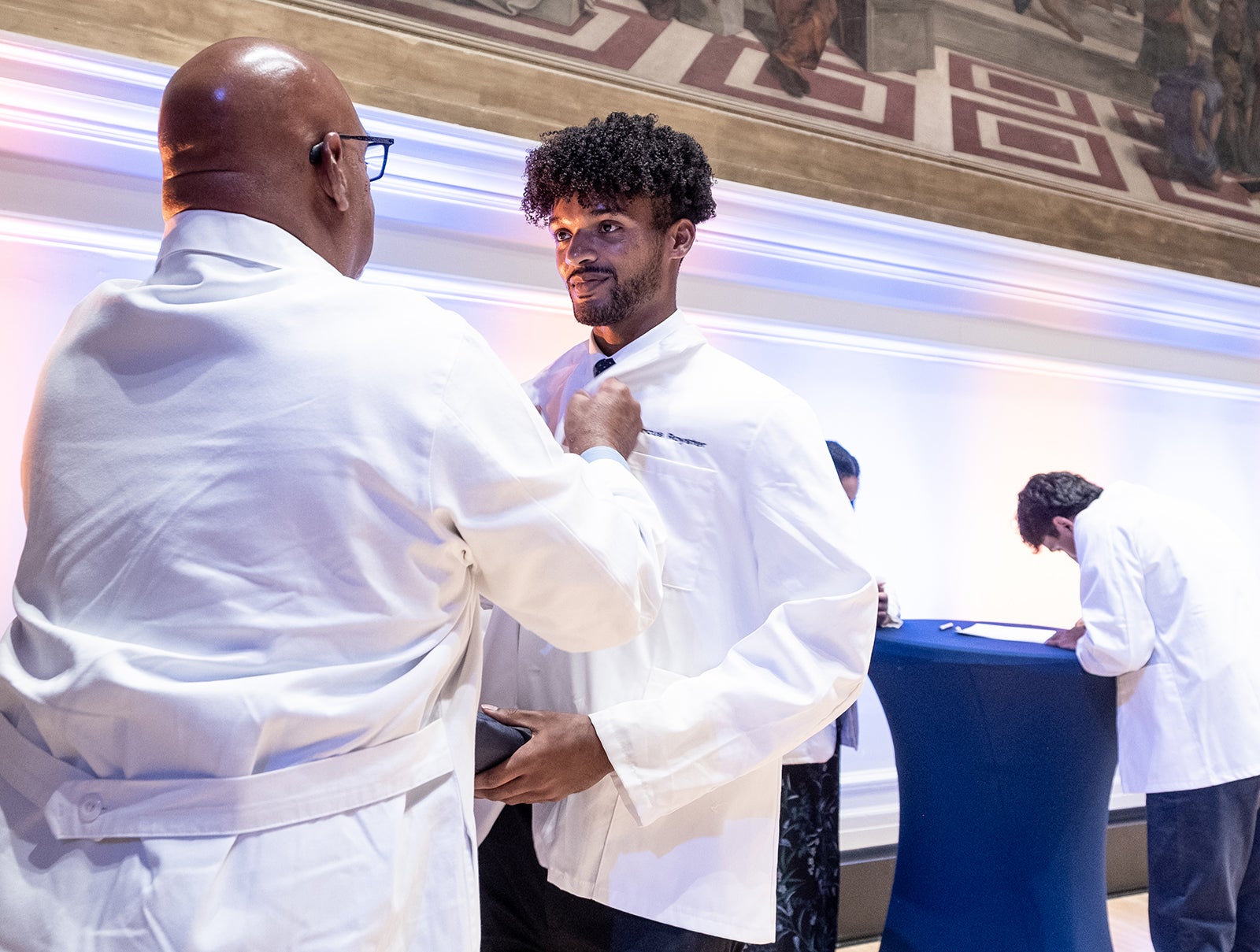
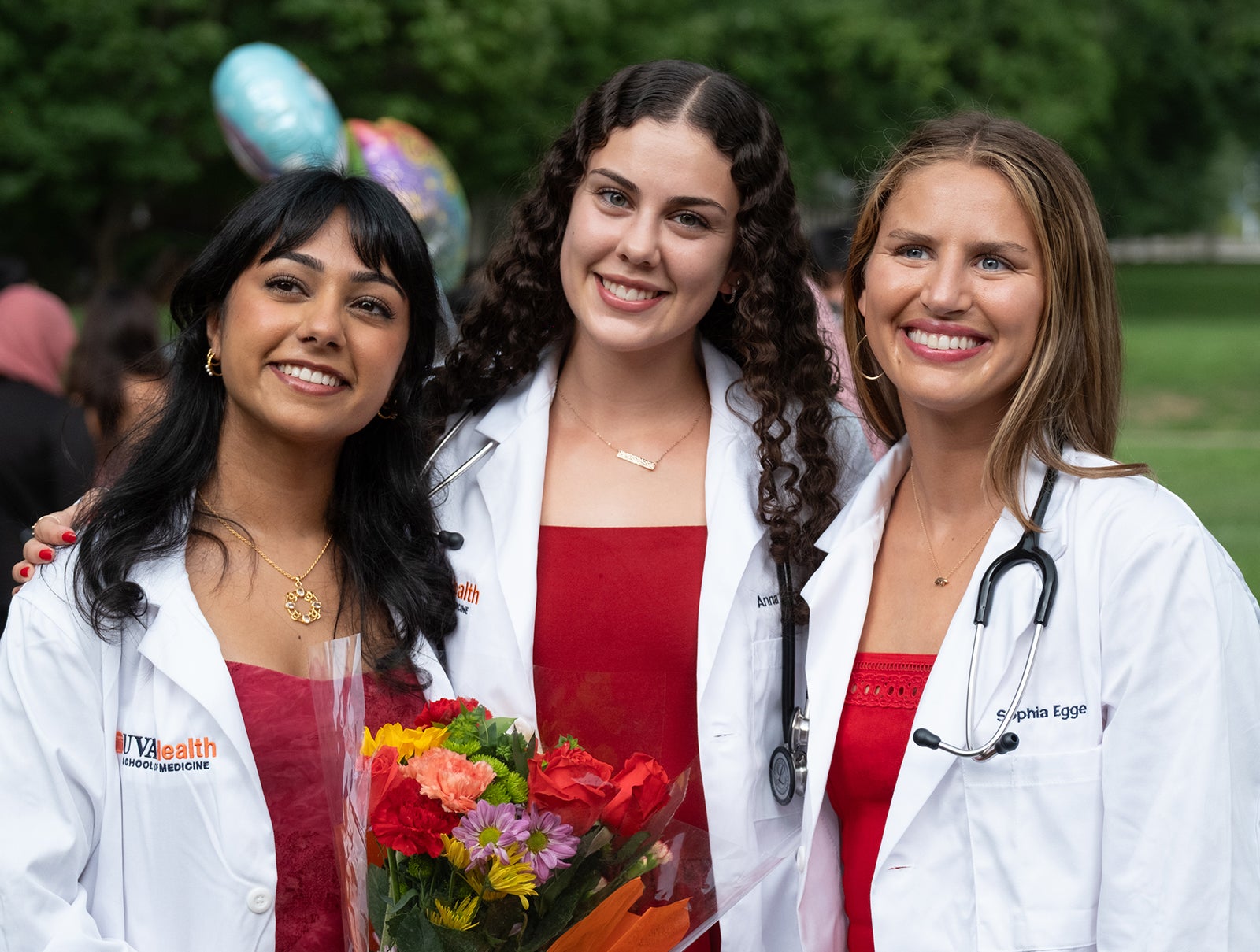
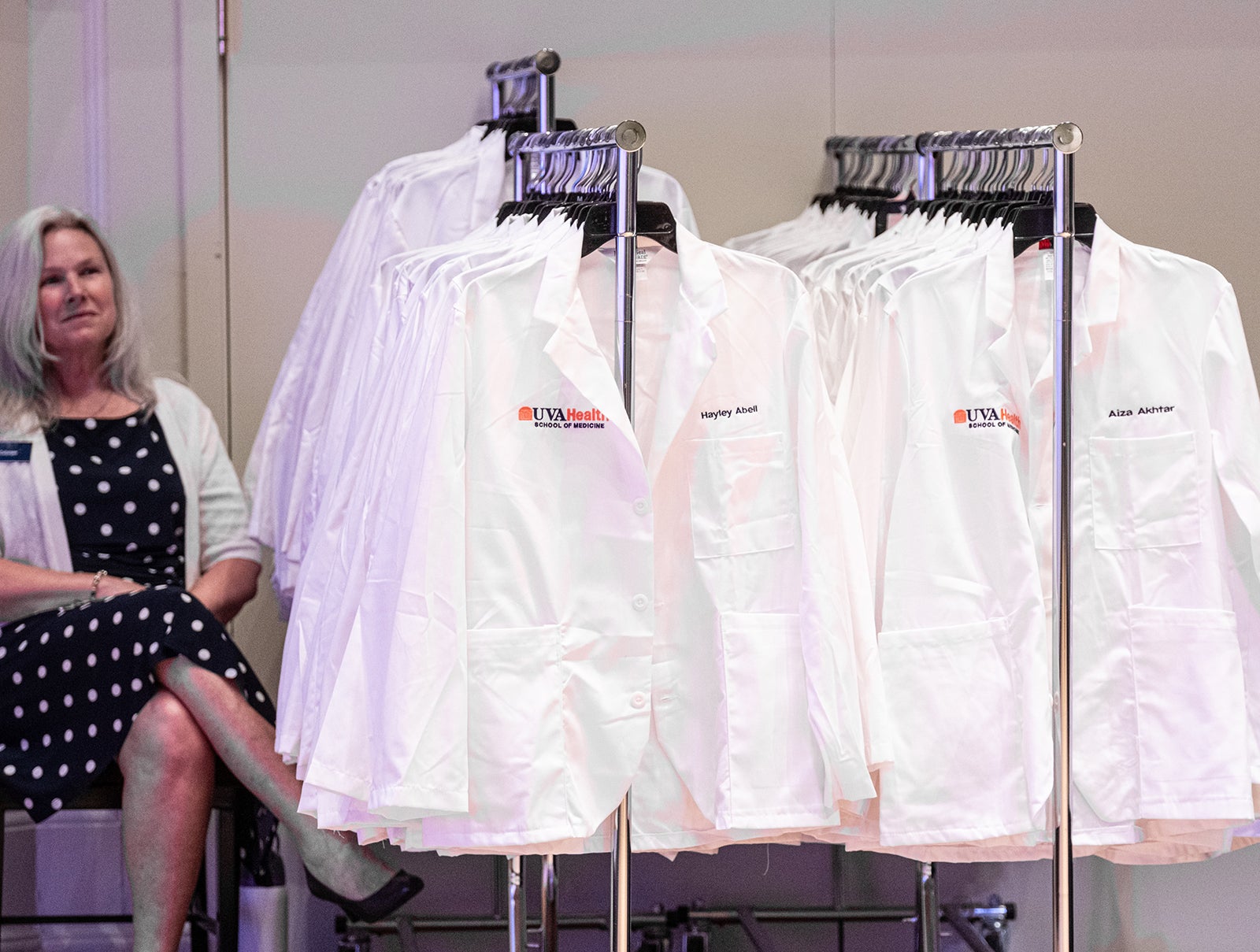
The UVA School of Medicine welcomed 155 new medical students during its annual White Coat Ceremony on Aug. 14, marking the beginning of their journey to become physicians. Surrounded by family and friends in Old Cabell Hall, members of the Class of 2030 received personalized white coats and medical toolkits and recited a covenant affirming their commitment to the profession.
This year’s School of Medicine students were selected from more than 7,200 applicants and represent 27 states and the District of Columbia, with 54% of the class coming from Virginia. For students, their families, and our faculty, the White Coat Ceremony marks an exciting beginning — and for the UVA community, it is a cherished tradition that welcomes a new generation of future physicians to the profession.
UVA Health has been recognized by Forbes as the No. 1 health system employer for women in Virginia and No. 4 among all Virginia employers. Nationally, UVA Health ranked No. 20 among health systems on Forbes’ 2026 list of America’s Best Employers for Women. Forbes parters with Statista, a market research firm, in gathering survey data from 146,000 women working for companies that employ at least 1,000 people in the U.S. Survey participants are asked about career development, pay equity, work-life balance, parental leave, and the representation of women in leadership.
We want UVA Health to be a place where talented and dedicated women can build meaningful, rewarding careers, and we are grateful to be recognized for our continued efforts toward this end.

Who: Ziqiao Wang, PhD, assistant professor in the UVA School of Medicine’s Department of Genome Sciences, working with researchers at Johns Hopkins University.
Focus: Wang and her collaborators developed a new statistical tool, called PGS-TRI, to help researchers better understand how genetics and environmental factors work together to affect a child’s autism risk. The tool analyzes genetic information from children and both of their parents to distinguish the effects of inherited genes from influences associated with the family environment.
Discovery: Using data from more than 18,000 autistic children and their parents, researchers demonstrated that PGS-TRI can provide a more detailed picture of “nature” vs. “nurture” in determining autism risk. Their findings also underscore the importance of including people from diverse backgrounds in genetic research so that genetic risk assessments become more accurate and useful across populations.
Why It Matters: Complex conditions such as autism can be influenced by many genetic and environmental factors, making it difficult for researchers to understand how each contributes to risk. PGS-TRI gives scientists a new way to study those relationships and identify promising areas for further research. Ultimately, a better understanding of how genetics and environment interact could help researchers develop more personalized and effective ways to support children with autism and other developmental conditions.
The scientists described their new tool in the scientific journal Nature Genetics.