7.21.2026
Need to Know | University Medical Center

A UVA Health emergency medicine doctor and a colleague at Clemson University have developed a framework to help hospitals integrate artificial intelligence to not just increase efficiency and cut costs, but ensure high-quality patient care remains the top priority.
With the massive potential of artificial intelligence to transform healthcare in the coming years, UVA Health’s R. Andrew Taylor, MD, MHS, and Clemson’s Arwen B.L. Declan, MD, PhD, created the new framework to ensure healthcare remains “rooted in its ethical obligations” to serve patients, communities, and local workforces, they say in a new paper outlining their creation. Their Total Mission Value framework arrives as hospitals face mounting pressure to adopt AI quickly, often with little practical guidance on how to weigh a tool’s worth beyond its price.

The framework of Drs. Taylor and Declan puts patient care and the patient experience at the top of a pyramid built on a foundation of ethics and supported by a base of economic sustainability. It emphasizes that AI should support care providers in their mission rather than replace them or simply create more work for them.
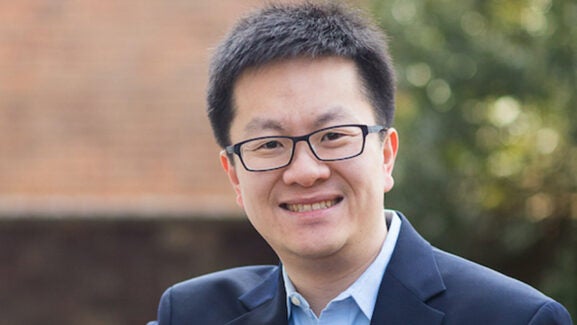
“AI is being adopted in medicine at a scope and velocity we have never seen before, but hospitals haven’t had a good way to weigh these decisions as a whole,” says Dr. Taylor (right), Vice Chair of Research and Innovation, UVA School of Medicine Department of Emergency Medicine. “Typical approaches tend to measure cost, because cost is the easiest thing to measure. We built this framework to give organizations a structured way to also weigh what an AI tool does for patients, for staff, and for the quality of care.”
Future of AI in Healthcare
Drs. Taylor and Declan are candid that AI’s promise cuts both ways. “AI tools could enhance care speed, diagnostic accuracy and costs efficiency while supporting population health, scientific inquiry and operational management,” they note in their paper. “However, they also introduce risks of bias, opacity, workforce displacement, and erosion of the patient-clinician relationship that are invisible to cost-focused analyses.”
They add that hospitals have lacked a structured way to weigh these choices as a whole — the standard approaches for evaluating a new technology tend to center on cost. Their framework is built to fill that gap, integrating five “ethically grounded” priorities: patient care, staff experience, hospital operations, economic impact, and education and research.
Patient care, which the authors place at the top of the framework, emphasizes the importance of “patient-centered” care and traits such as integrity, honesty, trust, compassion, and respect. The staff-experience category, meanwhile, calls for hospitals to use AI to drive workforce development, teamwork, and collaboration across disciplines.
Dr. Declan emphasizes that realizing AI's full potential means resisting the urge to evaluate it narrowly. “Hospitals are seeing a huge number of new AI tools marketed to improve healthcare. The challenge is to figure out which ones actually will,” says the Clinical Assistant Professor in Clemson University's School of Health Research. “That requires weighing an AI tool’s impact across clinical, operational,and financial dimensions, while keeping patient care at the center of every decision.”
Ultimately, it is vital that hospitals remember patient care is their “central, defining mission,” Drs. Taylor and Declan write. “Our hope is that keeping the mission front and center actually speeds good AI adoption rather than slowing it down, because it builds the trust that patients and clinicians need,” Dr. Taylor says. “Technology should help us take better care of people. If we keep that as the goal, the efficiency and the savings tend to follow.”
Framework Published
Drs. Taylor and Declan unveiled their framework in the scientific Nature Partner Journal Digital Medicinernal. The article is open access and free to read.
Dr. Taylor notes he has received a grant from Beckman Coulter to support evaluation of a clinical decision-making algorithm called TriageGo and that he is an adviser for VeraHealth.
To keep up with the latest medical research news from UVA and the new UVA Paul and Diane Manning Institute of Biotechnology, bookmark Making of Medicine.