1.27.2026
Lung Transplant Program Performs Highest-Ever Number of Transplants
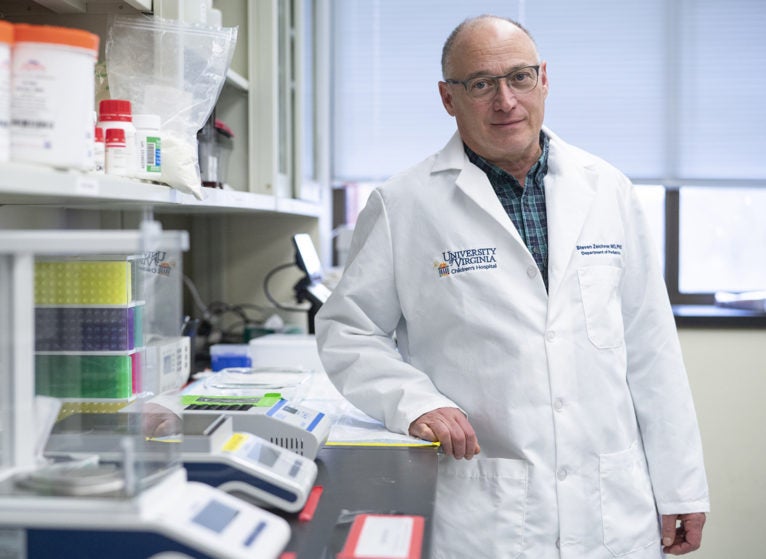
Steven L. Zeichner, MD, PhD
UVA Health scientists are reporting promising success as they pioneer a new way to create vaccines far more quickly, nimbly, and inexpensively than ever before.
UVA School of Medicine’s Steven L. Zeichner, MD, PhD, is optimizing a vaccine-development platform he has created to accelerate how quickly life-saving vaccines can be designed and deployed during infectious-disease outbreaks such as the COVID-19 pandemic.
Dr. Zeichner’s approach could be even speedier than mRNA vaccines, and those were already far faster than traditional approaches. His platform also could overcome limitations of mRNA vaccines, such as the need for cold storage. This could mean new vaccines could be delivered more easily in more places, even in remote areas where continuous cold storage is not possible. Further, the vaccines could be manufactured in existing facilities around the world at extremely low cost.
“The technologies that are currently available produce excellent, safe, and effective vaccines against many diseases. However, there would be many benefits if vaccines could be made much faster and less expensively and were easier to distribute. We are trying to develop a new way, or platform, that will let us rapidly produce vaccines against existing infectious diseases and new infectious diseases that threaten humans and animals,” says Dr. Zeichner, part of UVA Department of Pediatrics and Department of Microbiology, Immunology, and Cancer Biology.
He adds, “We hope that vaccines made using this new platform will be very easy and inexpensive to manufacture in existing factories around the world using very abundant and easy-to-obtain starting materials, and stable at ordinary refrigerator temperatures, so they are easy to distribute. We hope that the vaccines made using this platform will help prevent disease not only in people but also in animals, so that they can help farmers and consumers, and prevent diseases from spreading from animals to humans.”
Platform’s Proof-of-Concept
Dr. Zeichner has already built out his vaccine platform and is now putting it to the test. His latest work serves as proof-of-concept, demonstrating the platform effectively can produce vaccines that are highly “immunogenic,” meaning they prompt a strong immune response from the body.
Further, he and his team were able to use the platform to enhance the immunogenicity of a vaccine test target dramatically — in the best case, by approximately eight times compared with an initial test vaccine.
How it Works
The innovative approach first identifies a part of an infectious organism that could be a good candidate for a vaccine, then designs a vaccine based on that target, incorporating features that enhance and shape a person or animal’s immune response. After verifying the design has the desired features using AlphaFold AI protein structure prediction software, instructions are sent to a synthetic DNA company that synthesizes DNA to tell a bacteria how to make the vaccine.
The company puts this DNA into a small circular form, or “plasmid,” which is then put into special bacteria. The bacteria are grown and inactivated to make the vaccine. This process is much simpler than the processes used to make mRNA and many other vaccines.
Similar, but much more primitive, traditional killed whole cell bacteria vaccines have been made for more than 100 years, and are currently being made in factories around the world for both humans and animals.
Saving Lives, Saving Money
Because Dr. Zeichner’s vaccines would be so low cost — potentially far less than $1 per dose — they could be afforded even by countries with very limited resources. Further, the vaccines would be shelf stable and keep for a long time. Those attributes could help get life-saving vaccines to people in remote and developing areas far more quickly during a pandemic or infectious-disease outbreak.
“We know that in a pandemic it is very important for everyone to be able to get vaccines. First, because we want to protect everyone, but also, second, because we know that new disease variants that can be resistant to existing vaccines arise in unprotected populations where disease runs wild. Protecting everyone in the world is not just an altruistic goal, but also a self-interested one,” Dr. Zeichner says.
“Vaccines need to be safe and effective, but it is also important that we can make vaccines against new threats very quickly, so that we can respond to new pandemics,” he adds. “Goverments and others have stated that a new vaccine for a pandemic threat should be able to be made in 100 days, but we think that with our platform we can make a new vaccine for testing in 3 weeks."
Findings Published
The researchers have detailed their results in the scientific journal Vaccines; the article is also being featured as a cover story. The article is open access, meaning it is free to read.
The research team consisted of Juan Sebastian Quintero-Barbosa, Yufeng Song, Frances Mehl, Shubham Mathur, Lauren Livingston, Xiaoying Shen, David C. Montefiori, Joshua Tan, and Zeichner.
UVA Licensing & Ventures Group has filed patent applications related to the vaccine platform.
To keep up with the latest medical research news from UVA and UVA’s new Paul and Diane Manning Institute of Biotechnology, subscribe to the Making of Medicine blog.