10.9.2026
Upcoming School of Medicine Website Relaunch Marks Key Milestone in UVA Health Digital Evolution
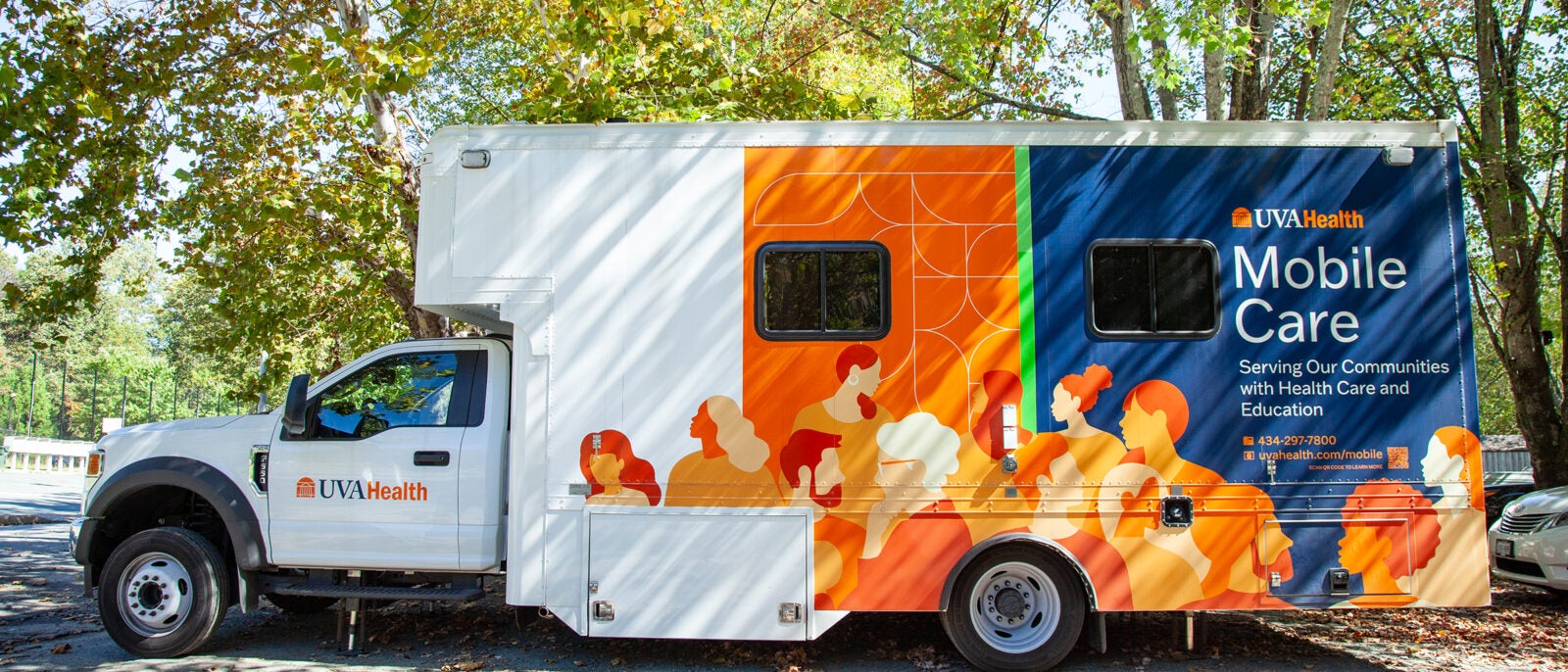
When it launched two years ago, the UVA Health Mobile Care Unit served two Charlottesville neighborhoods with four clinics per month. Today, this primary care clinic on wheels serves communities from Esmont to Greene with 11 clinics per month at five locations.
“The Mobile Care Unit has successfully demonstrated both the need for and the value of bringing high-quality care directly into our communities,” says Novella Thompson, MBA, MA, ALM-C, FACHE, Assistant Chief and System Hospital Administrator for Population Health, Post-Acute Care, and Continuum Home Health.
The goal from the start: to meet patients where they live, removing transportation barriers and expanding access to care. This was the shared vision among Primary Care, Community Engagement, Population Health, and physicians that gave rise to the Mobile Care Unit, but it was the Population Health team that put the initiative into motion. “Because Population Health specializes in delivering care beyond traditional healthcare walls, we answered the call to operationalize that vision,” says Thompson.
The Population Health team continues to steer the progression of the Mobile Care Unit, responding to the rising demand for accessible care to improve community health and reduce health disparities.
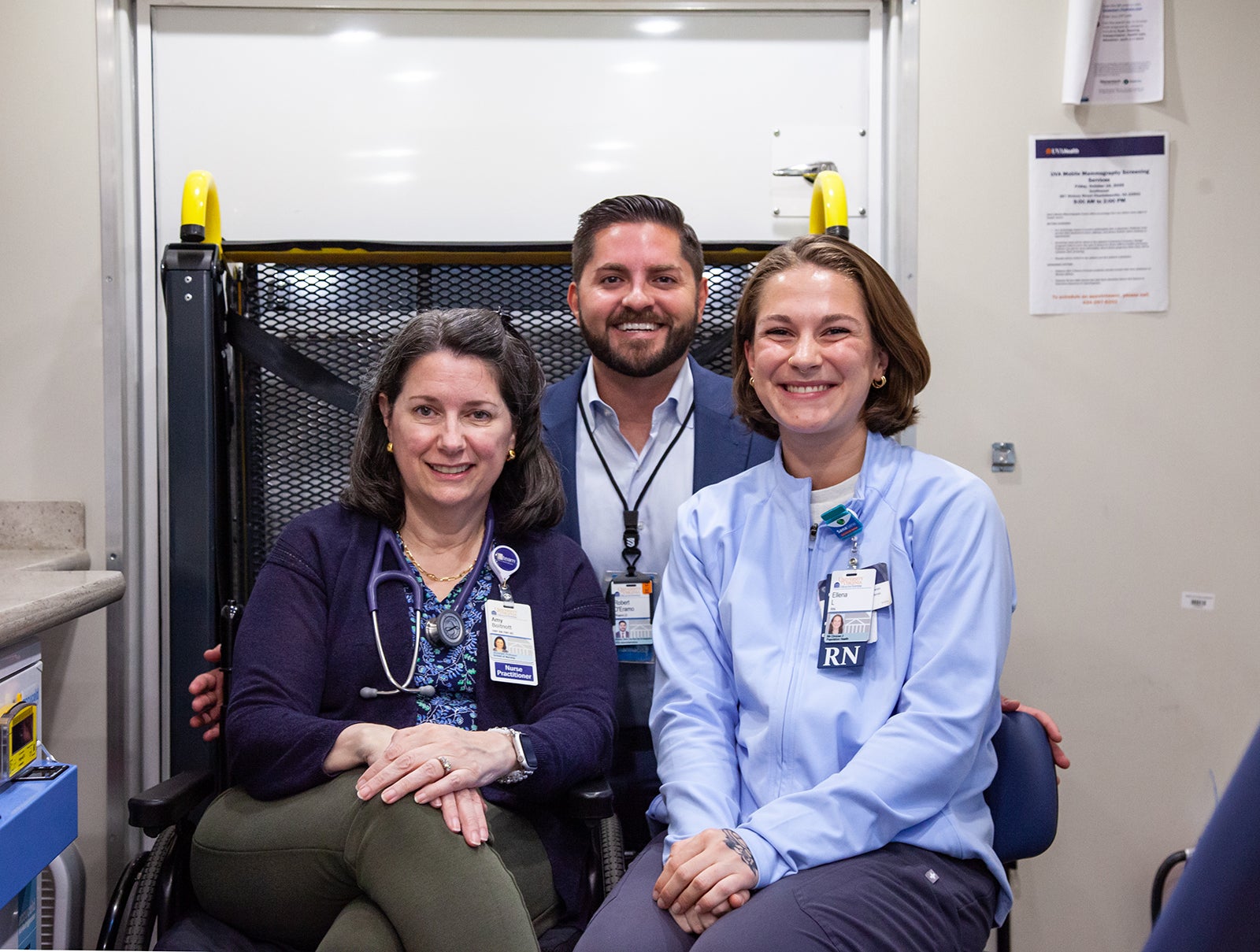
To learn more about this rolling healthcare hub, we spoke to Novella Thompson and other key members of this dedicated team, including:
What services does the Mobile Care Unit provide?
Thompson: The unit provides high-quality primary care and point-of-care testing for pediatric and adult patients, while also connecting them to primary and specialty care across UVA Health. Our model is designed to complement and extend primary care rather than simply replicate it. The Mobile Care Unit can serve as a patient’s primary care home, provide timely care when an established PCP is not immediately available, or serve as a bridge for patients waiting to establish with a UVA Health primary care provider. This flexibility allows us to meet patients where they are while keeping them connected to the broader UVA Health system.
Which locations are served by the Mobile Care Unit?
D’Eramo: We’ve increased our clinics to several different site partners based on need. These sites include: the Downtown Pedestrian Mall, Yancey Community Center in Esmont, the JABA Greene County Community Senior Center, Greenstone on 5th in Fifeville, and the Habitat for Humanity Southwood Community Center. These community partners help make sure that we have access to a building and internet if we need it during inclement weather, for example.
How many patients have you seen at the Mobile Care Unit so far?
D’Eramo: We’ve had more than 800 patient encounters since we launched in 2024. Patients can walk in or make an appointment through the scheduling pod just like they would for any other clinic visit.
How many people are involved in running the Mobile Care Unit at each location?
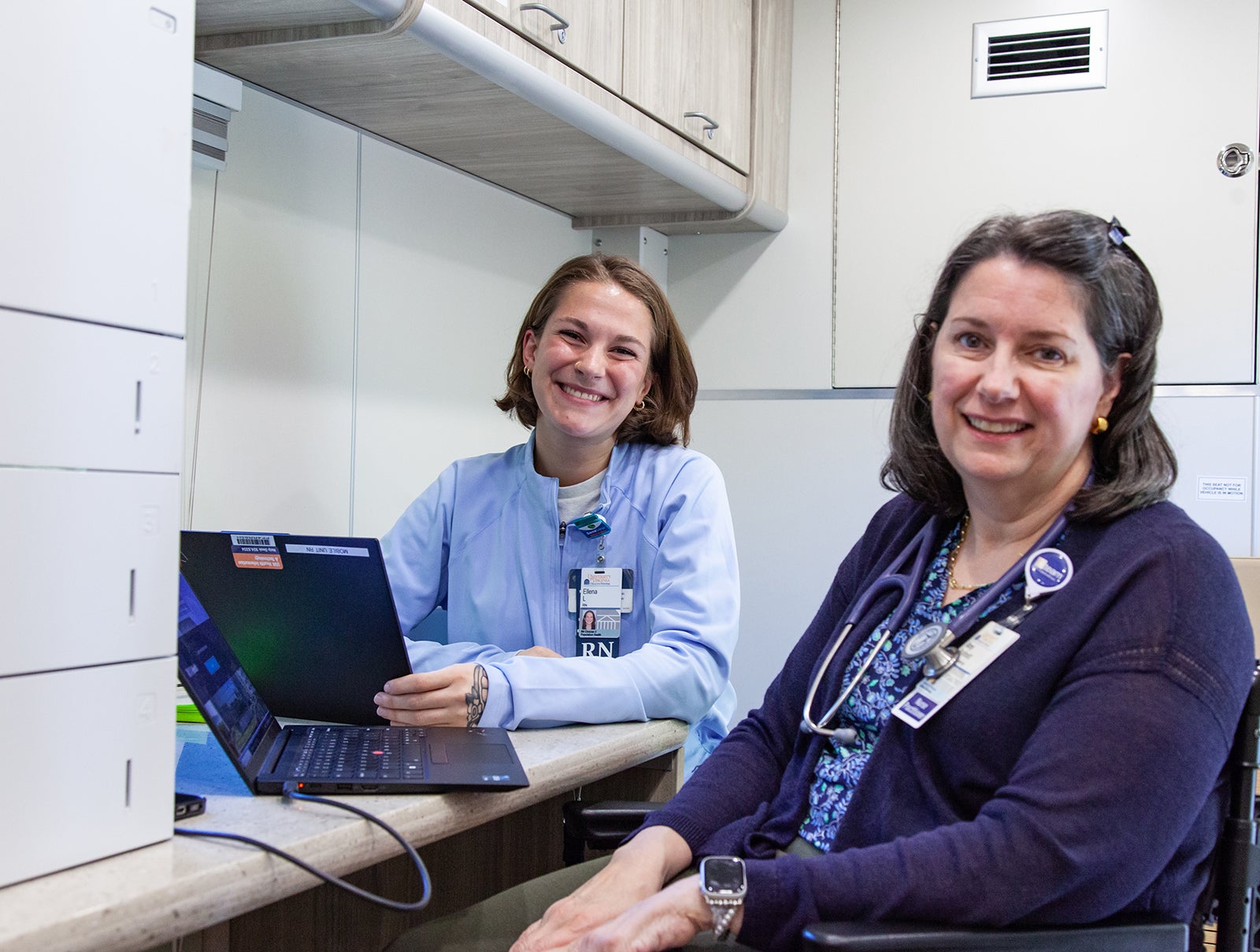
Whitlow: Our team is truly interdisciplinary. A typical Mobile Care Unit visit may include an advanced practice provider, an RN, an access associate, and two to three members of the community paramedicine team. We also work closely with an embedded librarian, interpreters/translators, financial assistance representatives, nursing/medical students, security and other health system and community resources.
Each person brings something different to the team. That collaboration allows us to address much more than the immediate clinical concern and consider other factors that may be affecting a patient's ability to access and navigate healthcare.
How would you describe this health clinic on wheels?
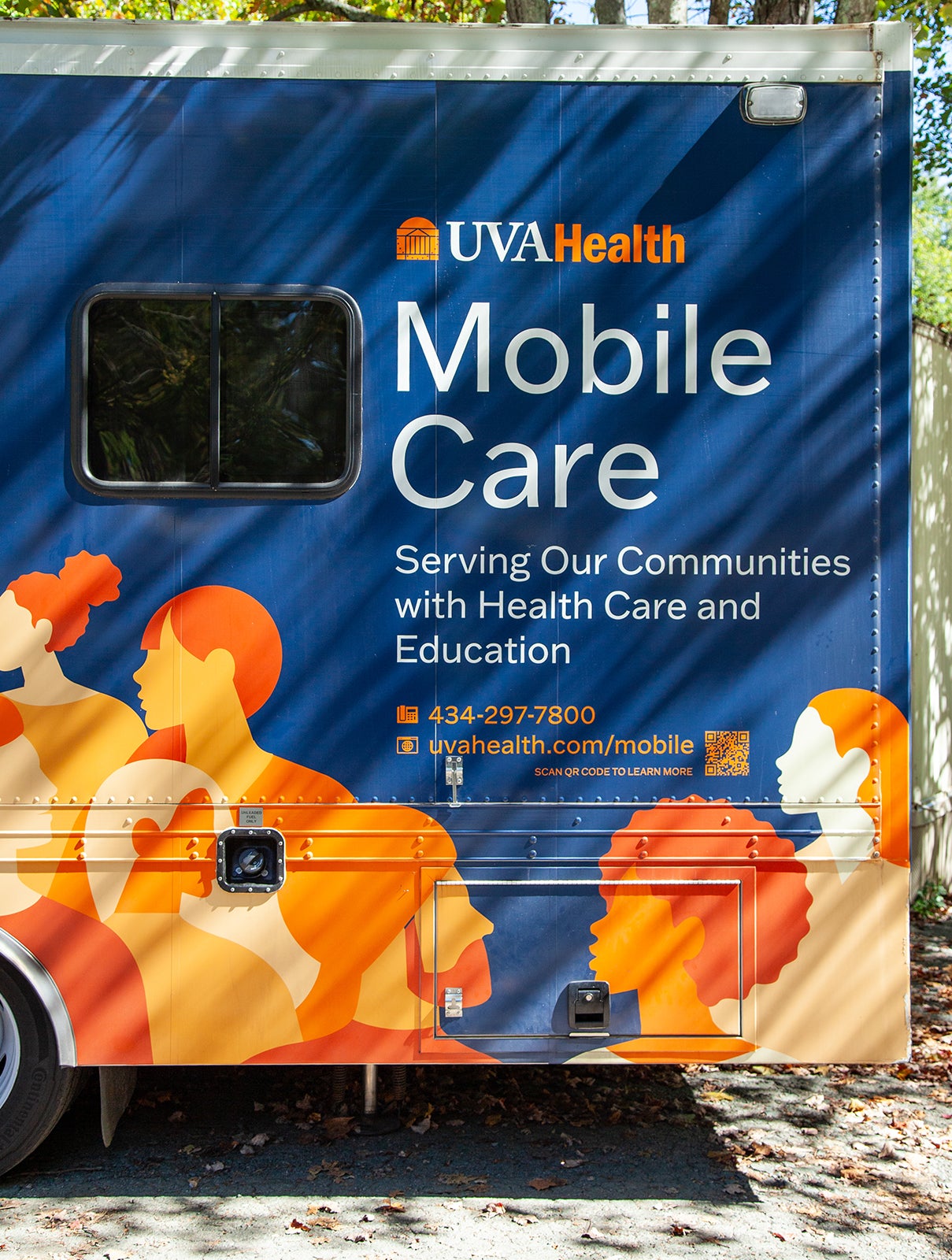
D’Eramo: It is a specialty vehicle with all the bells and whistles to make it function like a brick-and-mortar ambulatory clinic. There were probably around 100 different departments that played a role in its launch, from infectious disease to IT. We had to install internet so that the team could connect to the EHR just like they would at University Medical Center. There’s a registration area and a patient room, and we made sure there was a wheelchair lift on the back to make it fully accessible.
Are there any limitations of caring for patients in this environment? If so, how do you work as a team to overcome those limitations?
Whitlow: We do not have every diagnostic test, specialty service, or resource that would be available in a hospital or traditional clinic. However, that is where the strength of the team becomes so important. We recognize what we can safely manage on the Mobile Care Unit and when a patient needs a higher level of evaluation or specialty care. We then work together to identify the most appropriate next step. Having an interdisciplinary team allows us to address barriers that might otherwise prevent a patient from following through with care.
Describe a typical day for the Mobile Care Unit.
Whitlow: There really is no single "typical day," which is one of the things I enjoy about working on the Mobile Care Unit. We care for patients across all age groups and see a wide variety of health care needs.
A visit may involve evaluating an acute concern, completing a screening, discussing a chronic condition, providing education, reviewing medications, or helping someone determine where to go next within the healthcare system. At the same time, another member of our team may be helping that patient navigate financial assistance, locate reliable health information, arrange follow-up care, or overcome a language or access barrier. The goal is to look beyond the reason the patient initially stepped onto the unit and ask, "What does this person need to move forward with their health?"
How do you help facilitate follow-up care with a specialist or other provider when needed?
Boitnott: I place referrals in their Epic chart, and our RN follows up within a few days to make sure the referral was received and the patient can schedule the specialty appointment. I also send patients to UVA Health for same-day services, like X-rays, and get results back within hours. I'll often reach out to the specialist directly to share details before they see the patient. With many of our specialty groups, the referral process is seamless.
Whitlow: Connecting patients to resources is a huge part of our role. Providing an assessment or treatment is important, but the visit does not necessarily end when the patient walks off the Mobile Care Unit. We help patients understand what follow-up is needed and connect them with the appropriate resources within the health system or community. Our access associates and other team members are invaluable in helping patients navigate appointments, referrals, financial resources, and other barriers. We want the patient to leave not only knowing what they need to do next but also having a realistic pathway for how to do it.
How important are community partnerships to the success of the Mobile Care Unit?
Whitlow: Community partnerships are essential. The Mobile Care Unit cannot be successful by simply driving into a neighborhood and providing health care. The relationships and trust established with community members and organizations help us better understand the community’s self-identified needs and priorities.
Community members also teach us. They tell us what is happening in their neighborhoods, what barriers people are experiencing, and what resources may be needed. That ongoing dialogue helps make the Mobile Care Unit a community resource rather than simply a mobile clinic.
Boitnott: Without our community partners, we would not have the success we're experiencing. In our first and busiest community, we have an amazing partner who cares about our patients as much as we do. During our first year-and-a-half in Southwood, he sent a text to the community every day we were coming to remind them we'd be there. Communities like Southwood with active partnerships are more likely to thrive.
What have you learned from serving these communities that has changed or informed the way you provide care?
Boitnott: I have learned, especially in the Southwood community, that family is everything. The moms take care of everyone in their family first, and it has become my honor to care for these women, their husbands, their children, and their extended families. I've learned that truly good people still exist in our world; they are my patients. They are kind. They are grateful, and they fill my cup far more than I could have ever imagined.
After being an RN for 35 years and an NP for 26 years, I have truly found joy in nursing again. I don't speak the language of most of my patients, but the language of compassion is universal, and I've had many conversations grounded in kindness with the people I care for.
Whitlow: This experience has reinforced for me that good healthcare is about much more than making a diagnosis or writing a prescription. A treatment plan is only helpful if it is realistic and accessible to the patient.
Working in the community encourages you to listen differently. You become more aware of transportation, finances, language, health literacy, access to primary and specialty care, and other circumstances that influence someone's ability to follow a healthcare plan.
It has also reminded me of the importance of asking patients what matters to them and understanding their priorities before deciding what successful care should look like.
What are the advantages of providing care in the community setting?
Whitlow: Over time, simply being present and consistently returning to the community helps build trust. Patients become familiar with the Mobile Care Unit and the people who work on it. When someone steps onto the unit and feels comfortable talking with us, asking questions, or returning just to let us know how they are doing, that means a great deal. That trust is something we have to earn, and I consider it a privilege when community members view us as a resource.
Can you share a memorable patient experience that illustrates the difference this clinic can make?
Boitnott: I honestly don't think I can pick just one. Every patient I see leaves an unforgettable memory. There was the mom who walked in, just before closing, with her 10-year-old and three younger children in tow. Her 10-year-old was having an asthma exacerbation. Without our clinic, the only option would have been going to the ED — a trip that meant the bus, two transfers, and four children ages 10 and under, at 6 p.m. in the dead of winter. Instead, we gave her daughter the urgent care she needed right there and sent them home together. When the 10-year-old looked up at me and said, ‘I can breathe again,’ her mother's weary eyes finally brightened.
Then there was the 30-year-old soccer player who badly injured his knee in a game. Because of his insurance requirements, he needed a PCP to refer him to orthopedics, but he didn't have one, and the nearest opening came with a six-month wait. He lived in Manassas, which is two hours away. I referred him to UVA Health Orthopedic Center Ivy Road, who saw him the following week; he had surgery two weeks after that. Between surgery and physical therapy, he was back on the field before his original PCP appointment back home had even arrived.
And finally, there was the 42-year-old woman who had moved to the U.S. just eight months earlier. She'd known something was wrong with her breast but hadn't sought care. I was her first U.S. healthcare provider, and I had to confirm her worst fear: The lump needed attention right away. That was 10 months ago. A few weeks back, she stopped by the clinic. She was thinner and wearing a wig. She hadn't come for an appointment. She just wanted to give me a hug.
How do you see the Mobile Care Unit evolving in the years ahead?
Thompson: Looking ahead, we believe this model has applicability well beyond our current region, with a long-term vision of multiple Mobile Care Units serving communities across Central, Southwestern, and Southern Virginia.

Thank you for making such a difference for our patients!