9.21.2026
Need to Know | University Medical Center
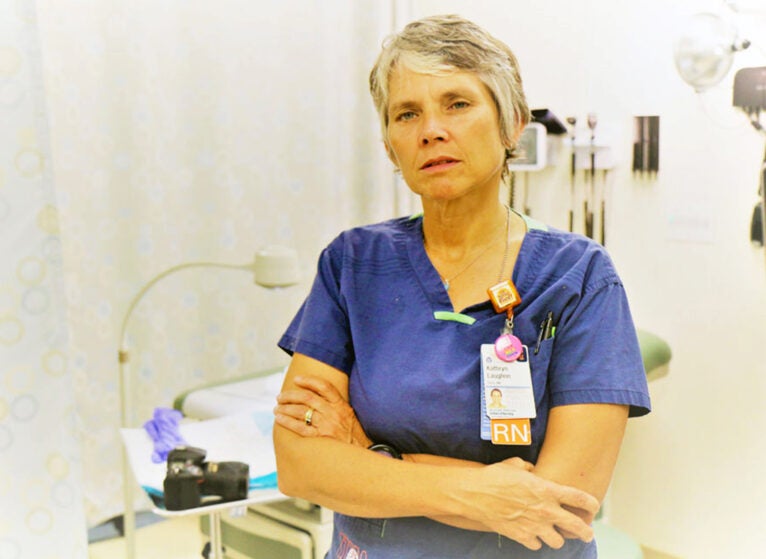
Did you know UVA Health is home to one of the country’s early forensic nursing teams, originally established as a master’s project by a University Medical Center Emergency Department nurse? In this Q&A with Kathryn Laughon, PhD, RN, FAAN, SANE-A/SANE-P, Director, UVA Health Forensic Center, learn more about the team — five, full-time and one, part-time, specially trained forensic nurses — who collaborate with bedside nurses, physicians, social workers, pharmacists, and community organizations to support patients’ immediate health, safety, and longer-term needs.
Laughon earned her bachelor’s and master’s degrees in nursing at UVA School of Nursing, where she serves as an Associate Professor, and she's spent most of her career as a forensic nurse at UVA Health. She wants team members to know that even if anyone working for UVA Health isn't sure whether a consult is needed, the forensic nursing team is always available to help.*
What does the forensic nursing team do?
We care for patients who have experienced sexual assault, physical abuse, or strangulation, which most people call being choked. We see patients across the lifespan, from infants to elders. I am proud we provide health-focused care to patients who often haven’t had basic healthcare because of whatever else is going on in their life.
We are here to take care of the patient. We work in the multidisciplinary team to ensure all the appropriate testing, medications, and imaging are ordered and done. If the patient wants us to, we complete a forensic exam during which we examine them for injuries, document those injuries and — when it’s appropriate — collect evidence for the criminal legal system.
What kind of expertise does the forensic nursing team have?
We are all specialists and experts in forensic nursing who receive classroom training, hands-on skills training, and then are precepted in performing exams until we have demonstrated competency. We also have additional ongoing training in intimate partner violence, child abuse, and the specifics of safety planning, which frankly have gotten a lot more complex over time because of GPS trackers, social media, and digital security cameras. Our nurses spend time with all the community agencies that we work with regularly, so they understand how they work. They also spend time in court watching expert testimony and learning how to testify. I am incredibly proud of the work my team does to take excellent care of our patients.
Is the forensic nursing team part of law enforcement?
No. We are not the police. Talking to us does not mean we are going to report something to law enforcement. Our focus is on the patient’s health and well-being. We are bound by the same requirements that all of us are bound by around things like child abuse and harm to self or others, but otherwise, this is confidential healthcare like everything else. Our foremost goal is the patient’s immediate health and wellness. The forensic piece — documentation of injuries, evidence collection, and everything else — is at the behest of the patient.
Does a patient have to report to law enforcement to receive care from you?
No! We want our patients to receive healthcare and referrals to resources. If an adult has been sexually assaulted, we want to make sure that they’re getting the healthcare they need — pregnancy prophylaxis, HIV prophylaxis, and medications to prevent a variety of sexually transmitted infections — and that they are connected to the community resources that can support them long term. If they have been physically assaulted, we will help them make a safety plan and, again, connect them with the appropriate UVA Health and community resources.
How do you approach care for someone who has experienced trauma?
Radical consent is our MO. We tell patients, “Here are the things we usually do,” but they can opt out of any and every piece of that. If they don’t want a speculum exam, no problem. We give them the option to do nothing, have us swab without the speculum, or swab themselves and hand it to us — whatever they want. We’ll explain why we take their clothes and what the likelihood is that there is evidence on them, but if they don’t want to give us their clothes, that’s totally fine.
When should inpatient team members contact the forensic nursing team?*
If someone has been admitted who was seen by a forensic nurse and there are questions about follow-up, they should contact us. Or if a situation newly emerges. For example, there are cases in which someone has been admitted and goes straight to an Intensive Care Unit [ICU] because they are unconscious when they come in. Then they regain consciousness and start talking about their story, or a family member says, “Here are the circumstances. We’re really worried about what happened.” The team member should page us to the floor in those situations so we can talk to the patient and do a forensic exam. If a team member in any setting is ever wondering if it’s appropriate for us to see a patient, they can page us and ask. We are always available to answer questions and help support staff.
Is there a time frame for forensic exams?
We perform physical abuse and strangulation exams within 72 hours and sexual assault exams within 120 hours. That’s the standard time frame for documenting injuries and collecting evidence, but we are happy to have conversations about resources and safety planning at any point if issues come up. If a clinician is not sure if their patient is within the timeframe for our services, page us or send a secure chat message.* Someone is always available to answer questions.
*How can UVA Health team members reach the forensic nursing team? In Epic Secure Chat On-Call Finder, type “uvmcemergencyforensicexaminer” for any consult to see who is on call and message them directly.