5.19.2026
‘You Are Irreplaceable’
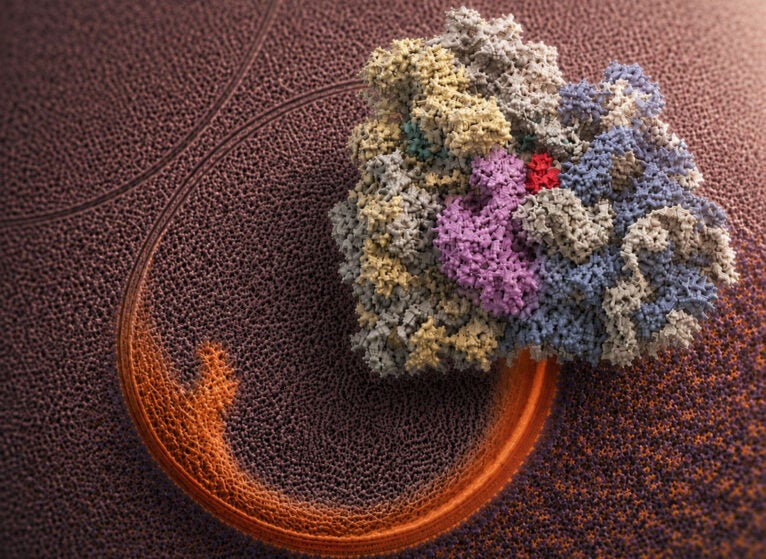
University of Virginia School of Medicine scientists have discovered an important trigger that allows dormant cells, such as in cancer or hibernating animals, to awaken — and they’ve named it SNOR, after a sleepy Pokemon, Snorlax.
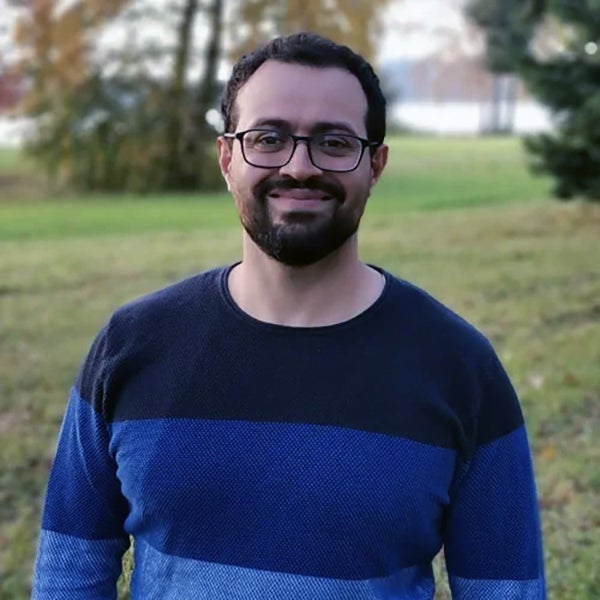
The new research was co-led by Ahmad Jomaa, PhD, of UVA’s Department of Molecular Physiology and Biological Physics, and collaborators from EMBL Heidelberg in Germany, with key contributions from collaborations at Vanderbilt University and Cornell University. Their discovery sheds important light on how cells can resume functioning after nutrient deprivation or other stressors that could otherwise halt growth or threaten survival. Cancer cells, for example, can go dormant during treatment only to awaken months, years or even decades later, allowing the cancer to return.
The findings advance our understanding of a critical biological process that occurs in a vast variety of living organisms, from protozoa to plants and people. The insights could inform the development of new and better treatments not just for cancer but for dangerous drug-resistant fungi, an increasing health threat around the world.
“All living cells need a way to pause and restart when conditions change, such as when nutrients run low or cells experience stress,” said Jomaa, part of UVA Comprehensive Cancer Center. “We’ve identified a key part of that restart switch, something cells use to wake their protein-making machinery after these periods of stress. Because this ‘sleep and wake’ cycle exists across biology, from microbes to humans, it gives us a new way to think about how cells survive tough conditions. In the long term, this could help us find ways to prevent harmful cells, like cancer cells, from reawakening, or to better control recovery from stress and infection.”
Surviving the Toughest Battles
Snorlax is a very large, rotund Pokemon (or “Pocket Monster”) who appears in the long-running video game, anime, movie, and trading card mega-franchise. He is known for sleeping all the time, awakening only to eat. That inspired the UVA scientists to name their new discovery in his honor.
The identification of an unknown “factor” that restarts cellular engines known as ribosomes that have gone dormant in a bid to conserve their resources. Ribosomes translate our cells’ genetic instructions into proteins that drive cellular functions, and their reactivation is an essential step in the process of waking up a sleeping cell. This typically occurs when a nutrient source has become available or other cell-threatening stress has passed. In essence, the cell determines it has weathered the storm or survived the famine and that it is safe to resume normal operations.
Working with a team led by Simone Mattei, PhD, at EMBL Heidelberg, the UVA scientists identified a previously unknown factor, which they’ve dubbed SNOR. They were able to do this by using high-tech imaging tools, including cryo-electron tomography and cryogenic electron microscopy. These powerful tools can produce 3-D images of the tiniest cellular structures down to the level of individual atoms.
“By combining imaging directly inside cells with high-resolution structural methods, we were able to see how ribosomes are held in a dormant state and how they are prepared to restart,” said Mattei, team leader at the EMBL Imaging Centre and co-senior investigator of the study. “This allowed us to capture a key transition in the life of the ribosome and visualize how cells preserve their protein-making machinery during stress and then ready it for rapid reactivation when conditions improve.”
The work also involved the group of Kathy Gould, PhD, at Vanderbilt, and Heather Feaga, PhD, at Cornell.
While working in yeast, Jomaa and his colleagues have already confirmed SNOR exists in most fungi. The evidence, he says, suggests that it occurs in a wide variety of eukaryotic cells, the type found in plants, animal and people. That makes it an attractive target for developing new treatments for cancer and drug-resistant fungi.
“This is an early step in the restart process, but many details are still missing,” Jomaa said. “Our next goal is to understand how ribosomes are fully reactivated and how this process is controlled under different conditions.”
Better understanding cancer and finding new ways to treat it is a primary mission of UVA Comprehensive Cancer Center, one of only 57 cancer centers in the country to earn the prestigious “comprehensive” designation from the National Cancer Institute. The designation recognizes cancer centers that offer both exceptional cancer care and cutting-edge cancer research programs, including leading-edge clinical trials.
Findings Published
Jomaa and his colleagues have published their findings in the prestigious scientific journal Nature. The research team consisted of Maciej Gluc, Higor Rosa, Maria Bozko, Lesley A. Turner, Cassidy R. Prince, Yelena Peskova, Heather A. Feaga, Kathleen L. Gould, Simone Mattei, and Jomaa. The scientists have no financial interest in the work.
The research was supported by the National Science Foundation, grant 2503218, and the Searle Scholars Program, grant SSP-2023-106.
To keep up with the latest medical discoveries from the UVA School of Medicine and UVA’s new Paul and Diane Manning Institute of Biotechnology, bookmark the Making of Medicine blog.