
10.2.2026
Cybersecurity Awareness Month: Because Cybersecurity Is Everyone’s Responsibility
UVA Health’s mission: transforming health and inspiring hope for all Virginians — and beyond. And in this case, way beyond — to the West Coast and another health system!
Kristin Cady, MSN, RN, CNL, CCRN, CNML, (pictured above, center) Nurse Manager, Coronary Care Unit (CCU), and interim Nurse Manager, Cardiac Monitoring Unit (CMU), and Garretson “Garry” Gellert PT, DPT, (above, left) each have held their current roles for three years at University Medical Center in Charlottesville, Virginia.
Cady has worked for UVA Health overall for almost a decade, starting out as a new graduate RN in CCU, then transitioning to Nursing Supervisor and then to Nurse Manager. She earned her MSN from UVA School of Nursing’s Clinical Nurse Leader program.
'An Opportunity to Engage in Their Own Care'
In June 2023, passionate caregivers — including rehabilitation, nursing, and physician champions — took our UVA Health strategic plan initiative of working as One UVA Health team to heart, and launched a rehab project focused on ambulating patients who required an intra-aortic balloon pump (IABP) via femoral (thigh and groin area) access.
“The project was built upon previous work to transform health and inspire hope for our patients awaiting heart transplant by using these temporary mechanical support devices,” recalls Gellert. “Our patients could utilize a standing bed for upright activities but stayed in their bed and in their room — often for months.”
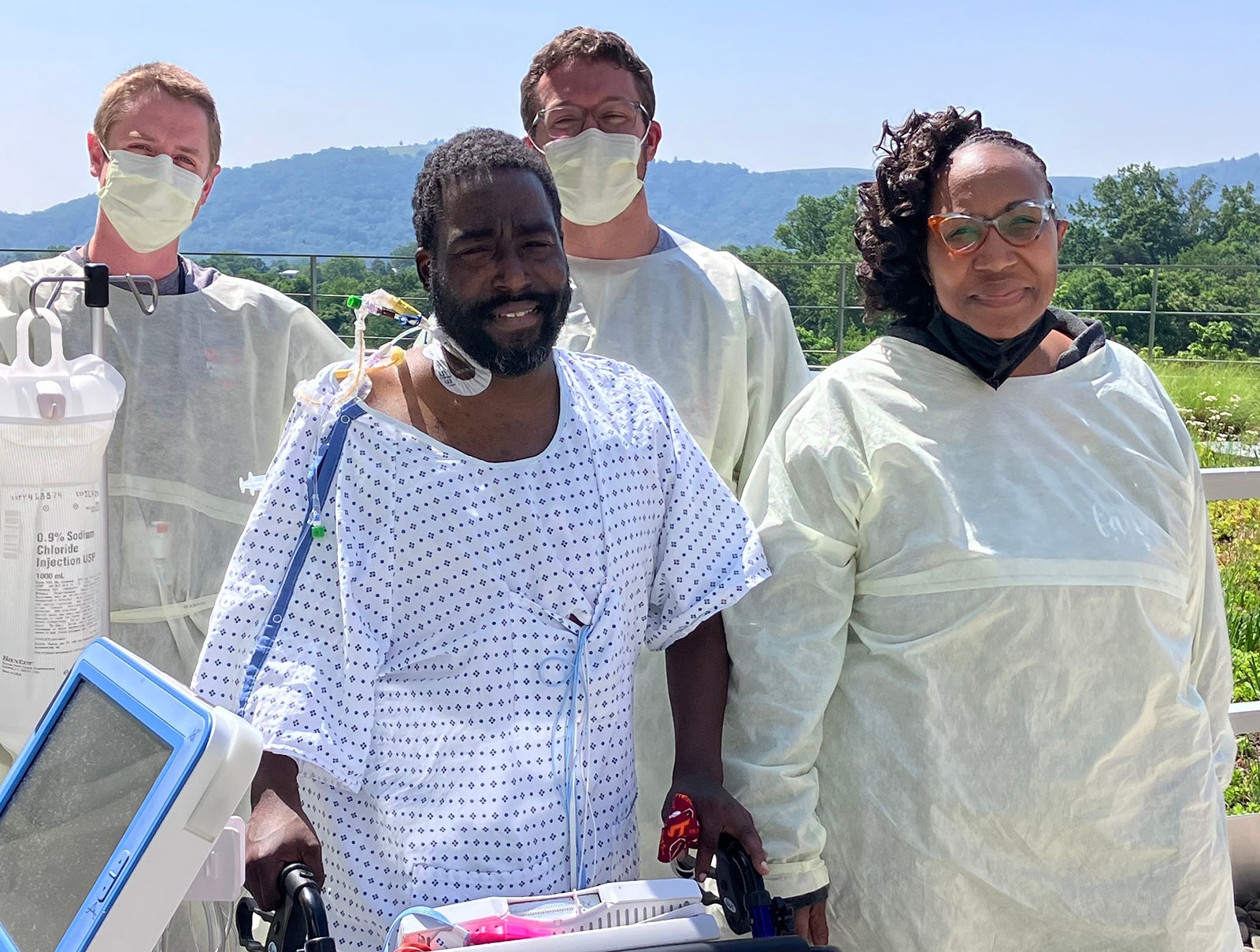
Cady adds: “Recognizing the physical and emotional impact for patients preparing to undergo massive surgeries — an interprofessional, collaborative team leveraged evidence to develop and implement progressive guidelines to give these patients an opportunity to engage in their own care.”
Through increased engagement and autonomy, there’s been a positive impact on patients’ pre-surgical emotional state and physical wellbeing. They’ve also found post-surgical benefits associated with decreased length of stay and post-hospitalization quality of life.
“Participants are extremely appreciative for the chance to mobilize out of bed and engage with families and caregivers in a more ‘normal’ fashion,” Cady describes. “Being able to get out of their room also gives them a different perspective in their healing as they await a heart transplant.”
Heart Assist
Steven Phillips, PhD, MD, (top photo, right) Heart Failure and Transplant Cardiology, and Assistant Professor, UVA School of Medicine, cares for patients with advanced heart failure, or in need of a heart transplant. He’s also an expert in cardio-oncology which focuses on detection, monitoring, and treatment of cardiovascular disease as a side effect of cancer treatment.
Dr. Phillips explains that some patients suffering with end-stage congestive heart failure are eligible for curative therapy via heart transplantation. As a finite resource, donor hearts are allocated in a national system run by the United Network for Organ Sharing (UNOS), which gives priority to the sickest patients, often those who require Intensive Care Unit (ICU)-level care.
Some of these patients require temporary “heart assist” devices to maintain adequate blood flow to vital organs. IABP is one such temporary device used commonly for patients awaiting transplant, traditionally inserted via a large artery in the groin and requires patients to maintain extremely limited hip flexion.
“Historically, this translated to patients being kept in a supine position at all times,” says Dr. Philips. “With the advent of standing beds, patients were able to be safely moved to an upright position. However, true mobility and pre-habilitation efforts have been quite limited in this patient population. This problem has only been accentuated by the extended wait times for donor hearts — often weeks to months.”
'Amazing Place With Amazing People'
Butch Barnes shares with Connect that he was referred to UVA Health with congestive heart failure in July 2023 and admitted several times until Jan. 2, 2024, when his ejection fraction (EF, heart failure measurement) dropped below 11%. When the IABP was proposed to Barnes, he says there was no hesitation on his part, because it was part of the process and as he describes: “My only chance.” The procedure was performed in early January 2024. In total, he had an IABP for 100 days while awaiting his heart transplant.
Barnes was in the ICU from January through May 2024, then transferred to rehab until mid-June, then returned home to Strasburg, Virginia. After receiving his new heart, he recalls, “Several bleeds from a right heart cath pooled up in my left femoral nerve, and I was told it would take some time to heal and for me to walk."
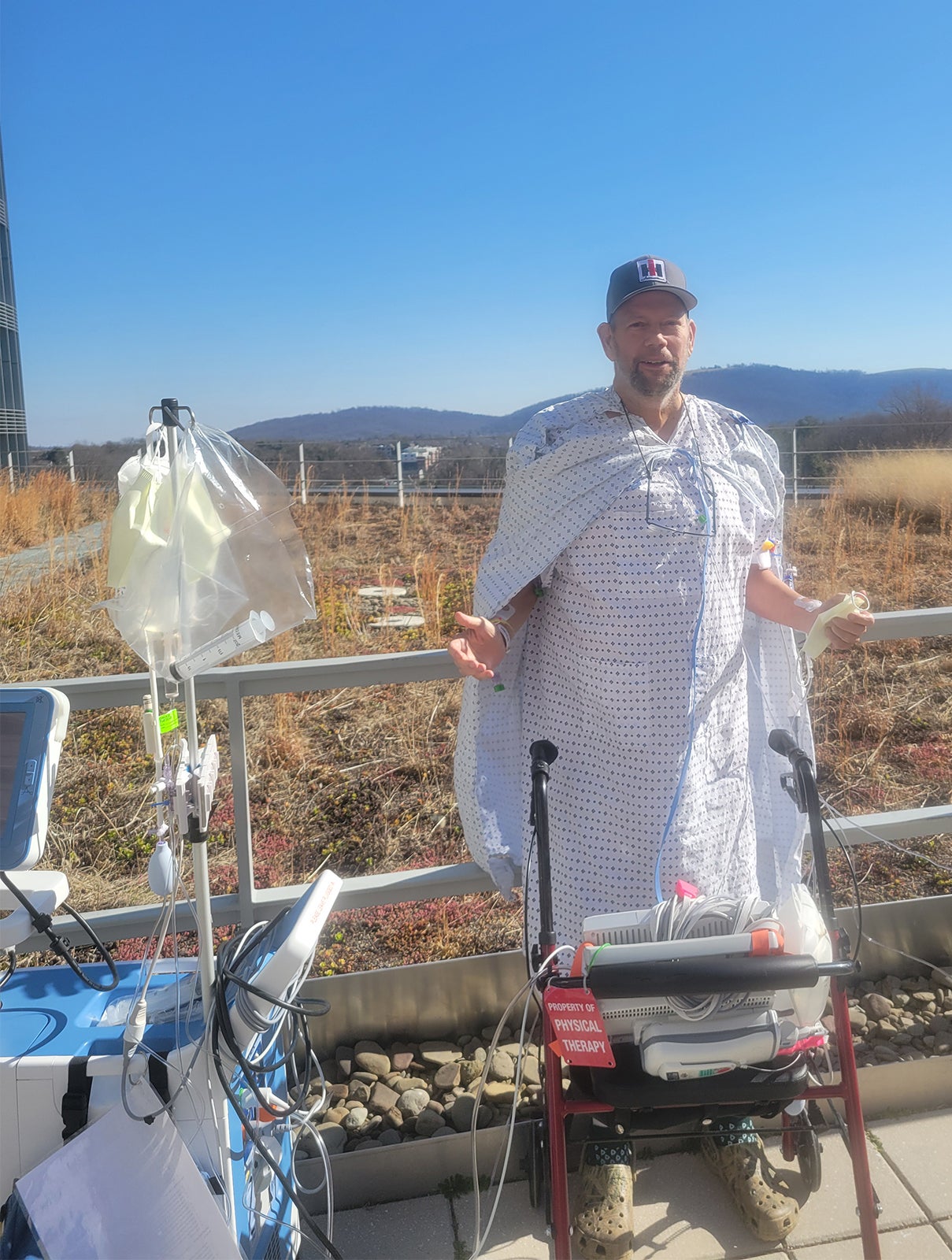
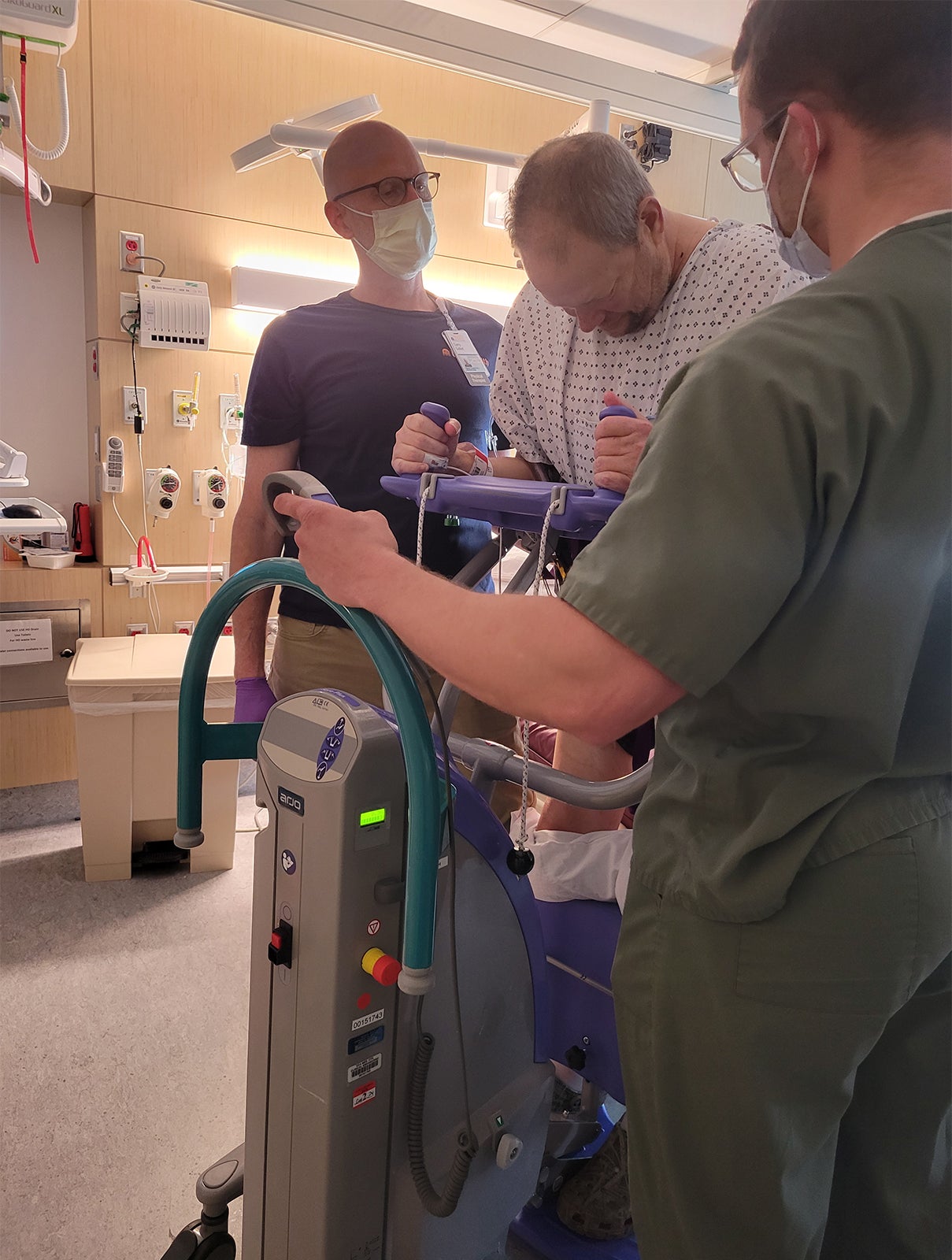
"Today, I am working on our farm and walking without assistance of any devices!" shares Barnes — retired from law enforcement but not slowing down — working as a realtor and raising registered Angus cattle. “The balloon pump assisted my heart to the point my kidney function improved slightly and of course, it reduced the stress on my heart. Building my strength pre-transplant most likely saved my life!"
How’s Barnes doing today? “I have not felt this well in 20 years!" he declares. "It's still a journey, but one I am willing to battle every day. I am a very driven and positive person and had to get better for my family!”
And how does Barnes feel about his care teams at UVA Health? “I wouldn't be here today without them. I have a deep love for all the folks who took care of me. It's an amazing place with quality people!”
Shared Commitment to Advanced Care
Ashley Wade, BSN, RN, CCRN-K, Nurse Manager, Thoracic Cardiovascular Intensive Care Unit (TCV-ICU), ensures the care of this patient population is consistent across units. “One of the things I'm most proud of is seeing this become part of our standard of care. That only happens because of the dedication of our teams at the bedside and a shared commitment to patient safety.”
The UVA School of Nursing RN-BSN alum adds, “Meaningful change doesn't happen because of a new guideline — it happens because people are committed to putting it into practice safely and consistently every day! Safely mobilizing patients with temporary mechanical circulatory support requires trust, preparation, and constant communication. When those elements come together, patients have the chance to preserve their strength and independence — while optimizing their recovery.”
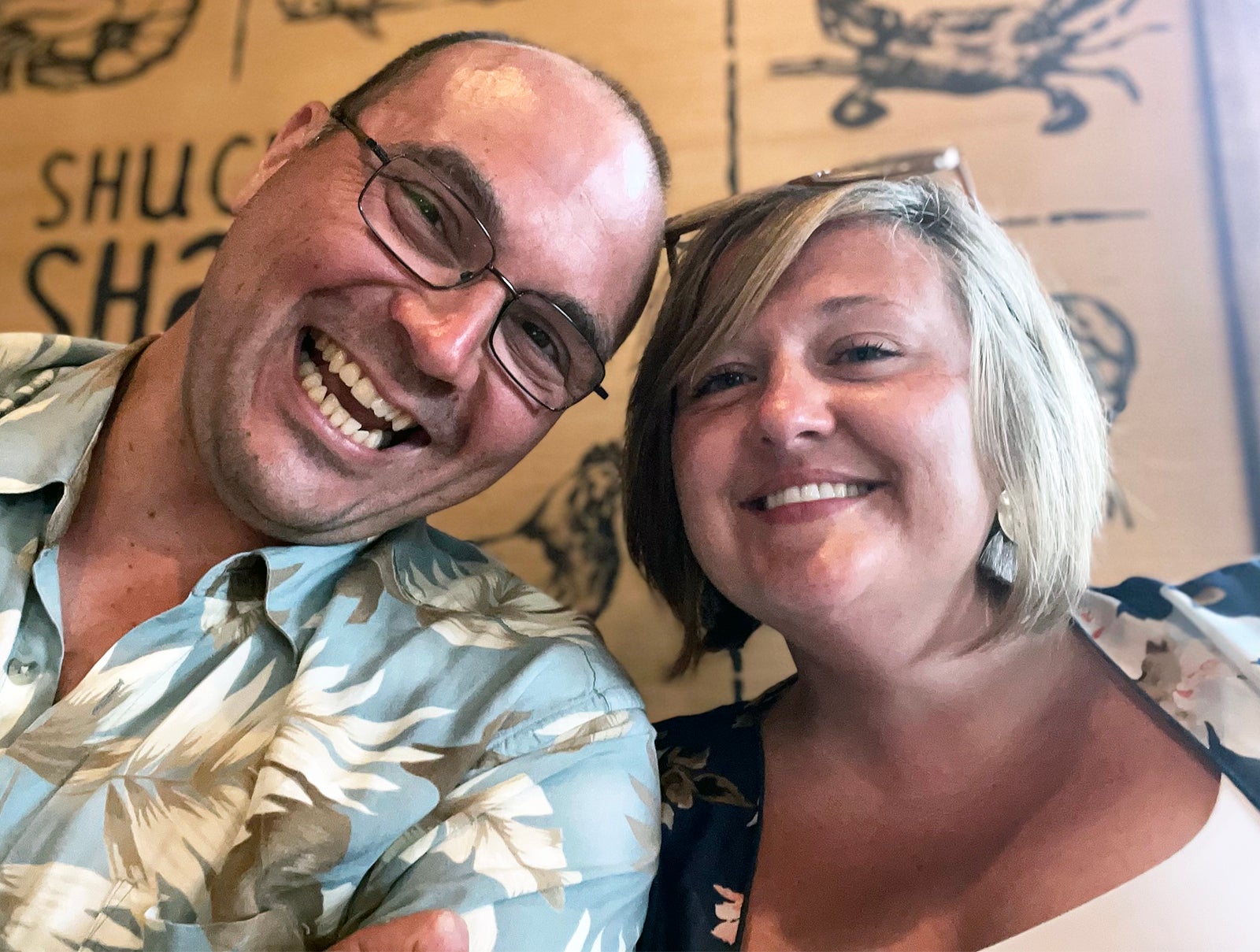
“It is wonderful to see how this work has expanded across the critical care units of the Heart and Vascular institute," says Dustin Money, RRT-ACCS, CES-A, Senior ECMO Specialist, Extracorporeal Life Support Program, HVI, UVA Health.
He explains that the implementation of IABP ambulation is a culmination of several years of hard work and persistence. "This wasn't just guideline development and implementation — it was a cultural change led by a truly multidisciplinary team to challenge the current thinking around femoral catheters used in mechanical circulatory support."
Money says the foundation of this work started in 2022 with the need to mobilize an increasing number of ECMO patients with large femoral ECMO cannulas at UVA Health and traditionally, these large cannulas are seen as barriers to physical therapy, especially ambulation. He adds that the original work led to a statistically significant decrease in immobile femoral ECMO patients by 12% — and improved survival to discharge home over the last three years.
"Garry, Kristin, and Ashley have done an amazing job supporting the changes necessary to push this work forward, support team team members, and implement it smoothly across patient populations," Money hails. "Challenging the status quo and building strong teams is what makes UVA Health the best hospital in Virginia for advanced care!"
Coast to Coast
After sharing their successes with the regional representative for Teleflex which makes IABPs, Cady and Gellert were connected to other medical centers interested in developing and implementing similar programs to benefit patients and elevate standard of care.
The two UVA Health team members met virtually in January 2026 with Kaiser Permanente in Santa Clara, California to share guidelines, implementation, and the positive impact that progressive, evidence-based care can have on this patient population.
“A huge thank you to Kristin for making the time to share her team's experience, and a bigger thank you to all involved in the guideline development and implementation!” praises Gellert. “She’s been instrumental in the development, implementation, and ongoing conversations promoting progressive care with other healthcare systems. This is an interprofessional collaboration focused on providing safe, evidence-based, progressive patient care.”
What does it mean to the UVA Health team to have such an impact on patients, all the way to the other side of the country? “To me, it speaks to the dedication and innovation of our team,” answers Cady. “What started as something very unfamiliar and went against what has been historically thought of as best practice — has grown into a culture that improves our outcomes and quality of life for patients far beyond our hospital. I’m incredibly proud of the hard work. Being able to share it is rewarding and a reminder of the impact bedside nurses can have on advancing patient care everywhere.”
'Why I Do This'
“I wanted to be the first to say, ‘Thank you!’” Jillian Dahlin, AGACNP, VAD-C, CCRN-CMC, Advanced Heart Failure Therapies, Kaiser Permanente, Santa Clara, California, tells Cady and Gellert. “We did it! We successfully walked our first femoral balloon pump patient, and it went so well! On just their second walk ever, the patient made it around the entire unit and asked for more! This is such a meaningful accomplishment for our team, and it truly would not have been possible without your guidance and encouragement. I’m so grateful for the time and energy you both invested in helping me build this project!”
Dahlin adds: “This work isn’t always easy, but this is one of those moments that really reminds me why I do this. It’s incredibly rewarding, and I’m so thankful. This is going to make a huge difference in patients’ lives in the Bay Area!”



Bravo!!!!
Amazing team!
This work is amazing! A meaningful example of true collaboration and authentic leadership that is changing lives.