
6.16.2026
UVA Health Prince William Medical Center and Haymarket Medical Center Named Among Becker’s 100 Great Community Hospitals for 2026
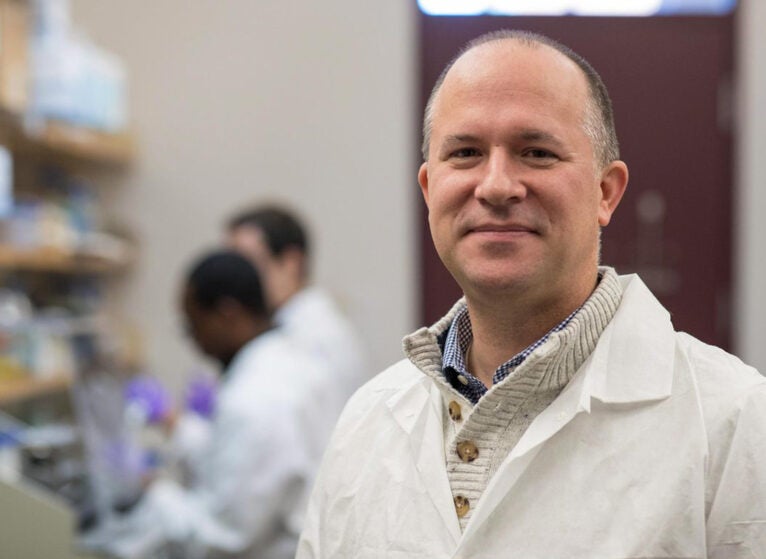
Jason Papin, PhD, UVA School of Medicine
Probiotic supplements found in drugstores nationwide contain an assortment of microbes sold for specific health purposes despite limited understanding of the microbes' connections to their marketed use, new UVA School of Medicine research reveals. But the scientists have assembled sophisticated computer models that could lead to more effective products to shape our microbiomes to improve health.
UVA researchers led by Jason Papin, PhD, analyzed more than 350 over-the-counter probiotics sold at the three largest pharmacy chains in the United States: CVS, Walgreens and Walmart. Those 352 products were found to contain, collectively, only 36 unique species of bacteria. The most common species were forms of Lactobacillus, a type of bacteria commonly found in yogurt.
More than half the products contained only one probiotic species. The products with the most unique species topped out at 17. Some brands maintained a consistent number of bacterial strains across products, while others did not.
Based on their analysis, the scientists concluded that there was no real consistency in the combination of species used to support gut health, vaginal health, or other health claims.
“It is truly fascinating to discover that these probiotic bacteria hold a unique, specialized niche among the trillions of microbes in and on the human body,” says Glynis Kolling, PhD, research faculty member, UVA Department of Biomedical Engineering, who works closely with Papin. “By combining our advanced methods, we have the potential to vastly expand the pool of beneficial bacteria and pave the way for targeted solutions to support human health.”
Targeting the Microbiome
We have at least as many microorganisms living on and inside us than we have cells in our bodies. Scientists have increasingly come to appreciate the role these microorganisms – collectively known as the microbiome — play in maintaining our health. We can get beneficial bacteria from our diets, such as from yogurt and fermented foods, but there has also been an explosion in “probiotic” products over the last two decades.
So far, the federal Food and Drug Administration has approved only two microbial products for therapeutic purposes, and both are used to treat recurrent C. difficile infections in the colon. Supplements, however, are not regulated as strictly as drugs in the United States, and there is limited understanding of connections between bacteria and marketed use for many probiotic products, UVA researchers found.
To improve the effectiveness of probiotic products, Papin and his team have developed HaPaPro, a collection of more than 1,000 computer models of bacterial metabolism. They used these models to see if they could identify probiotics with the potential to improve women’s vaginal health.
The vaginal microbiome is a natural ecosystem of bacteria, fungi, and other microbes that help support health. Bacterial vaginosis occurs when this natural ecosystem is disrupted, leading to pregnancy complications, pelvic inflammatory disease, higher risk of sexually transmitted disease, and general discomfort. The researchers were able to use their models to identify microbes that have the potential to help prevent bacterial vaginosis.
The successful results, Papin says, demonstrates HaPaPro’s potential for identifying ways to manipulate the microbiome will have concrete benefits. Such insights, he hopes, will lead to better probiotic products that deliver on their promises.
“It is remarkable how much microbes play a role in human health and well-being,” Papin says. “I love seeing how computational models of these complex biological systems are leading to new ideas for therapies and helping us understand such fundamental biological processes.”
Findings Published
The researchers have published their findings in the scientific journal Nature Microbiology. The research team consisted of Emma M. Glass, Kolling, and Papin. The scientists have no financial interest in the probiotic industry, but Papin disclosed he has a stake in Cerillo, the manufacturer of instrumentation used in some of the analyses.
The work was supported by the National Science Foundation, grant 1842490 — and the National Institutes of Health, grants T32 GM-145443-1, R01-AI154242 and R01-AT010253.
UVA Department of Biomedical Engineering is a joint program of UVA School of Medicine and UVA School of Engineering and Applied Science.
To keep up with the latest medical research news from UVA Paul and Diane Manning Institute of Biotechnology and School of Medicine, bookmark the Making of Medicine blog.