6.8.2026video
UVA Health Update | June 8, 2026
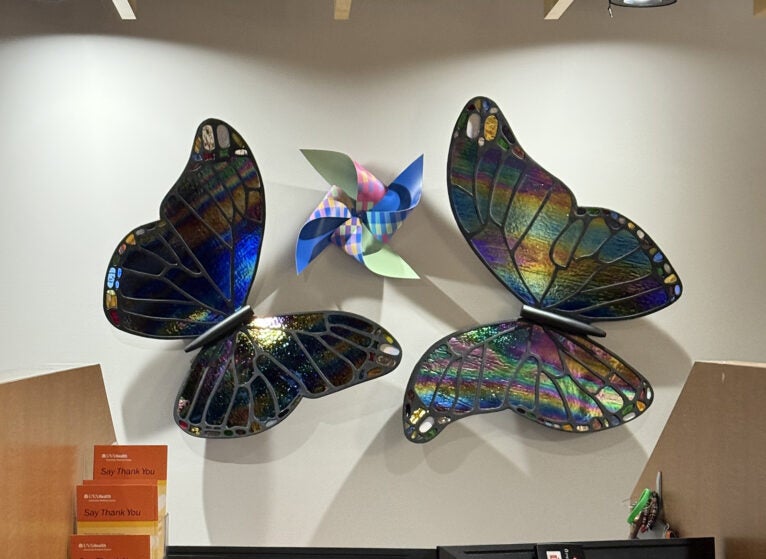
Marrying beauty and whimsy with symbols of strength and hope, new art installations in the UVA Health Charles O. Strickler Transplant Center are a reflection of our ongoing commitment to provide our patients and their families with an environment that promotes calm and healing.
“Patients and families often spend significant time in the center during some of the most vulnerable moments of their lives. The artwork is intended to help create a space that supports emotional well-being alongside medical care,” says Amy Schmidt-Morris, Senior Advisor, Special Projects.
“UVA has made a conscious decision to embrace the evidence-based idea that people who are surrounded by beauty tend to do better. They heal faster. They feel happier, and they’re less stressed. It’s a best practice,” adds Anne Brown, Environmental Experience and Arts Program Manager.
Brown has helped facilitate many art installations throughout the health system, yet this was one of the few instances in which an artist came to her. Atlanta-based artist Paul Heller had a connection to UVA; his son graduated from the McIntire School of Commerce. So when he began looking for a meaningful place to show his work, UVA Health was top of mind.
“When I saw the UVA Health University Medical Center mission statement — transforming health and inspiring hope for all Virginians — I thought it would be perfect fit, so I reached out to Anne,” says Heller.
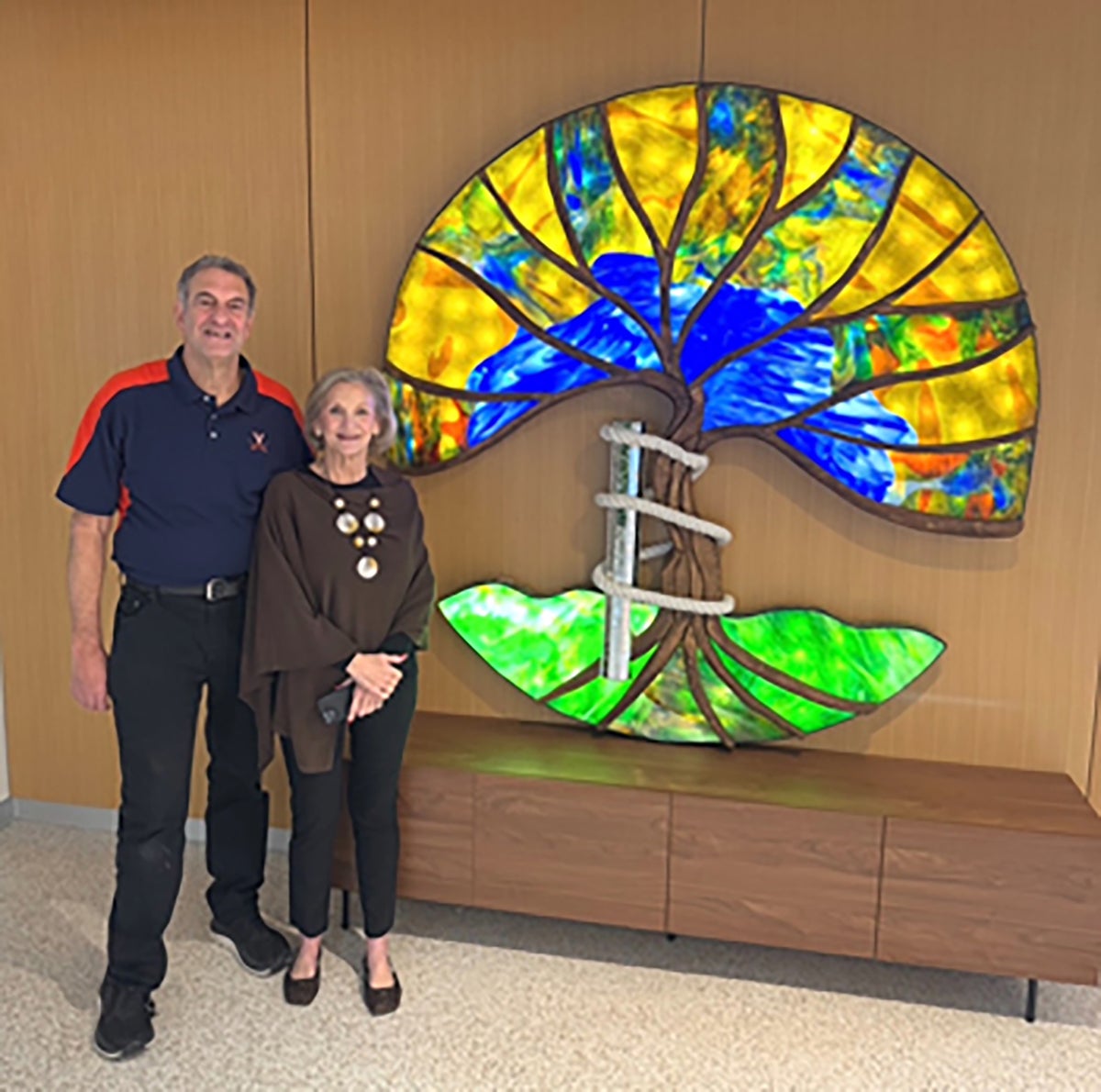
“Paul invited me to view some of the artwork he had done, and I was really impressed. They showed a great deal of skill in terms of working with glass and a level of creativity that I thought was very interesting,” says Brown.
That initial meeting led to a months-long collaboration and three unique installations in two centers. Heller’s first piece, a lighted glass rendering of the Tree of Andry, a universal symbol for the field of orthopedic medicine that features a crooked tree sapling tied to a sturdy stake, was installed at the Orthopedic Center Ivy Road last year.
Once that was complete, Heller and Brown then teamed up with Transplant Center leaders to brainstorm imagery that might be impactful in that space. “Just like with the Orthopedic Center and that team, we worked on this concept together from start to finish,” says Heller. “I really love to include the client, and involving Amy and the rest of the transplant team was amazing. The energy and enthusiasm — they were so much fun to be around.”
The Beauty of Creativity and Collaboration
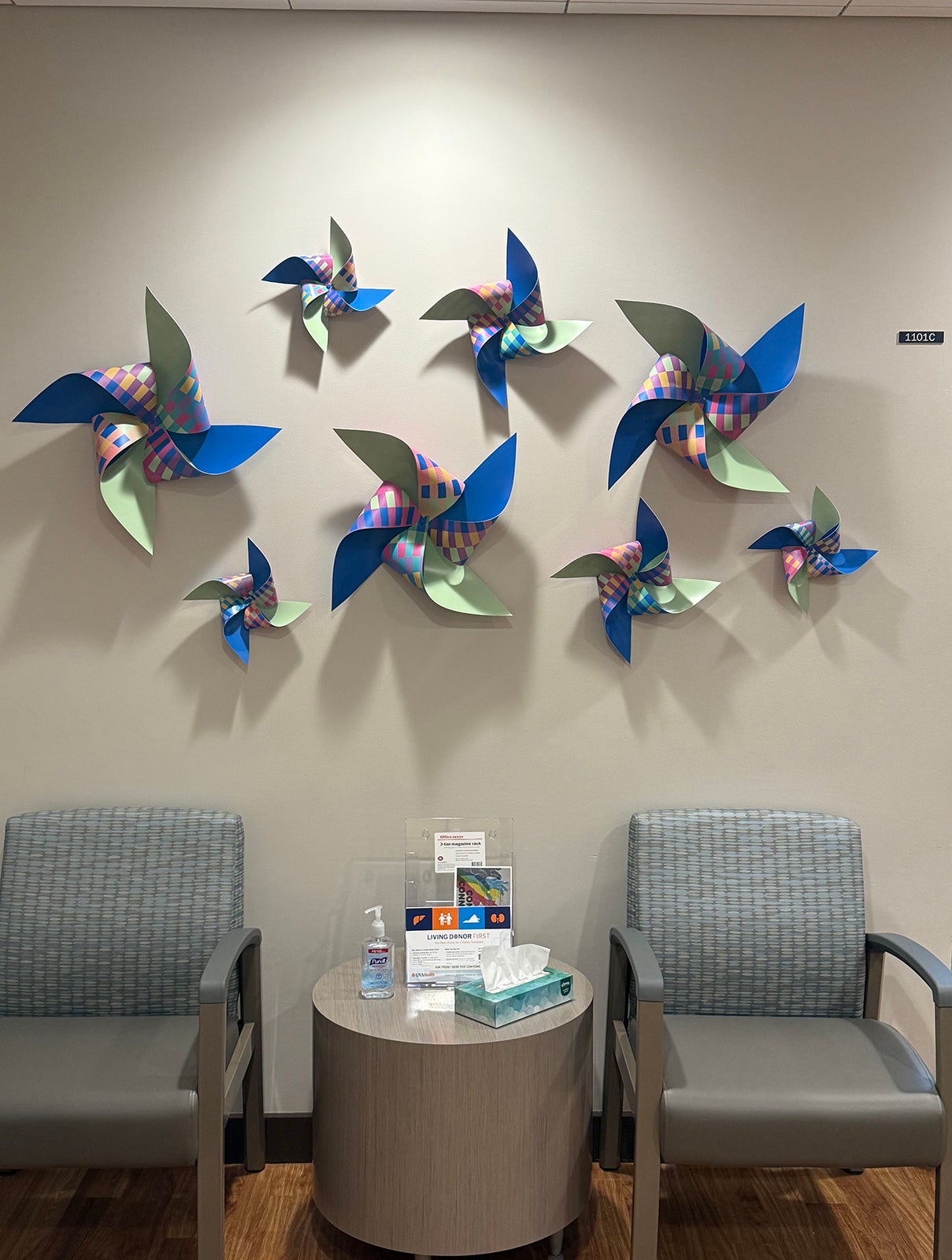
The butterfly and pinwheel are symbols commonly associated with organ donation and transplant. “The pinwheel symbolizes the many lives connected through the transplant journey,” explains Schmidt-Morris. “The butterfly motif represents transformation, healing, and new beginnings many transplant recipients experience after receiving the gift of life.”
Heller was tasked with finding a way to bring this imagery to life, ensuring that their beauty immediately catches the eye, while their meaning lingers in the heart. It took months of brainstorming, research and craftsmanship. The result: two large butterflies hovering by a pinwheel flower, each made of reflective, iridescent glass, that welcome guests into the reception area. In addition, Heller worked with Brian Helder, a key member of his design team, to create specialty-printed pinwheels in a variety of colors, including blue and green, the nationally recognized colors for organ donation. There are more than 40 pinwheels, big and small, that line the hallways.
“The feedback has been overwhelmingly positive,” says Schmidt-Morris. “Patients and families have shared that the artwork makes the center feel warmer, more hopeful and less clinical. Staff have also expressed appreciation for how the artwork brightens the environment and reflects the heart of transplant care.”
"I get goosebumps when I receive feedback from viewers that my art has inspired and comforted them,” says Heller. "An artist wants to impact people's lives. With healthcare, it’s a heightened level of fulfillment. I realize my art is creating hope and positivity for people facing major life challenges.”
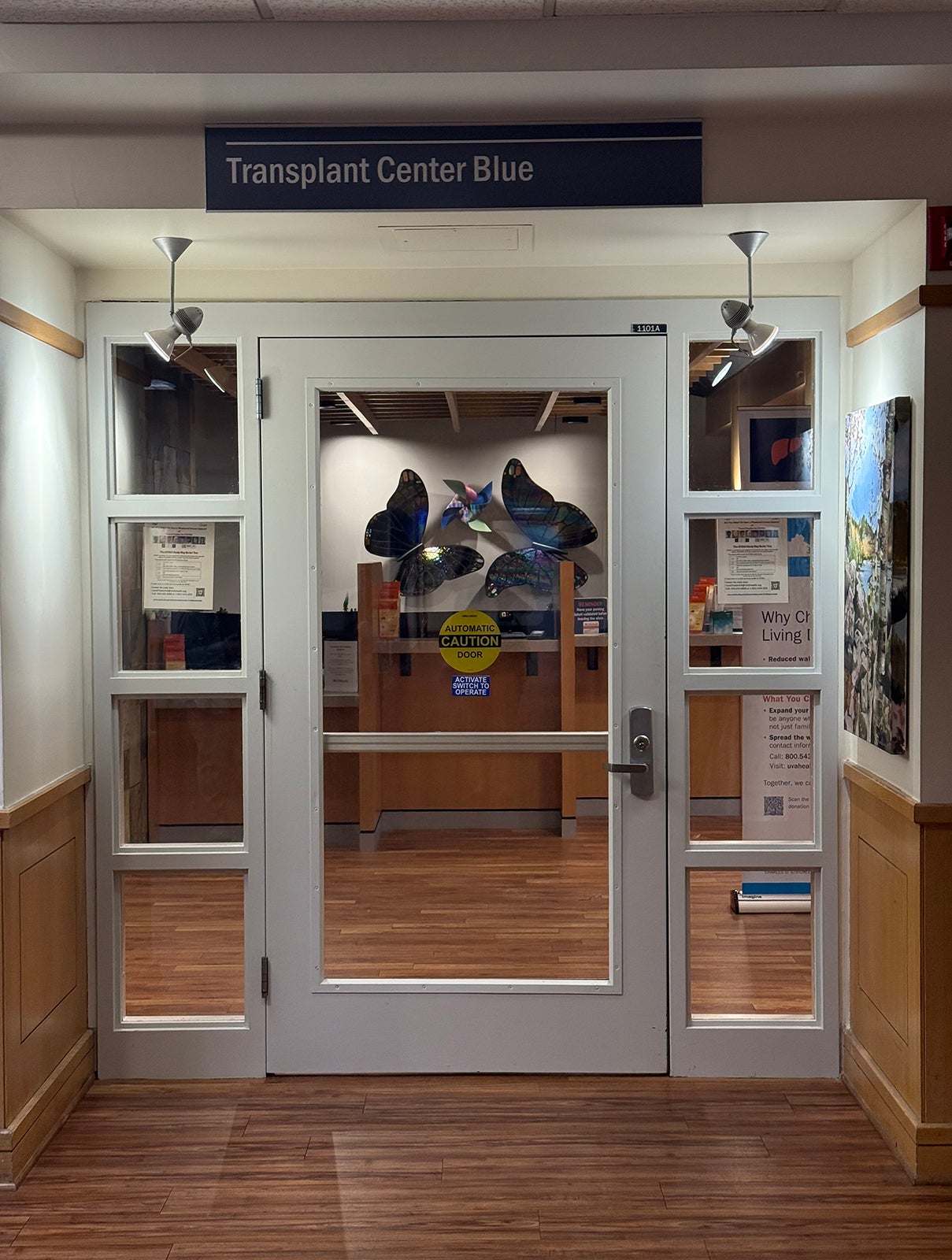
Schmidt-Morris, Brown, and Heller are quick to remind others that bringing this installation from concept to reality required more than just this core group. As with every change or new addition to our clinical spaces, preserving the patient experience is paramount. And this wouldn’t be possible without the UVA Health facilities team working behind the scenes.
“The UVA Health facilities team were truly the makers of miracles throughout this process. They worked closely within the clinic’s operational constraints and adjusted schedules to make the installation possible, while minimizing disruption to patients, families, and staff. Work began at 6 a.m. so installations could be completed before clinic activity fully ramped up for the day,” says Schmidt-Morris. “Their flexibility, creativity, and commitment to the patient experience played a critical role in bringing the project to life safely and seamlessly.”