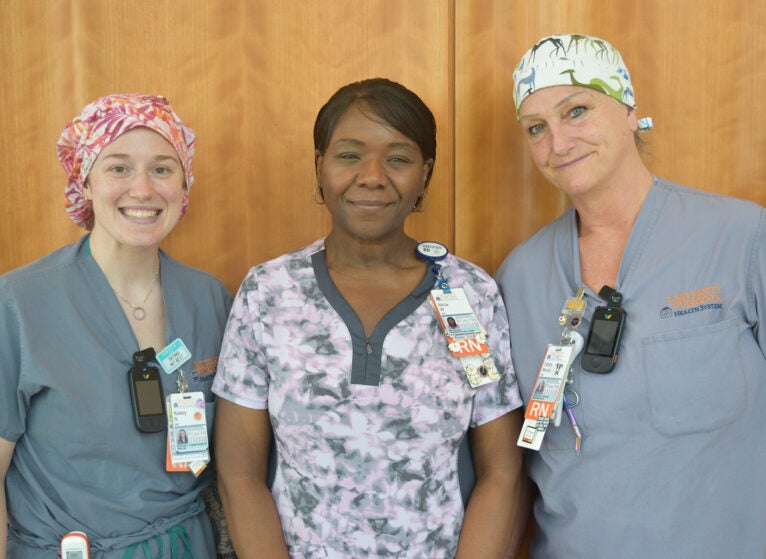
From left, some of the UVA Health University Medical Center Nursing Professional Governance Organization Sustainability Champions: Kelsey Necelis, BSN, RN, CNOR; Alicia White, BSN, RN, CAPA; and Debby Moody, BSN, RN, CNOR.
Our Power, Our Planet: This Earth Month, UVA Health Touts Sustainability Milestones
Earth Day Network marked the first Earth Day on April 22, 1970. This year’s global theme: Our Power, Our Planet.
UVA Health University Medical Center
UVA Sustainability continues to recognize the important advances at UVA Health. “Sustainable healthcare practices play a vital role in the University’s ability to achieve our 2030 sustainability goals," says Andrea Trimble, Director, UVA Office for Sustainability. "Work is being done across many facets of UVA Health to reduce environmental impacts."
By the Numbers
UVA Health University Medical Center recently earned the voluntary Joint Commission Sustainable Healthcare Certification, which includes five goals specifically to be applied to University Hospital and South Tower; Primary Care Center, Emily Couric Clinical Cancer Center (ECCC); Education Resource Center (ERC); and Battle Building:
- Purchased Electricity: 10% reduction in greenhouse gas (GHG) emissions from purchased electricity by the end of FY30.
- Waste Disposal: 10% reduction in GHG emissions from waste disposal by the end of FY30.
- Anesthetic Gas Use: 5% reduction in GHG emissions from anesthetic gas use by the end of FY26 and 10% reduction in GHG emissions from anesthetic gas use by the end of FY27.
- Fleet: 3% reduction in GHG emissions from fleet by the end of FY27.
- Governance: The organization appoints leaders who are responsible for the oversight of activities to reduce greenhouse gas emissions in coordination with clinical and facility representatives.
Governance
- Joint Commission Sustainable Healthcare Operations Team (SHOT): Mike Marquardt, CHFP, Chief Financial Officer, UVA Health University Medical Center, leads this 10-member committee that meets quarterly to advance sustainable healthcare practices. “Sustainable healthcare at University Medical Center is an important part of the stewardship of our ASPIRE values as we continuously improve patient care while reducing associated energy use and solid waste," he explains. "Our clinicians and team members are leading the way among academic medical centers in developing innovative sustainability solutions specific to the healthcare environment."
- NPGO Sustainability Champions*: 16 units feature an active Sustainability Champion, including Outpatient Surgery Center (OPSC), where they’re piloting the use of reusable blood pressure cuffs to reduce cost and waste.
Education
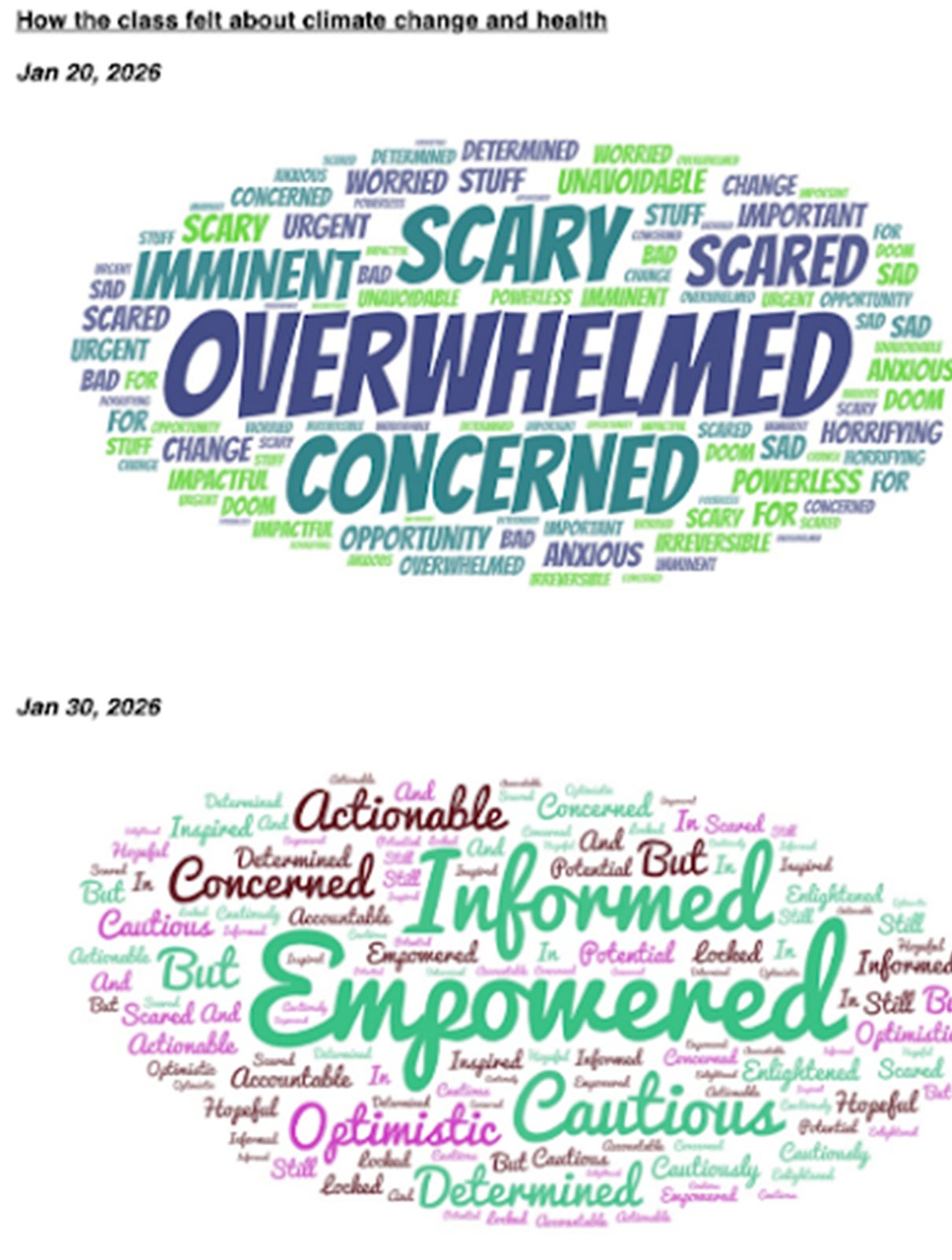
- UVA School of Medicine's Samantha Ahdoot, MD, Assistant Professor, UVA School of Medicine, and Krupal Shah, MD, Assistant Professor (also a Regional Medical Director at Inova Fairfax) are training the next generation of healthcare providers through their “Climate and Health” course. Dr. Ahdoot also is the lead author of “Climate Change and Children’s Health: Building a Healthy Future for Every Child,” an American Academy of Pediatrics technical report and policy statement published in the journal Pediatrics.
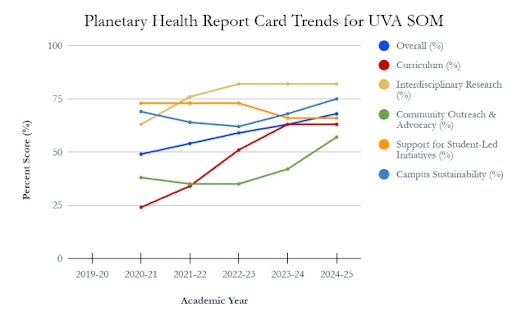
- UVA School of Medicine Planetary Health Report Card organized and completed by School of Medicine (SOM) students for the last five years.
Operations
Anesthesia gas monitoring:
- Lindsey Sites, MSN, CRNA, Director, CRNAs and Anesthesia Technicians, Perioperative Services, UVA Health University Medical Center, reports almost elimination of desflurane (a high global warming potential anesthesia gas) and implementation of an anesthesia gas monitoring system to capture use volumes and help identify potential waste. “Anesthesia and Perioperative services are deeply committed to sustainability projects that protect the future — for our team members and for our community,” she says.
Energy:
- A Sustainable Clinics program is lowering energy costs through various upgrades. Kevin E. Fox, Director, Facilities Planning and Capital Development and Co-Chair, UVA Health Sustainability Committee, and Jesse Warren, Associate Director, UVA Office for Sustainability, report that the Emily Couric Clinical Cancer Center (ECCCC) building efficiency project has resulted in an 8% reduction in energy use. UVA Health invested $786,000 on building system efficiency upgrades to date in ECCCC and the ongoing Battle Building project which has resulted in $632,000 in energy savings since FY23. The project costs will be paid back fully through energy savings in the next year.
Fleet/Transportation:
- Marilou Maglione, Director, Anatomic Pathology shares a reduction in intra-agency miles traveled — thanks to a new digital pathology initiative.
- In addition, UVA Health Medical Transport added charging capability for ambulance vehicles in garage to eliminate idling — saving money, reducing noise, improving air quality, eliminating carbon emissions, and PPM emissions (parts per million, measuring concentration of pollutants in the air) near the Emergency Department with patients whose respiratory condition could be compromised.
Waste:
- UVA Health University Medical Center nurses Alicia White, BSN, RN, CAPA, and Tabatha Gilbert, BSN, RN, CPAN, expanded the use of reusable plastic bins, instead of single-use plastic bags, to store patient belongings across all outpatient surgery sites following a successful pilot project. Says Gilbert — a UVA Health University Medical Center Nursing Professional Governance Organization (NPGO) Sustainability Champion*: “I’m noticing daily that many team members are rethinking their waste and making more sustainable choices, which has been really encouraging.”
- At Orthopedic Center Ivy Road (OCIR) and Battle Building — UVA Office for Sustainability's Samantha Kelly, Special Projects Coordinator, and Anna Jett, Sustainable Healthcare Fellow, are leading a project to reduce waste that includes team member training — and new recycling, compost, and landfill bins. Since launching in Q1 FY26, the waste minimization project has achieved an average recycling and composting rate of 35.7% across program buildings, representing a 20.7 percentage-point increase over University Medical Center’s prior baseline of just 15%. As of January 2026:
- At OCIR:
- Compost diversion averages: 400–500 lbs./month.
- Majority of compost generated from kitchen and café operations.
- At Battle Building:
- Compost diversion averages: ~150 lbs./month.
- Compost generated from staff kitchenettes.
- At OCIR:
- Now, the project team is working in ECCC, ERC, and UVA Health Primary Care.
- In addition to meeting clinician demand for improved recycling access, the project also will help University Medical Center reach its Joint Commission Sustainable Healthcare Certification waste disposal goal.
Recognition
UVA Health University Medical Center received a 2025 Partner Recognition Award from Practice Greenhealth, the nation’s leading organization dedicated to environmental sustainability in healthcare. The award recognizes commitment to environmental improvements and records progress in several areas. At University Medical Center, this includes landfill waste reduction and energy efficiency.
UVA COMMUNITY HEALTH
UVA Community Health is comprised of three medical centers: Culpeper, Haymarket, and Prince William. The chair of the UVA Community Health Sustainability Committee tells Connect she's "extremely proud" of its members' work. "They take on these projects, in addition to their everyday responsibilities, because they understand that planetary health and patient health are interconnected," says Joanne Ondrush, MD, Medical Director, Critical Care Services, UVA Health Haymarket and Prince William Medical Centers. "They look around and see the 'why' of this work in the faces of their families, their team members, and their community."
She reports the following strides in sustainability:
- Increased donations of expired medical equipment to Medical Missionaries and the MERCI organization — diverting these items from landfill.
- Expanded operating room blue wrap recycling to Culpeper Medical Center, to now include all three UVA Community Health facilities.
- Improved signage to increase recycling and decrease pharmaceutical waste.
- Audit and education around regulated medical waste (red bag waste).
- Converted anesthetic gas nitrous oxide to e-cylinders to decrease amount of gas escaping into the atmosphere contributing to global warming.
- Ongoing installation throughout our facilities of refillable water bottle stations.
- Ongoing pharmaceutical waste reduction research project.
- Sustainability survey of patients and families on how UVA Health can continue decreasing our carbon footprint.
"The healthcare sector is a large contributor to the environmental challenges we face, but that means we get to be a large part of the solution!” sums up Dr. Ondrush.

Latest News