4.27.2026
Relax, Relate, Release: 2026 UVA Health Community Mental Health and Wellness Festival
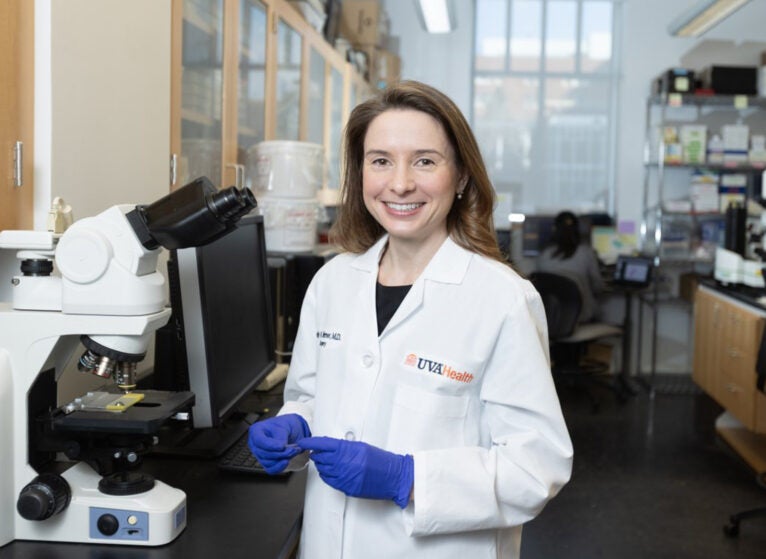
Surgery resident Emily Ninmer, MD, is gaining valuable research experience thanks to funding from the Rebecca Clary Harris, MD, Memorial Fellowship.
Emily Ninmer, MD, was several years out of college, pursuing a career in marketing and business, when she had a change of heart.
“I found myself wanting a more service-oriented career where I could use my skills to directly improve the lives of others,” she said.
Realizing her true calling was medicine, Dr. Ninmer returned to the classroom to complete the prerequisites for applying to medical school. Simultaneously, she took a job at the George Washington University Biostatistics Center to work on a large, multicenter clinical trial. That experience sparked a desire to integrate clinical research into her future medical career.
At UVA School of Medicine, Dr. Ninmer found surgery offered both a challenge and a deep sense of fulfillment. Upon graduating in 2022, she stayed at UVA to begin her general surgery residency, which typically spans seven years, including five years of clinical training and two dedicated years of research, completed between the second and third clinical years. Today, Dr. Ninmer is a married mom of a 6-year-old boy, in her fourth year of residency, and the second year of a two-year research fellowship. In June 2026, she will return to her clinical training to complete the last three years of her residency.
For now, though, she works full-time in the laboratory of Craig Slingluff, MD, thanks to funding from the Rebecca Clary Harris, MD, Memorial Fellowship. Dr. Slingluff is a renowned surgeon-scientist who investigates melanoma immunology and the development of novel immunotherapy strategies. Dr. Ninmer’s fellowship is named for a former research fellow in the Slingluff lab.
“In the current research climate, where access to federal funding is increasingly limited, this fellowship has been critically important,” said Dr. Ninmer. “It has allowed me to complete two full years of dedicated research time and generate the data needed to support new clinical trial proposals.”
While the Department of Surgery encourages all residents to take dedicated research time, the logistics of placing residents in labs with available funding may not always align perfectly with their long-term goals. That’s unfortunate because dedicated research time during a residency is invaluable, according to Dr. Ninmer.
“It allows residents to learn skills and gain knowledge beyond what is acquired through clinical training alone, while also providing opportunities to build relationships with mentors,” she said. “These relationships are critical to achieving success and growing as an academic surgeon, and the fellowship has been essential in providing me with these opportunities.”
Dr. Ninmer also recognizes the deeper significance of the fellowship’s legacy. “Dr. Harris was known for her inquisitive spirit and dedication to discovery,” she said. “I’m honored to be a recipient of this fellowship and hope to continue building on the work Dr. Harris so passionately pursued.”
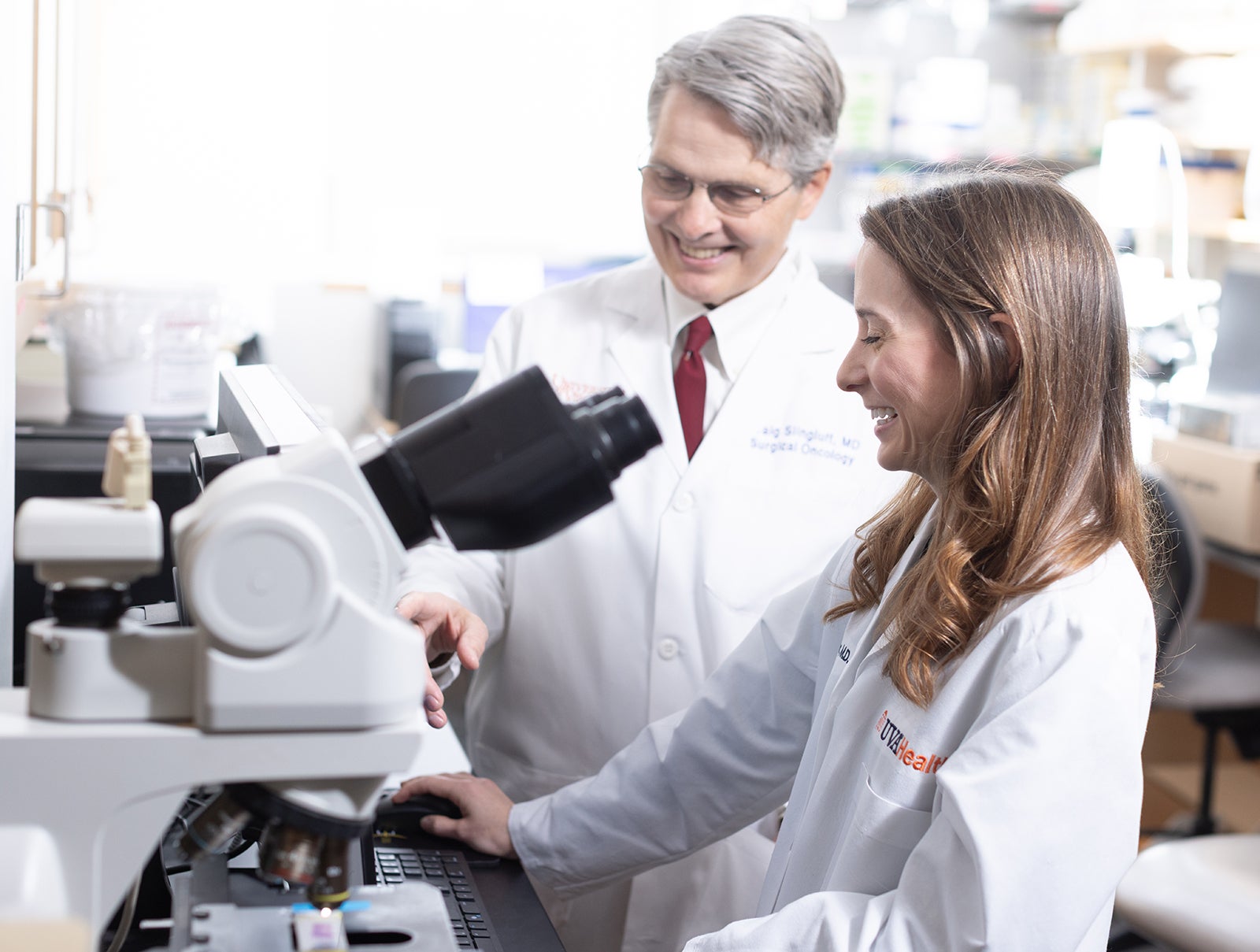
Dr. Ninmer’s career-defining research mentorship with Dr. Slingluff began when she met him just two months into her residency. The early introduction grew into a three-and-a-half-year research collaboration.
“We met during a case in the operating room and started talking afterwards about his research. Of course, I knew who he was and jumped at the chance to come by his lab to learn more,” she said.
Dr. Slingluff is a surgical oncologist with more than 30 years of experience who has advanced melanoma vaccines as a therapeutic strategy through several clinical trials. He also serves as director of UVA Comprehensive Cancer Center’s Human Immune Therapy Center. He’s widely published and well-known across the country.
Dr. Slingluff says mentoring an emerging surgeon-scientist like Dr. Ninmer is mutually beneficial. “Working with Emily has been one of the most rewarding experiences for me in many years,” he said. “She is very bright and has a remarkable work ethic and great attention to detail.”
Among many compliments, Dr. Slingluff praised Dr. Ninmer’s intellectual rigor. “She digs deeply into understanding the research she is doing. She often challenges me to think more deeply as well, so while I mentor her, she has also taught me a lot,” he said. “She has been the key driver of multiple projects that I am very excited about. She has a very bright future as a surgeon-scientist, and I could not be more proud of her.”
Dr. Ninmer was drawn to Dr. Slingluff’s study of melanomas and the immune system’s response to cancer. Even before starting her research fellowship and joining the lab full-time, Dr. Ninmer helped analyze long-term clinical outcomes from Dr. Slingluff’s earlier melanoma vaccine trials. This work demonstrated the long-term clinical benefits of vaccinating with antigens that target two types of T cells (immune cells) rather than one, and laid the foundation for Dr. Ninmer’s current research pursuits.
Now she’s investigating whether vaccine-induced T cells can infiltrate melanoma tumors, including distant metastases from uveal melanoma, a rare subtype arising in the eye. Her research also explores how T cells from unaffected lymph nodes contribute to anti-tumor immune responses in patients with melanoma that has spread to the lymph nodes. Building on this work, Dr. Slingluff has designed two new clinical trials.
“The goal of these two years is to develop the skills needed to become a successful academic surgeon,” said Dr. Ninmer. “I outlined my research objectives at the outset, and I meet weekly with Dr. Slingluff to review progress. I’m motivated to accomplish as much as possible during this time.”
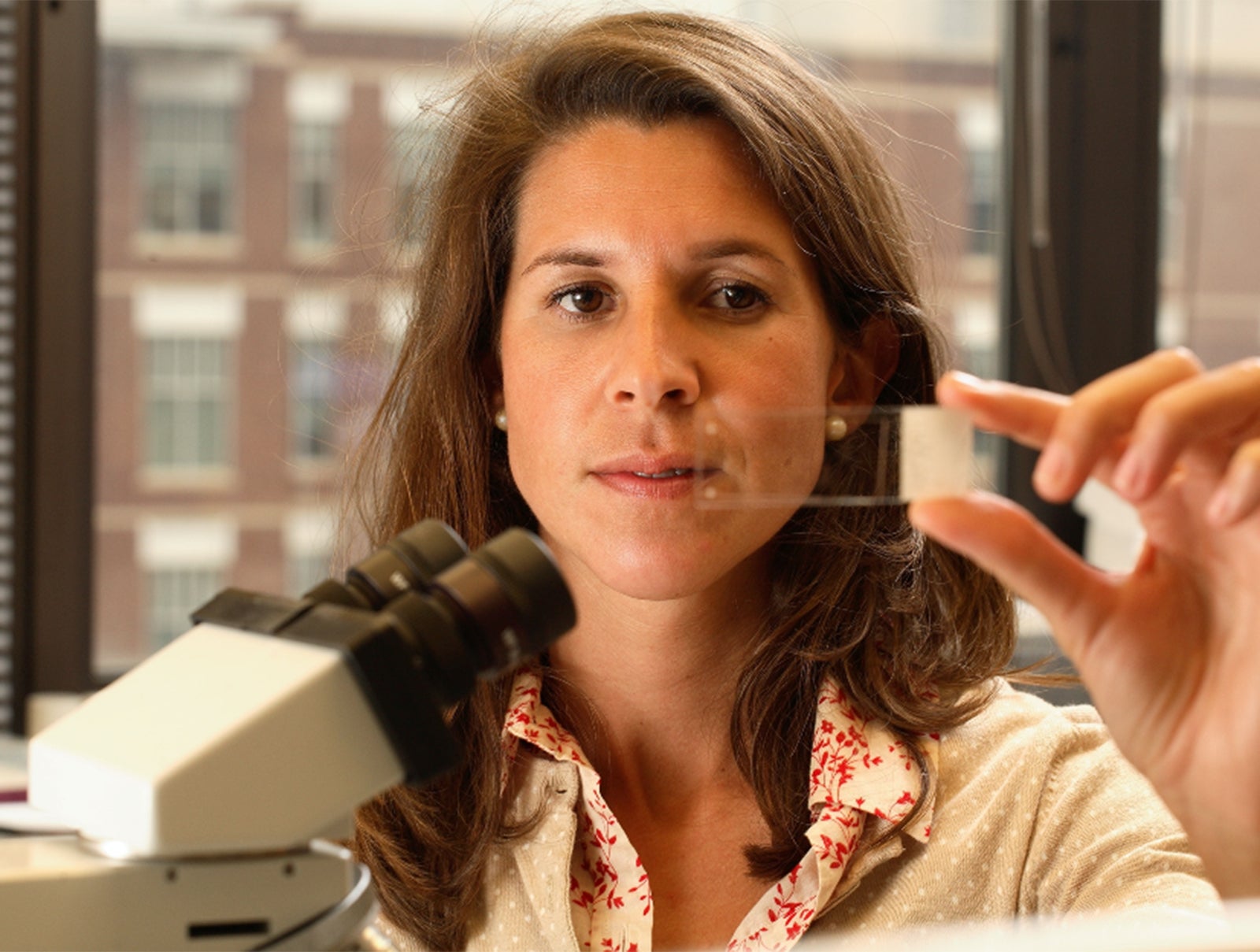
Looking ahead, Dr. Ninmer plans to pursue a clinical focus in surgical oncology while continuing research in tumor immunology and immunotherapy.
“Surgeons bring a unique clinical perspective that is especially valuable for translational research,” she noted. “This protected research time has been invaluable for building technical skills, mentorships, and the foundation for a long-term research career.”
Dr. Ninmer’s journey — made possible through the support of the Rebecca Clary Harris, MD, Memorial Fellowship — exemplifies how protected research time during residency can drive meaningful advances in cancer immunotherapy while also shaping the next generation of surgeon-scientists.
“Emily has benefited from the Rebecca Clary Harris Fellowship, and her commitment and excellence reflect very well on the goals of the fellowship that honors Becca, whom we miss always. I am sure that Becca and Emily would have enjoyed getting to know each other. I’m grateful to Becca’s family and all who contributed to the fellowship to make it possible to support Emily,” said Dr. Slingluff.