
9.17.2026
New Sepsis Guidelines Seek to Reduce Infection’s Deadly Toll
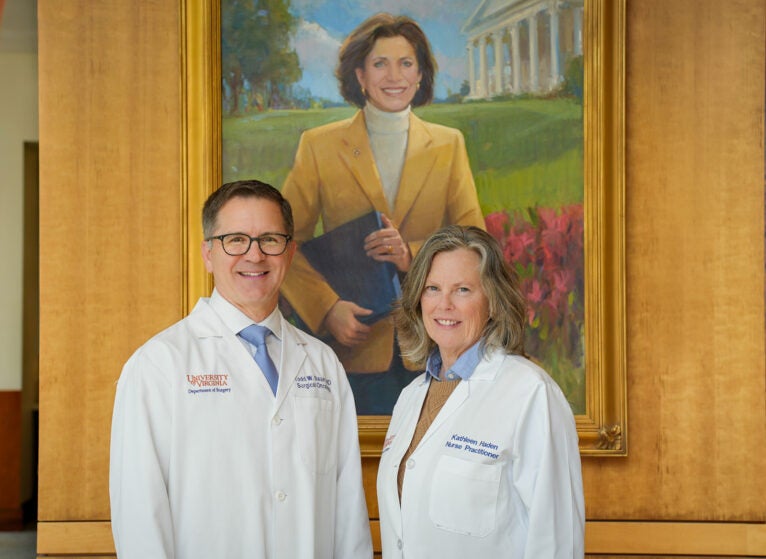
Todd Bauer, MD, and Kathleen Haden, RN, MSN, ANP
Pancreatic cancer is known as “the silent disease” for its ability to develop and progress without clear symptoms. By the time most patients report pain, weakness, and weight loss and receive a diagnosis, the disease has already spread. Currently, the only effective curative treatment is surgery, which works for just 10-15% of patients.
That dire prognosis makes a disease that affects only 1.7% of American adults inordinately deadly. Pancreatic cancer is the third leading cause of cancer deaths in the United States, and is expected to overtake colorectal cancer by 2030, behind only lung cancer.
A national leader in screening and the pursuit of new therapies, UVA Comprehensive Cancer Center recently joined the Pancreatic Cancer Early Detection Consortium (PRECEDE) in support of its goal to increase five-year survival rates from 12.8% to 50%. The initiative pools data from high-risk patients gathered in member institutions’ PRECEDE trials, which is then shared with researchers worldwide working to identify biomarkers for disease risk and occurrence, launch clinical trials of new screening techniques and treatment targets, and establish new prevention methods.
PRECEDE is already the largest-ever cohort of pancreatic cancer data and biospecimens and the only global, collaborative research initiative with potential to drive discovery faster with open access to researchers and industry partners alike. Patient participants consent to provide information like their family histories and biosamples, including liquid biopsy and pancreatic cancer blood tests, to be shared and explored across the consortium. Their contributions are not only adding to available pancreatic cancer data but also diversifying it, which is vital to stimulating research progress.
“PRECEDE is the definition of knowledge is power,” says Todd Bauer, MD, Chief of Surgical Oncology and Director of UVA Health’s High-Risk Pancreatic Screening Clinic. “You have to build knowledge to find the next steps.”
UVA Health’s High-Risk Pancreatic Screening Clinic was established in 2013 by Dr. Bauer and Kathleen Haden, RN, MSN, ANP-C. One of the earliest programs of its kind in the country, and the first in Virginia, the Clinic helps people with significant risk factors learn about the screening process and behavioral modification strategies for cancer prevention including tobacco cessation, and nutrition and environmental improvement. Patients may undergo genetic testing, MRI and MRCP scans, or endoscopic ultrasound procedures to screen for pancreatic cysts and early-stage cancer. A National Pancreas Foundation Academic Center of Excellence for Pancreatic Cancer, the Clinic has screened over 1,500 people.
If cancer is found, Clinic patients are referred for surgery to remove the tumor, and start chemotherapy and radiation treatments. Patients whose screenings are clear undergo annual screenings to prevent surprise pancreatic cancer diagnoses.
A 2024 study incorporating Dr. Bauer’s research published in the Journal of Surgical Oncology found that nearly 78% of pancreatic cancer patients screened at high-risk clinics like UVA’s experience five-year survival, compared to roughly 13% of patients in traditional surgical oncology clinics.
“Lots of people don’t realize screening is possible, but survival is significantly improved when pancreatic cancer is found early,” says Haden.
UVA Health’s participating PRECEDE clinical trial opened in March 2025, and has already garnered 170 enrollees. Haden says UVA Health’s participants are excited to be a part of “something big.”
The PRECEDE Foundation, the charity behind the Consortium, contributes all proceeds to increasing survival rates by providing research assistance and funding for trial sites, offsetting patient enrollment costs, and offering resources for clinicians, researchers, genetic counselors, and clinical research coordinators. Their support helps trial sites increase early detection opportunity availability and outreach to individuals who could otherwise go unscreened.
“What makes PRECEDE so powerful is its global collaboration of 65 leading academic institutions working together with more than 11,000 high-risk individuals enrolled to accelerate early detection research in pancreatic cancer," says PRECEDE Foundation President and CEO, Margaret A. Caspler, MBA, MPA. “Progress against pancreatic cancer will only happen through coordinated, international effort, and UVA is playing a critical role in that mission.”
UVA’s PRECEDE site will be open through 2030. Eligible individuals include those with significant risk factors including a family history of two or more family members diagnosed with pancreatic cancer, or known genetic mutations that increase pancreatic cancer risk like the BRCA 2 gene.
“Our high-risk clinic and participation in PRECEDE merge our work advancing science and delivering world-class care,” Dr. Bauer says.
Learn more about the PRECEDE Trial at UVA.
To make a donation in support of advancing pancreatic cancer early detection and care, visit the UVACCC giving page and select “Bauer High Risk Pancreas Clinic (25053),” or contact the UVA Health Development Cancer Programs team at uvacancercenter@virginia.edu or 434.924.1871.

beautiful portrait of Emily Couric, is it in the Couric Center? She was such a lovely woman. Thanks for all your research.