
6.1.2026
‘The First to Step In’: UVA Health Haymarket Medical Center BEE Awardee Supports Colleagues and Patients Through Positivity and Interpretation

After identifying significant differences in stroke care and outcomes for patients on different Medicare plans, a UVA Health doctor is launching an ambitious effort to better understand the sources of those differences and ensure patients get the best care possible.
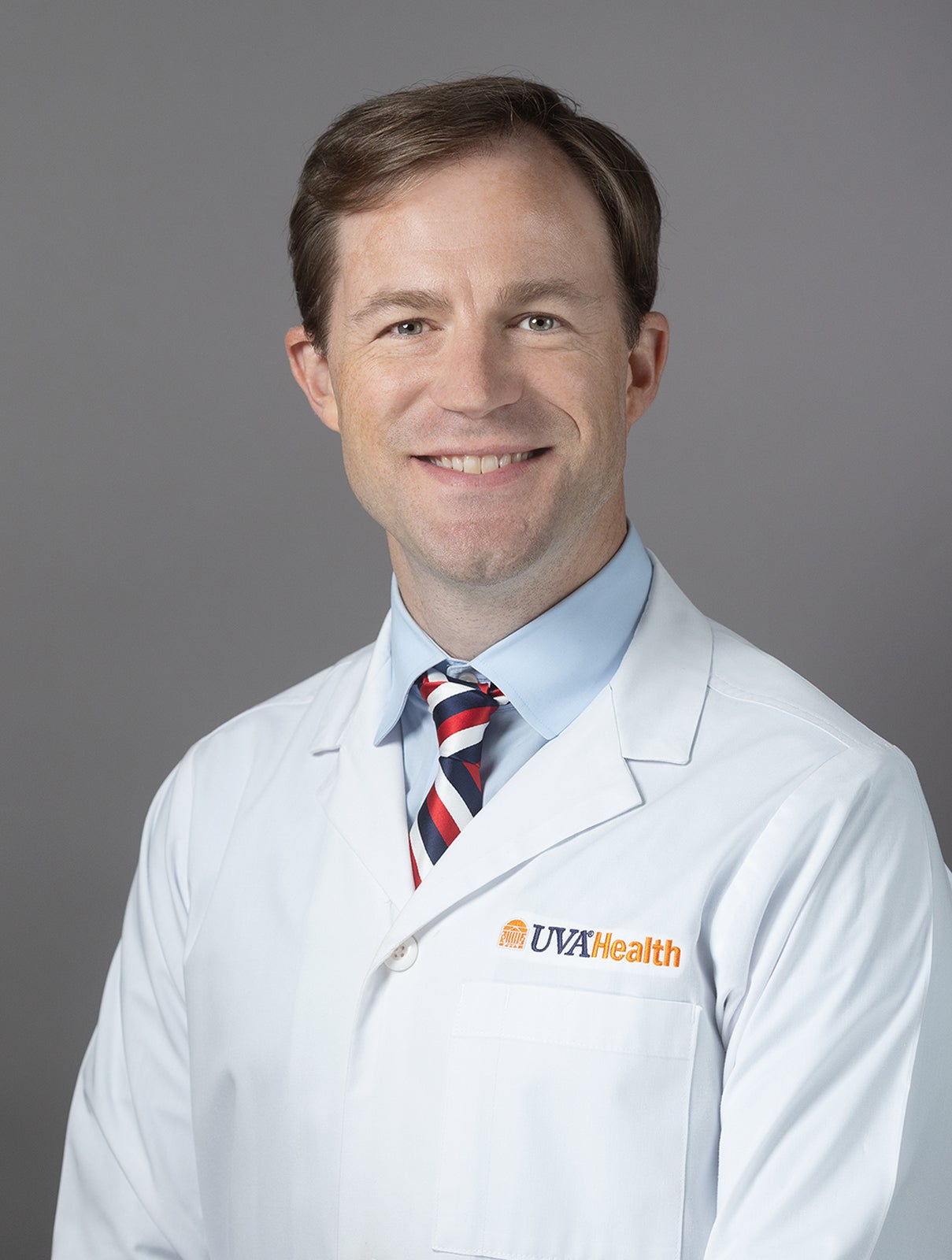
UVA Health neurologist Jonathan R. Crowe, MD, MPH, MSc, notes that Medicare pays for three-quarters of all stroke care in America — more than $2 billion annually. He aims to identify the policies that shape the stroke treatment and recovery Medicare patients receive and to mine Medicare and American Heart Association data to determine specific areas where care access differs between traditional, “fee-for-service” Medicare and Medicare Advantage plans offered by private insurers.
“Our goal is to provide patients, clinicians, and policymakers with clarity about how patients’ Medicare insurance affects important stroke outcomes,” Dr. Crowe says. “We believe this research can help clinicians and policymakers better understand how to improve stroke outcomes and stroke care.”
Medicare’s Role in Stroke Care
Stroke is the fourth-leading cause of death in the United States, and a major cause of long-term disability. Nearly 800,000 Americans suffer strokes every year.
In his prior work, Dr. Crowe and his colleagues found some patients with Medicare Advantage insurance were more likely to have access to certain types of stroke-preventing care, and they tended to recover more quickly from strokes than patients on traditional Medicare. These patients were also less likely to be readmitted to the hospital, and they were more likely to live in the community following a stroke.
Patients on traditional Medicare Parts A, B, and D plans, on the other hand, were more likely to receive intensive post-stroke care and rehabilitation than those enrolled in the Advantage plan, which incentivizes private insurers to limit more expensive medical care.
Ultimately, outcomes were similar for patients on both traditional Medicare and Medicare Advantage. But the journey to that shared destination often looked very different for the two groups, Dr. Crowe and his collaborators found.
Next Steps
Dr. Crowe has received a $231,000, three-year, Career Development Award from the American Heart Association that will allow him to further explore the stroke care Medicare patients receive and to fill important knowledge gaps, particularly about Medicare Advantage. For example, he will analyze more than 12.5 million Medicare claims and examine American Heart Association data to look at whether Advantage patients are receiving clot-dissolving thrombolysis and/or manual clot removal, known as mechanical thombectomy. He will also look at factors such as in-hospital mortality and where patients go after discharge. Finally, he will interview stroke survivors and caregivers to identify barriers to best-practice stroke care.
“We know insurance is an important, non-medical factor that impacts patients and their families,” Dr. Crowe says. “Since most stroke patients have Medicare insurance, it is critical for us to better understand how differences in the structure of patients’ Medicare insurance impact the type of medical care patients receive.”
Dr. Crowe hopes his work ultimately will answer important questions such as whether Medicare Advantage patients are receiving less stroke rehabilitation than patients on traditional Medicare. This type of information, he says, is key to informing federal policy discussions that will shape future stroke care for Medicare recipients.
“Our hope is that we can use this information to improve stroke outcomes and stroke care across the United States,” Dr. Crowe says. “We believe this is an important opportunity for research to make a meaningful difference in the lives of patients and their families.”
To keep up with the latest medical research news from UVA Health and the University of Virginia’s new Paul and Diane Manning Institute of Biotechnology, bookmark the Making of Medicine blog.