7.8.2026
UVA Health Update | July 8, 2026
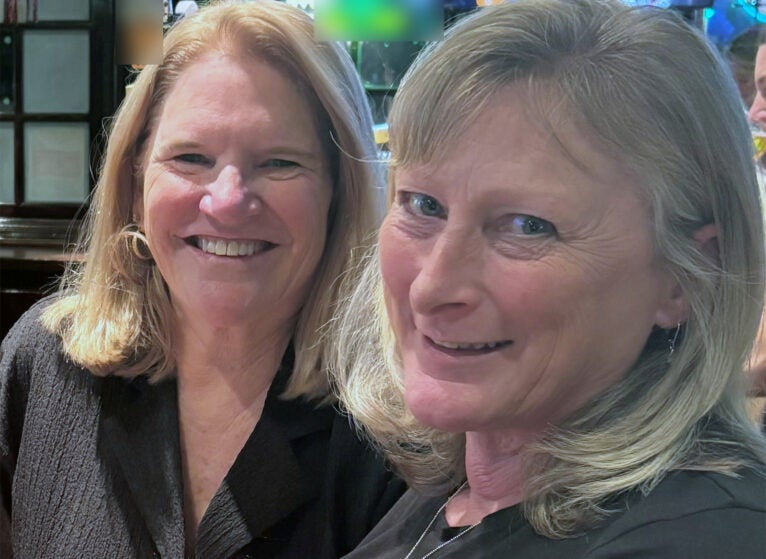
From left: UVA Health's Mary Coffey, PhD, MPH, RN, NEA-BC, TIPC; and Karin Skeen, PhD, RN, NEA-BC, take a break in Philadelphia.
"Creating the structure, skills, and pathways that allow those ideas to move from concept to implementation.”
UVA Health University Medical Center nursing leaders are taking part in the year-long, national Johnson & Johnson Nurse Innovation Fellowship.
It began with a virtual kickoff in spring 2026, followed by the Summer Innovation Institute on-site at the University of Pennsylvania from June 8 to 12 attended by Associate Chief Nursing Officer Karin Skeen, PhD, RN, NEA-BC, and Director of Professional Nursing Services Mary Coffey, PhD, MPH, RN, NEA-BC, TIPC. The fellows also are participating in additional virtual sessions, before concluding the fellowship at an on-site event in May 2027 at Johnson & Johnson in New Brunswick, New Jersey.

Powered by Penn Nursing and The Wharton School, the Innovation Fellowship brings together two nurse executives and senior nurse leaders each from 14 health systems across the country. Participants learn principles of human-centered design, strategic leadership, and change management — while developing solutions to challenges within their own organizations.
Focusing on One of the Most High-Stakes Areas of Patient Care
From the perspective of her role at Nursing Professional Development Services (NPDS), Coffey sees the fellowship as a way to help nurses move bold ideas into action. “At UVA Health, nurses identify opportunities every day to improve care, strengthen workflows, enhance onboarding, and support professional growth,” she describes. “The challenge is creating the structure, skills, and pathways that allow those ideas to move from concept to implementation.”
Skeen and Coffey — along with Kathy Baker, PhD, RN, NE-BC, FAAN, Chief Nursing Officer and interim Chief Executive Officer, UVA Health University Medical Center; and Associate Dean of Clinical Affairs, UVA School of Nursing — will focus on medication safety, one of the most high-stakes areas of patient care.
“I’m specifically interested in how we can support nurses with an innovative solution to medication safety,” Skeen explains. “No one wants to make a medication error. An innovative solution to support nurses in this area would have a profound effect on patient safety and the psychological safety of the nurse.”
Thinking Differently, Listening Differently
During the five-day institute earlier this summer in Philadelphia — Skeen and Coffey worked with other nurse leaders to examine healthcare challenges through new perspectives and develop solutions centered on the experiences of nurses, patients, and families.
“The most valuable part of the institute is being surrounded by nurse leaders who are thinking differently about healthcare challenges and willing to test those bold ideas,” Coffey shares. “It reinforces that innovation begins with deeply understanding the people closest to the work: nurses, interprofessional teams, patients, and families.”
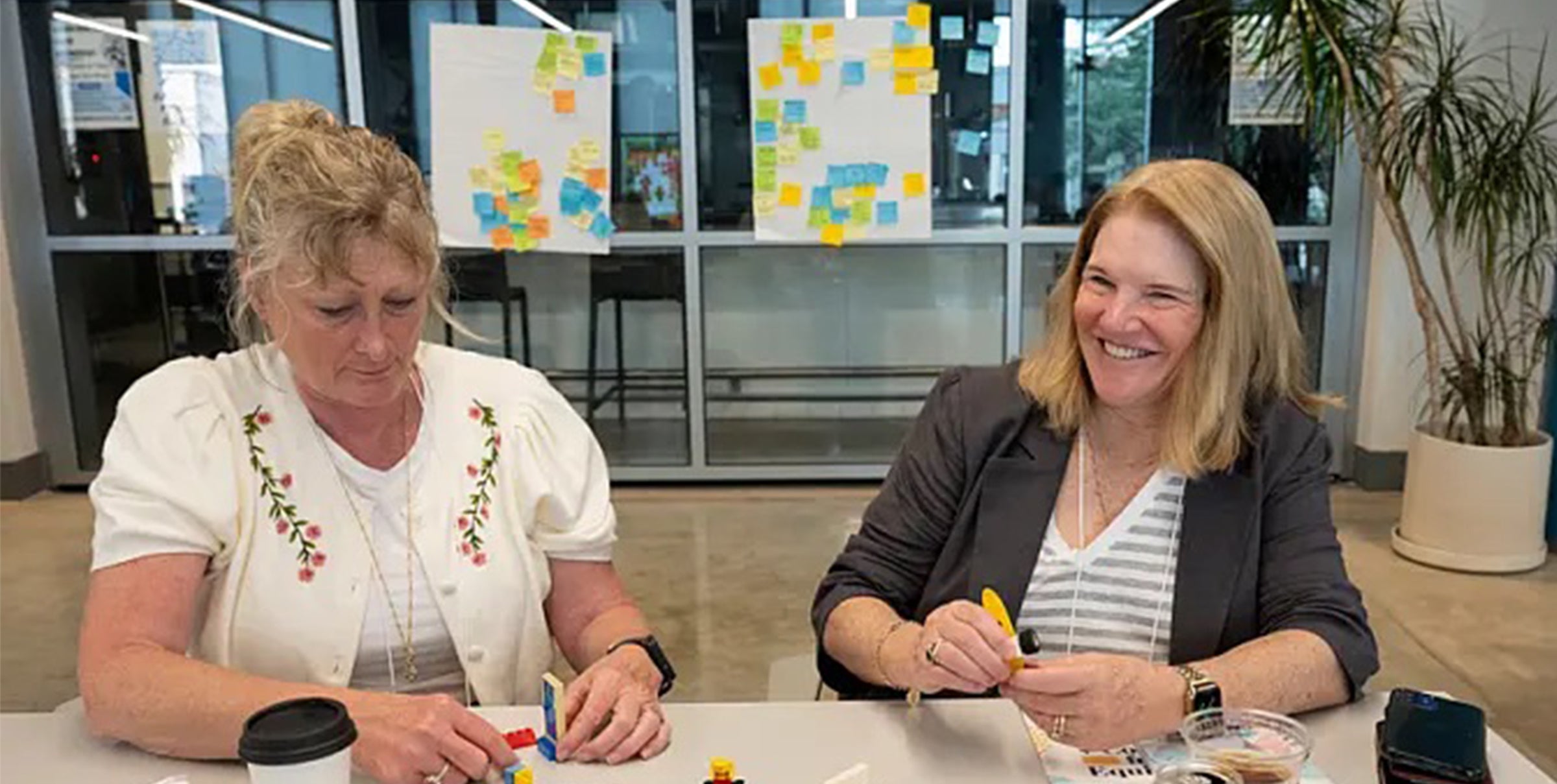
The institute also provided Skeen with new tools for creative problem-solving. “It's an invitation to let my brain return to a much more creative state for problem solving,” she says. “I now have the tools to guide others through the same process.”
“Sometimes it begins with listening differently, asking better questions, and testing a small change with the people most affected by the issue,” Coffey adds. “I see this directly connecting to our work in nursing professional development, centralized onboarding, competency development, and clinical inquiry.”
Empowering Nurses to Lead Change
Throughout the remainder of the fellowship, Skeen and Coffey will continue working with national faculty and fellow nurse leaders as they apply what they have learned to nursing challenges at UVA Health.
Looking ahead, Skeen sees an opportunity to create more formal structures. “I love the idea of exploring how we could build a nursing innovation center at UVA Health,” she says.
Human-Centered Design
Both leaders hope the fellowship will help nurses take a more active role in improving care. “My goal is for innovation to become a practical part of nursing excellence at UVA Health — helping us improve the nurse experience and patient outcomes,” Coffey says.
Skeen adds: “I hope bringing a more human-centered design process for problem solving will provide the structure to get the right people to the table, solve for the right problems, and bring us all closer together around the care. Nurses and patients can and should be involved in the process.”