
8.3.2026
UVA Health Update | Aug. 3, 2026
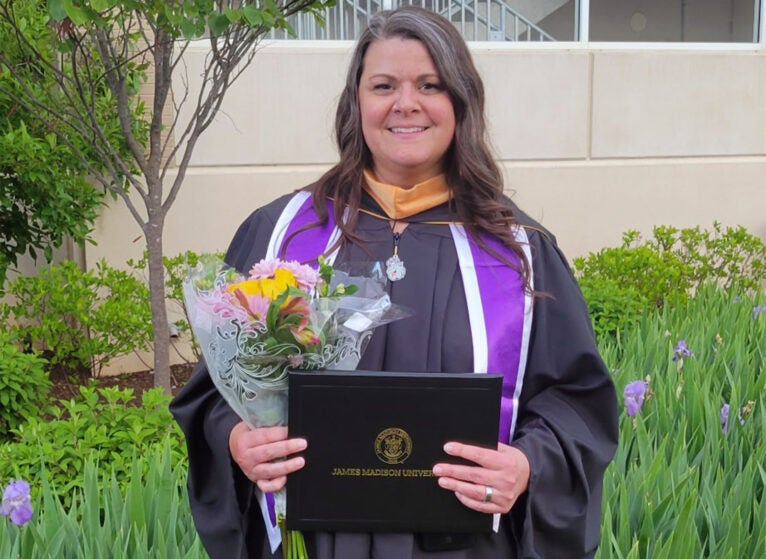
Rebecca Kresse, MSN, RN, RNC-OB, C-EFM
While everyday interactions with patients and visitors showcase our style of care and shape our relationship with those we serve, providing our brand of quality care is made possible by the research, skill, and professional development efforts of our team members. One such effort that we’re excited to celebrate is the award-winning project on maternal sepsis recently completed by Rebecca Kresse, MSN, RN, RNC-OB, C-EFM, Assistant Nurse Manager, UVA Health Culpeper Medical Center’s Family Birth Center (FBC).
Small-Scale to UVA Community Health-wide
To graduate with her MSN from James Madison University this spring, Kresse was tasked with completing a 500-hour practicum that involved identifying a Quality Improvement (QI) initiative. To complete this requirement, Kresse partnered with her preceptor and Manager Molly Stolar, MSN, RNC-OB, C-EFM, identifying a need within FBC to standardize our clinical approach to maternal sepsis recognition and management.
"When Rebecca came to me and asked, 'I have a project to complete for my MSN, what do you think I should focus on?' — I suggested maternal sepsis screening because I knew it was an area where we had an opportunity to improve," Stolar recalls. "That simple conversation was all it took — she took the idea and ran with it, transforming it into something truly meaningful.”
Bridging Gaps for Equitable Care
Kresse explains that they selected maternal sepsis as a focus because of its role as a leading cause of preventable maternal morbidity and mortality. Early recognition of maternal sepsis can be challenging in obstetric patients, as standard pregnancy and postpartum physiology can mask early signs of sepsis.
While our existing sepsis workflows are effective in Emergency Department and inpatient settings, their criteria are based largely on non-pregnant physical conditions, which potentially left gaps in best practices for treating obstetric patients. These gaps can lead to inconsistent triggers and delays in escalation and treatment, indicating the significance of Kresse’s project and the solutions it provides.
The goal of the project: to develop and implement a maternal-specific sepsis recognition and management workflows by adapting existing adult sepsis tools, rather than creating an entirely new system. By crafting a standardized approach while using resources already available at UVA Health, Kresse efficiently filled a need for our patients and heightened their care while also exemplifying our ASPIRE value of stewardship.
Multidisciplinary Teamwork Shapes Improved Approach to Care
To prepare for the project, Kresse participated in the California Maternal Quality Care Collaborative (CMQCC) Maternal Sepsis Implementation Sprint, a four-month program focused on reducing maternal morbidity and mortality. The sprint, in which Kresse was joined by Culpeper Medical Center Clinical Professional Development Practitioner Amarachi Ananaba, BSN, RN, RNC-OB, C-EFM, C-OBE, involved an in-depth review of the program’s maternal sepsis toolkit, which was developed from maternal mortality data, multidisciplinary expertise, and real-world implementation strategies used nationwide. Those recommendations were adapted to fit UVA Health’s Epic capabilities and clinical workflows.
What initially began as a unit-based, nurse-driven project — has expanded into an initiative across UVA Community Health, garnering the Outstanding Leadership MSN Project of Interest recognition. This award, for which Kresse was nominated by her program director, recognizes a project that shows measurable improvement in quality or impact on care delivery or outcomes.
'Incredibly Moving'
While the project stands to positively impact patients, Kresse also says it's had a personal impact on her as a practitioner: “This project was especially meaningful to me because it started as a small idea and quickly grew into something with systemwide impact. Being part of developing a more standardized approach to something with such significant potential impact has been incredibly eye-opening. Experiencing the process from the very beginning has been both challenging and rewarding. It’s been incredibly moving to see how collaboration can turn an idea into something that can truly improve patient outcomes on a broader scale.”
Though the project stemmed from Kresse’s pursuit of her MSN, she praises the teamwork that has enabled its implementation: “A key strength of this project has been collaboration with multidisciplinary stakeholders including FBC leadership, OB [obstetrics] providers at Culpeper and Prince William Medical Centers, our Sepsis Coordinator, Pharmacy, Epic analysts, and the education team for UVA Community Health Women's Services. These partnerships have been instrumental in shaping a standardized, sustainable approach to maternal sepsis care.”
Lasting Impact
“Watching Rebecca's passion and commitment throughout this project has been incredibly inspiring,” Stolar hails. “Every time I hear her speak about her work, I'm in awe of the depth of her knowledge, the countless hours she has invested, and the genuine desire she has to improve care for our patients. This has become so much more than an academic project — it's a testament to her dedication to advancing maternal care."
She adds: "I have no doubt her work will have a lasting impact on maternal sepsis recognition and the care we provide across UVA Community Health. I couldn't be prouder of what she has accomplished, and I can't wait to see her vision come to fruition!"


Way to go, Rebecca!